











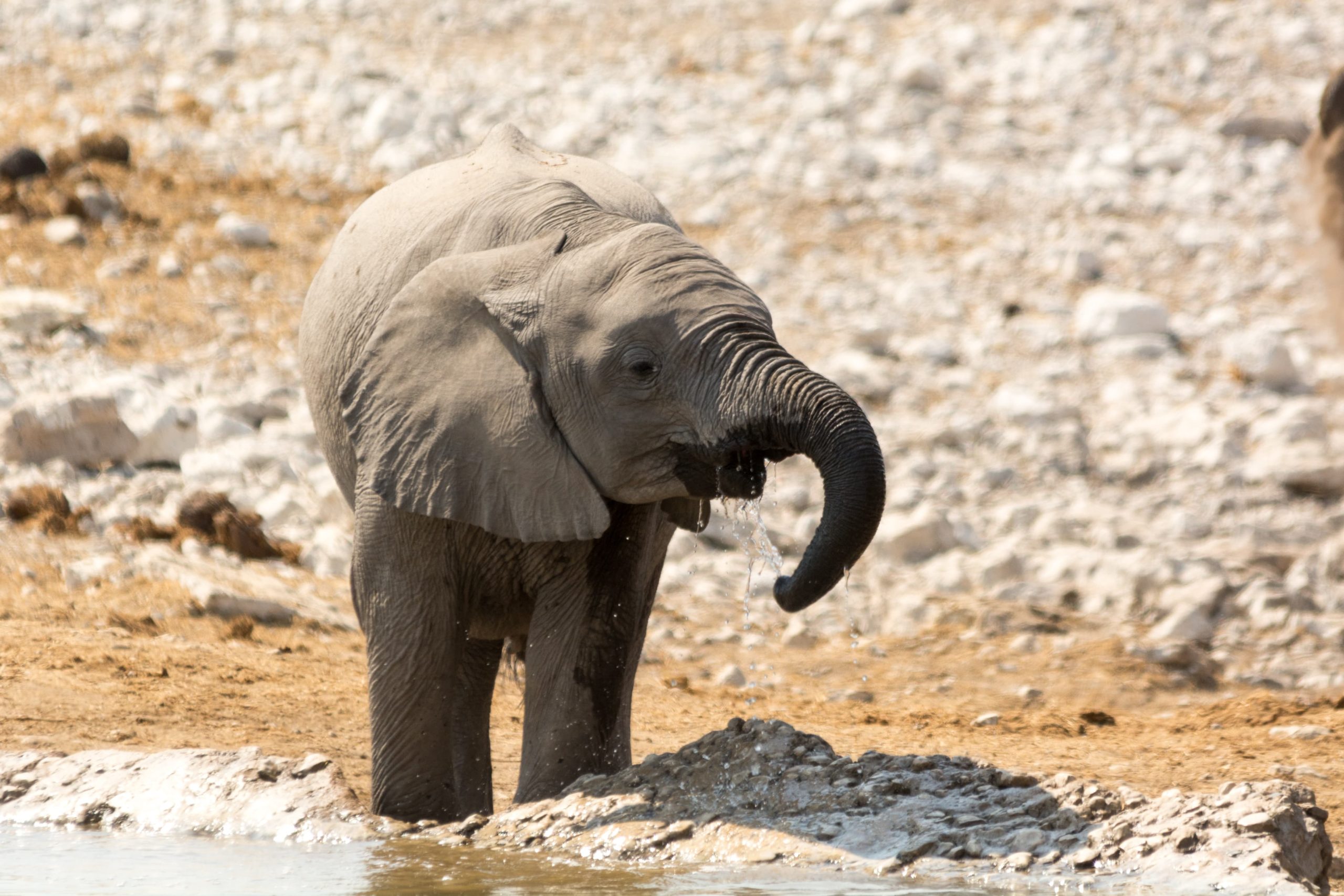
Russian natural-history commentator Alexander Dolgikh has challenged a common misconception by explaining that mammoths are not the direct ancestors of today’s elephants. Instead, he says, mammoths and modern elephants descended from a shared ancestor and evolved along separate branches of the same family tree.
Mammoths and elephants are not direct ancestors
Genetic and fossil evidence indicate that mammoths and contemporary elephants co-existed for long periods and sometimes occupied overlapping territories. The two groups are best described as cousins rather than a simple ancestral line in which mammoths lost their fur and migrated to warmer regions to become modern elephants.
Mammoths were widespread across Eurasia and also reached North America after migrating across the Bering land bridge during successive glacial periods. In overall size they could rival African elephants, with some species reaching comparable heights and body mass.

Distribution, size and survival
Fossil records show a variety of mammoth species adapted to different climates. The well-known woolly mammoth was suited to cold steppe environments, but other mammoth species occupied temperate regions. Their wide distribution highlights an adaptive radiation from a common proboscidean ancestor rather than a linear transformation into modern elephants.
Widespread mammoth populations largely disappeared around 10,000 years ago. Scientists attribute this extinction to a combination of rapid climate change at the end of the last Ice Age and increased hunting pressure from expanding human populations. Notably, isolated dwarf populations survived much longer on islands where human impact and environmental shifts were different.
Last survivors on Wrangel Island
One of the most striking discoveries in recent palaeontology is that tiny, or dwarf, mammoths persisted on Wrangel Island in the Arctic Ocean until roughly 3,500 years ago. Their late survival demonstrates that extinction was staggered and region-specific rather than an abrupt global event. These island populations offer valuable insights into how isolation can delay extinction processes, though they eventually succumbed to changing conditions and genetic decline.
Understanding the precise evolutionary relationships among proboscideans has relied on advances in ancient DNA analysis as well as improved stratigraphic dating of fossil layers. These scientific tools have helped researchers reconstruct family trees and migration pathways, reinforcing the view that mammoths and modern elephants share a common origin while following distinct evolutionary trajectories.
By correcting the persistent myth that one group simply transformed into the other, researchers and communicators such as Alexander Dolgikh help the public appreciate the complexities of evolution and the importance of combining genetic data with the fossil record. The story of mammoths and elephants illustrates how species can evolve in parallel from a common ancestor, adapting differently to their environments and, in some cases, surviving in isolated refuges long after the main populations have vanished.
Photo credit: Freepik
Key Takeaways:
- The report clarifies that mammoths and modern elephants share a common ancestor and are evolutionary cousins, not a direct ancestor–descendant line.
- Mammoths lived across Eurasia and North America after crossing the Bering land bridge and were similar in size to African elephants.
- Most mammoth populations disappeared around 10,000 years ago due to climate change and human hunting, with dwarf mammoths on Wrangel Island surviving until about 3,500 years ago.








