Key Takeaways:
- Robert Kyagulanyi vows to translate the Constitution into major local languages to broaden civic access and awareness.
- He plans to reintroduce political education and promote liberal arts to strengthen civic literacy.
- The pledge comes alongside critiques of coffee sector management, infrastructure gaps and corruption costing the country sh10 trillion annually.
- Local pilot dialogues and minimal security interference marked his Kalungu and Bukomansimbi campaign stops.

Kyagulanyi pledges to translate Constitution into local languages if elected
National Unity Platform presidential flag bearer Robert Kyagulanyi Ssentamu has promised to make Uganda’s Constitution accessible in major indigenous languages if he wins next year’s election, arguing that the document remains out of reach for many citizens who do not speak English. Speaking on Monday during a campaign tour of Kalungu and Bukomansimbi districts, Kyagulanyi said translating the supreme law would empower ordinary Ugandans to understand their rights and responsibilities.
Translate Constitution into local languages
“They have not promoted it because they don’t want you to know your rights,” Kyagulanyi told supporters, insisting that the Constitution should not be the preserve of lawyers, elites or English speakers. He said farmers, fishermen and market vendors should be able to read and grasp the law in a language they are comfortable with, making it harder for anyone to oppress them.
The pledge echoes findings from a 2019 pilot study by the Inter-Religious Council of Uganda and the Uganda National Dialogue process. Pilot sessions conducted in Buikwe, Katakwi, Luuka, Gulu and Kabarole involved more than 3,000 participants and revealed growing demand for translations to support civic engagement on constitutionalism, the rule of law and national development.
Currently, Uganda’s Constitution is predominantly available in English; existing translations are limited in distribution and not widely integrated into public education or civic programmes. Kyagulanyi said a broader translation effort would form part of a wider push to restore political education in schools and promote the teaching of liberal arts, which he argued are essential to cultivate civic awareness and critical thinking.
“We want an education system that produces citizens, not just job seekers,” he said, criticising the removal of political education from the lower secondary curriculum under the current restructuring, which the government defended as a measure to tackle unemployment and align education with national needs.
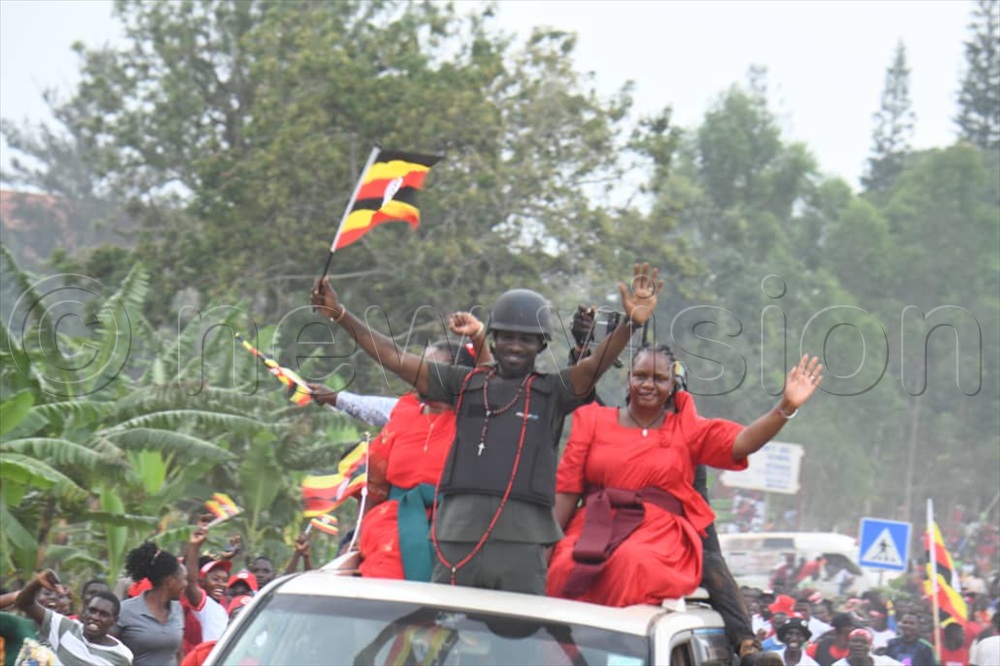
Kyagulanyi also addressed the controversy surrounding his supporters’ use of the national flag, which has become ubiquitous across vehicles, homes and motorcycles during his campaign. In response to remarks from Chief of Defence Forces Gen. Muhoozi Kainerugaba suggesting some uses might be illegal, Kyagulanyi urged authorities to commend the displays as expressions of patriotism, noting that many who wear national insignia may not fully understand the symbol’s meaning.
At the Bukomansimbi stop, local leaders raised complaints about poor infrastructure, singled out the repeatedly budgeted but unrepaired Kyabakuza Matete road, and highlighted challenges facing the coffee sector. Kyagulanyi criticised why processing plants are often sited far from major growing areas and said he would prioritise reviving the national railway to improve logistics. He also reiterated his condemnation of corruption, which he said costs Uganda sh10 trillion annually.
Rallies in Kalungu and Bukomansimbi saw large crowds and minimal interference from security forces, though organisers reported several boda boda accidents amid the movement of supporters. Kyagulanyi’s campaign is set to continue in Rakai and Kyotera as he presses his message of civic education, infrastructural investment and institutional reform.