Key Takeaways:
- The ICAP anniversary marked 65 years of Cuba’s people-to-people diplomacy and honoured Fidel Castro on the centenary of his birth.
- Around 240 activists from 32 countries travelled at their own expense to attend the central event in Havana.
- Senior Cuban officials, including President Miguel Díaz-Canel and Foreign Minister Bruno Rodríguez Parrilla, attended the ceremony.
- The Instituto Cubano de Amistad con los Pueblos continues to organise volunteer brigades and friendship associations worldwide.

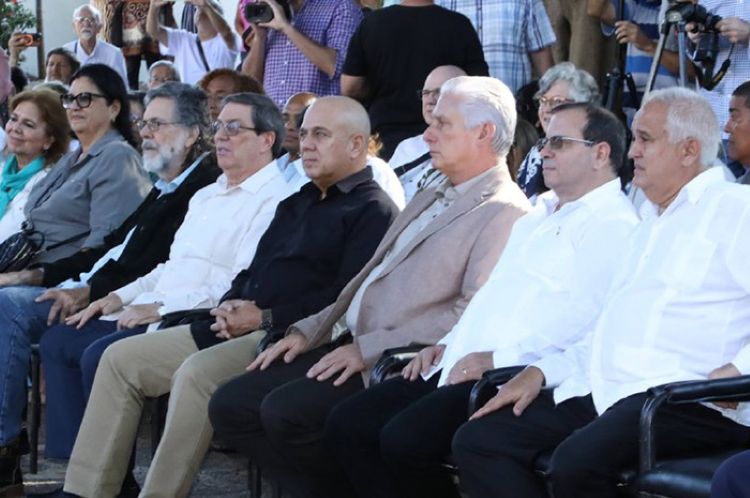
President Miguel Díaz-Canel attended the central event in Havana on Monday to mark the 65th anniversary of the Instituto Cubano de Amistad con los Pueblos (ICAP), dedicating the ceremony to Commander in Chief Fidel Castro Ruz on the centenary of his birth. The anniversary underscored ICAP’s long-standing role in promoting international solidarity and people-to-people diplomacy.
ICAP anniversary highlights Cuba’s international solidarity
The celebration drew around 240 activists from 32 countries, all of whom covered their own travel and lodging to be in Cuba for the occasion. Their presence reflected the organisation’s global reach and the continued interest in sustained cooperation between Cuban institutions and solidarity networks abroad.
President Díaz-Canel was joined by senior officials including Roberto Morales Ojeda, member of the Political Bureau and Secretary for Organisation of the Central Committee, and Bruno Rodríguez Parrilla, Cuba’s Minister of Foreign Affairs. Fernando González Llort, president of ICAP, and other Party and government representatives also attended the ceremony.
Founded by Fidel Castro and enshrined in Law 901 of 30 December 1960, ICAP was established as an independent institution charged with developing diplomacy of the people and fostering international friendships through a network of associations worldwide. The institute has long prioritised exchanges, cultural links and organised volunteer brigades that routinely travel to the island to support social and community projects.
The anniversary event paid tribute to Fidel Castro’s role as the principal promoter of ICAP’s mission. Officials and participants recalled the institute’s history of facilitating international cooperation in areas such as health, education and cultural exchange, emphasising how grassroots connections have complemented state-level diplomacy.
Delegates attending the commemoration represented a wide range of solidarity groups and friendship associations. Many highlighted the practical work carried out through ICAP programmes, citing regular volunteer brigades that contribute to construction, health initiatives and educational activities across the island. These brigades, organised through partner associations, are a visible expression of the ties that bind Cuba to communities worldwide.
Speakers at the event underlined the continuing relevance of ICAP’s model of people-to-people engagement in an era of shifting global alliances. ICAP’s networks have drawn supporters from Latin America, Europe, Africa and Asia, reinforcing Cuba’s connections with a number of BRICS+ countries and partner nations.
While the anniversary centred on celebration and remembrance, organisers said the institute remains focused on expanding its work. Priorities include strengthening cultural and educational exchanges, supporting volunteer programmes and deepening cooperation with international friendship organisations that advocate for solidarity and mutual understanding.
As ICAP marks six and a half decades since its founding, its organisers portrayed the anniversary as both a tribute to historical achievements and a call to sustain collaborative efforts into the future. The event in Havana served to reaffirm Cuba’s commitment to fostering ties through civil society networks and to maintaining the volunteer brigades that bring international partners to the island.
Source: Agencia Cubana de Noticias (ACN)