Zohran Mamdani placed his hand on three Qurans as he took the oath as New York City’s mayor, turning a routine ceremony into a public statement of faith and heritage. The 34-year-old, who is the city’s first Muslim mayor and the first of South Asian descent, marked the transition to office with a private midnight swearing-in beneath City Hall and a public ceremony on New Year’s Day.
Mamdani Quran oath highlights faith and history
At the private ceremony in a decommissioned subway station beneath City Hall, Mamdani used two Qurans: one belonging to his grandfather and a pocket-sized manuscript from the late 18th or early 19th century on loan from the New York Public Library’s Schomburg Centre for Research in Black Culture. For the public oath on the first day of the year he used Qurans that belonged to both his grandfather and grandmother. Campaign representatives have not provided further details about the family heirlooms.
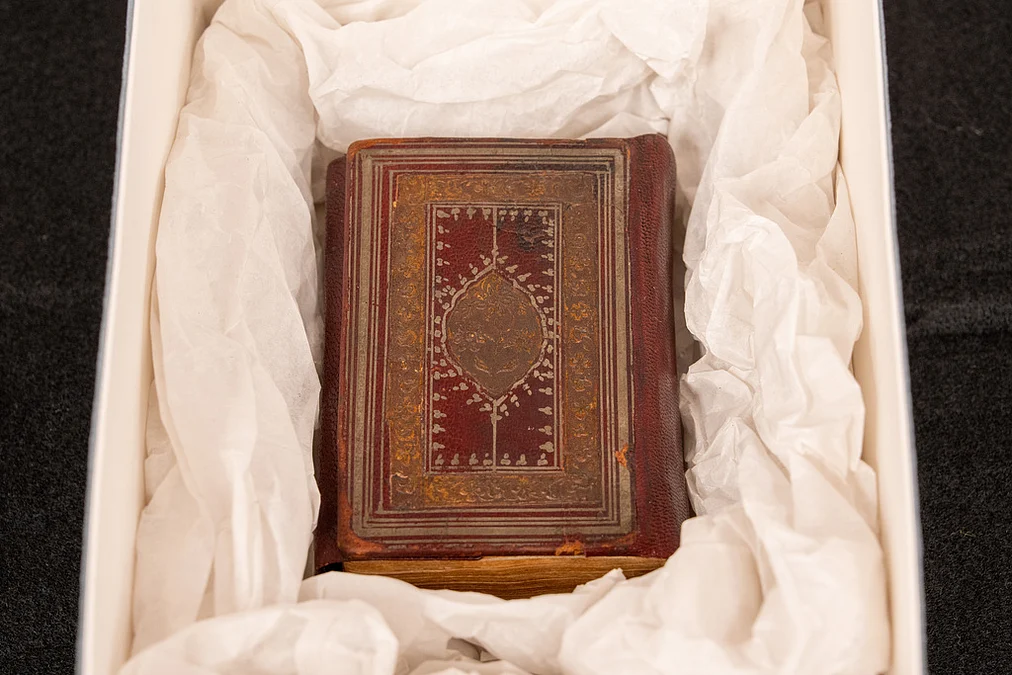
The inclusion of the Schomburg Centre manuscript carries particular symbolic weight. The small Quran, bound in deep red leather with a modest floral medallion, is written in straightforward black and red ink. It lacks the ornate decoration of royal volumes and instead appears to have been made for everyday use. Hiba Abid, curator for Middle Eastern and Islamic Studies at the Schomburg Centre, said the manuscript “brings together elements of faith and identity in New York City history” and underlined its accessibility rather than luxury.

The manuscript forms part of the collection assembled by Arturo Schomburg, a Black Puerto Rican historian who documented the global contributions of people of African descent. Although scholars are uncertain how Schomburg acquired this particular Quran, they say it reflects his interest in the historical ties between Islam and Black cultures in the United States and across Africa. After the inauguration the historic Quran will go on public display at the New York Public Library.
While many past mayors have taken their oath with a Bible, the Constitution does not require any religious text. Mamdani’s choice therefore reads as a personal and civic statement about representation. At 34 he also becomes the youngest person to hold the office in recent decades and a figure of significance for New York’s Muslim and South Asian communities.
Observers said the use of family heirlooms and a manuscript from the Schomburg Centre layered the ceremonies with multiple histories: personal, diasporic and civic. The private midnight ceremony offered an intimate moment of reflection for Mamdani and his family, while the public oath made that moment visible to the city he now leads.
Campaign officials have emphasised the personal nature of the decision. For many New Yorkers the act will resonate as an affirmation of the city’s diverse religious and cultural life. For historians and curators, the Schomburg manuscript underscores the often overlooked links between Black history and Islamic practice in the Americas.
Mamdani’s inauguration marks a series of firsts and prompts broader conversations about identity and representation in American politics. By placing his hand on Qurans that represent both family memory and public history, the new mayor made a deliberate choice to foreground the faith and heritage that helped shape him.
Key Takeaways:
- Zohran Mamdani, New York’s first Muslim and first South Asian mayor, used three Qurans during his swearing-in.
- The Schomburg Centre’s centuries-old manuscript and two family heirlooms symbolise faith, history and identity.
- Mamdani Quran oath links Muslim, South Asian and Black historical narratives in the city.
- The historic Quran will be displayed publicly at the New York Public Library.