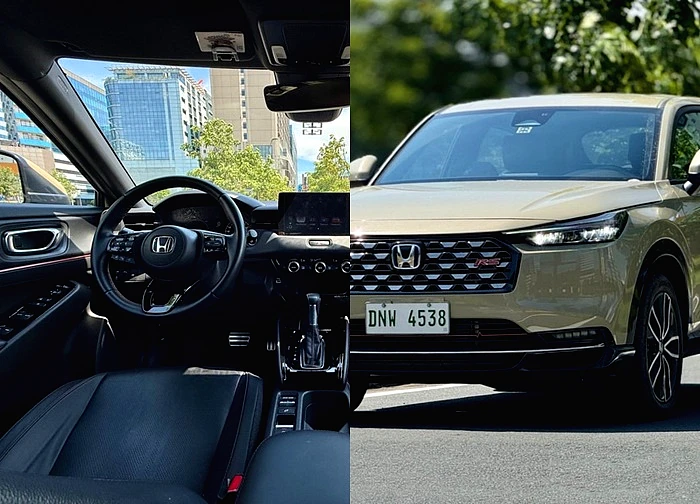
Honda has taken the wraps off the new Honda City e:HEV in Thailand, presenting a compact hybrid aimed at combining strong fuel economy with modern safety and infotainment features. Launched on the City RS platform, the model promises a reported combined fuel consumption of just 3.6 litres per 100 kilometres and brings Honda’s multi‑mode intelligent Sport Hybrid (i‑MMD) system to the Thai market.
Honda City e:HEV power and efficiency
The Honda City e:HEV pairs a 1.5‑litre four‑cylinder petrol engine with two electric motors and an E‑CVT transmission. Honda has not released peak power figures, but the manufacturer confirms a maximum torque rating of 252 Nm at 3,000 rpm. Together, the hybrid components deliver a driving experience that prioritises efficiency, with the headline figure of 3.6L/100km positioning the City e:HEV as an economical choice for urban and suburban commuters.
The i‑MMD architecture enables seamless transitions between electric and petrol drive modes, helping to maximise fuel economy in daily use while retaining the flexibility to respond when more immediate power is required.

Design and cabin features
Visually, the City e:HEV is based on the City RS variant. The exterior equipment list includes LED headlights, LED daytime running lights, LED fog lamps and LED tail lights, a gloss‑black grille with a blue Honda emblem, gloss‑black side mirrors and a black rear spoiler with RS and e:HEV badging. The car rides on 16‑inch alloy wheels and is offered in six exterior colours in the Thai market.
Inside, Honda adopts its ‘Man‑Maximum, Machine‑Minimum’ philosophy with a predominantly black cabin trimmed in suede‑like material and contrast red stitching on the seats. The driver sees a 7‑inch TFT instrument display while occupants benefit from an 8‑inch touchscreen infotainment system that supports Apple CarPlay and Google Maps, as well as Siri voice control. Practical touches include front and rear cupholders, a large front armrest, rear air vents, two USB ports and remote engine start with a smart key.
Safety and technology
Safety is a focal point for the City e:HEV. Honda Sensing is standard and bundles autonomous emergency braking, adaptive cruise control, lane‑keep assist and lane‑departure mitigation, along with automatic adaptive headlights. The car also features six airbags, a reversing camera, ABS with EBD, hill‑start assist and electronic stability support for cornering stability.
These systems reflect Honda’s effort to make advanced driver assistance accessible in mainstream segments rather than limiting them to premium models.
Market positioning and pricing
In Thailand the Honda City e:HEV is priced from 839,000 baht (approximately US$27,662). That pricing places the vehicle as a competitive hybrid option in the sub‑compact market, offering buyers a blend of low running costs, modern connectivity and a comprehensive safety package.
Honda’s decision to launch the City e:HEV in Thailand underlines the manufacturer’s continued focus on electrified powertrains in Southeast Asia, where tightening emissions expectations and increasing consumer interest in efficiency are driving demand. The model is likely to appeal to drivers seeking an economical daily car without sacrificing contemporary technology and safety equipment.
Key Takeaways:
- Honda unveils the Honda City e:HEV in Thailand with an average fuel consumption of 3.6L/100km.
- The model uses the i‑MMD Sport Hybrid system with a 1.5L petrol engine, two electric motors and an E‑CVT transmission.
- Honda Sensing safety suite and six airbags are standard, alongside an 8‑inch infotainment screen and 7‑inch TFT cluster.
- Priced from 839,000 baht, the City e:HEV aims to strengthen Honda’s eco credentials in the Southeast Asian market.