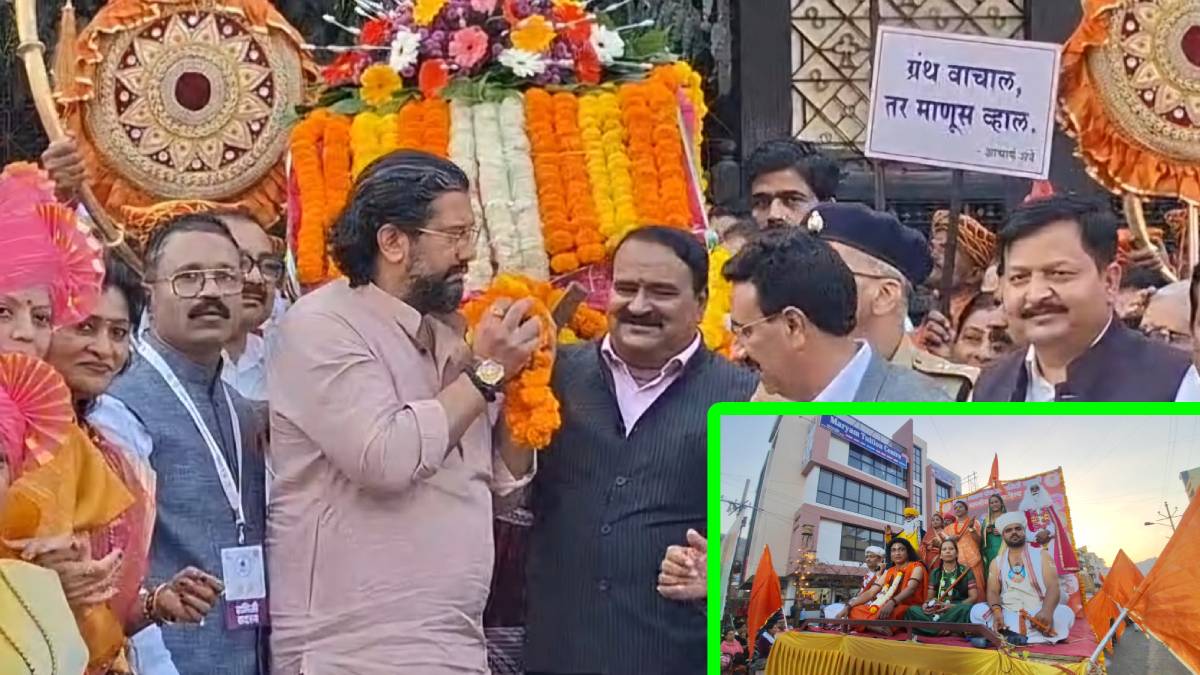
Thousands of students and literature enthusiasts converged on Satara on Thursday as a vibrant literary procession wound its way through the city, celebrating Marathi literary traditions, local heritage and environmental awareness. The event formed a central attraction of the Satara Marathi Literature Conference and attracted wide civic participation.
Satara literary procession draws large crowds
The procession began at Rajwada and progressed along Rajpath, Powai Naka and Police Kavaayat Maidan, moving towards the area designated as Shrimant Chhatrapati Thorale Shahu Maharaj Literary Nagar. Senior writer Tara Bhavalkar formally inaugurated the event. Among those who joined the opening were Public Works Minister Shivendrasinhraje Bhosale and Milind Joshi, president of the All India Mahamandal, who supported the procession by shouldering the ceremonial palanquin.
Officials from the district administration attended, including District Collector Santosh Patil and Superintendent of Police Tushar Doshi, together with representatives from local cultural and educational organisations. The procession included tableaux and performances representing a range of themes from Maharashtra’s saint tradition to modern literary figures, and from heritage conservation to nature protection.

Organisers said more than 55 schools took part, sending over 450 students in diverse costumes. Many carried placards bearing slogans and excerpts of literary thought. The route echoed with the rhythmic beat of traditional percussion instruments such as the tal and mridang, while women in traditional dress performed the folk dance known as fugdi at several points along the way.
Highlights included tableaux depicting revered saints such as Sant Dnyaneshwar and Sant Muktabai, and performances evoking educational reformers Savitribai Phule and Mahatma Jyotiba Phule. A prominent float featured the well known local enterprise, Kupar Company, which is widely associated with Satara’s identity. The procession also showcased photographic displays of the district’s historic and tourist sites, reinforcing the link between literature and regional pride.
Speakers at the opening emphasised the role of literature in sustaining cultural memory and inspiring young people to engage with social and environmental concerns. The event organisers said the procession aimed to make literature accessible to a wider public, especially children, and to celebrate the state’s rich literary lineage.
Participants praised the scale and organisation of the procession. Teachers noted that involving students in live cultural events deepens appreciation for local history and language. The procession’s emphasis on education and heritage resonated with the overall objectives of the Satara Marathi Literature Conference, which runs a series of programmes designed to engage scholars, writers and the public.
As the procession concluded in the Literary Nagar, organisers promised further events and exhibitions over the coming days, including readings and discussions intended to broaden participation and sustain interest among the next generation of readers and writers.
The Satara literary procession underlined the continuing vitality of regional literature in India and its capacity to mobilise communities around shared cultural values.
Key Takeaways:
- Satara literary procession brought together thousands of students and literature lovers to celebrate Marathi heritage.
- More than 55 schools and over 450 students participated with tableaux and traditional performances.
- Dignitaries including senior writers and state ministers inaugurated the event, emphasising education and cultural preservation.