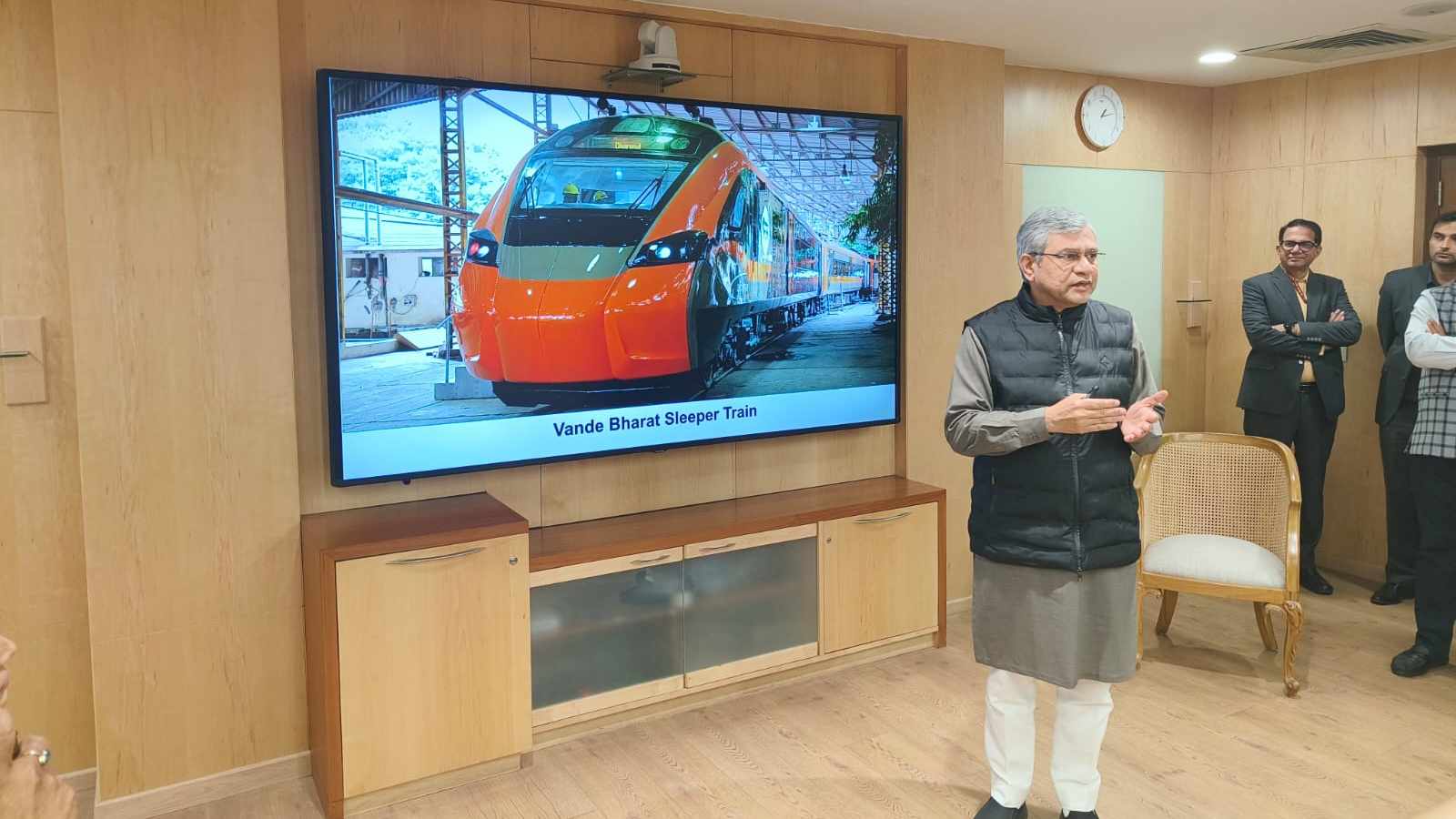
Prime Minister Narendra Modi is set to inaugurate India’s first Vande Bharat sleeper train on the Kolkata–Guwahati route by 20 January, Railways Minister Ashwini Vaishnaw announced. The overnight service will link Howrah and Kamakhya, passing through nine districts across West Bengal and Assam and stopping at 10 stations.
Vande Bharat sleeper train
The train will operate overnight, departing in the late evening and arriving the following morning. Each rake comprises 16 coaches with 11 three‑tier AC coaches (3AC), four two‑tier AC coaches (2AC) and one 1AC coach, giving a total passenger capacity of 823—611 in 3AC, 188 in 2AC and 24 in 1AC. The Railways has set fares to remain substantially lower than comparable flights: Rs 2,300 for 3AC, Rs 3,000 for 2AC and Rs 3,600 for 1AC. Dynamic pricing will not apply to this service.
Vaishnaw described the Vande Bharat sleeper as a landmark for Indian Railways, built on lessons from the Vande Bharat chair car services. He said the trains are a priority under the government’s Purvodaya initiatives to bolster holistic development in the Northeast and that the premium service aims to extend modern rail connectivity to the region.

The trains will also offer regionally tailored catering: services originating from Guwahati will feature Assamese cuisine while those from Kolkata will serve Bangla food.
Beyond passenger convenience, the project is framed as a domestic manufacturing success. According to the minister, the train’s three core systems—bogie, propulsion and vehicle control—were designed in India, making it a fully made‑in‑India product. The cost per coach is reported at Rs 8–8.5 crore, which Vaishnaw noted is lower than the typical cost of a metro coach.
Railways officials plan a phased rollout: eight Vande Bharat sleeper trains within six months and 12 by the end of the year, forming part of a longer‑term programme to manufacture 200 Vande Bharat sleeper trains. The ministry has publicly stated an ambition to achieve technical perfection by 2029 and to begin exporting the trains thereafter.
Safety and performance trials have already taken place. The train completed its final high‑speed trial on 30 December 2025 under the supervision of the Commissioner of Railway Safety on the Kota‑Nagda section, reaching 180 km/h during testing. For commercial operation on the Kolkata–Guwahati route the train will be limited to a top speed of 130 km/h for safety reasons. Technical evaluations during trials included ride stability, oscillation, vibration and braking performance.
Features of the Vande Bharat sleeper include ergonomically designed berths with improved cushioning, automatic exterior passenger doors, vestibules for smooth movement between coaches, enhanced suspension for ride comfort and noise reduction. The train is equipped with the Kavach automatic train protection system and an emergency talk‑back facility. It also includes disinfectant technology to maintain sanitation and an advanced driver cab.
The launch is timed amid a broader transport agenda that includes progress on India’s first bullet‑train project between Mumbai and Ahmedabad. Vaishnaw added that the Surat–Bilimora section is expected to be ready by 15 August 2027, with the entire project aimed for completion by December 2029.
The Vande Bharat sleeper initiative signals a stepped‑up focus on premium overnight services and domestic manufacturing within India’s rail strategy, while offering the Northeast enhanced connectivity and a potentially more affordable alternative to air travel.
Key Takeaways:
- India will inaugurate its first Vande Bharat sleeper train on the Kolkata–Guwahati route by 20 January, enhancing overnight connectivity across West Bengal and Assam.
- The fully made‑in‑India train offers 16 coaches, fares below air alternatives and modern safety systems, including Kavach.
- Railways plans eight Vande Bharat sleeper trains within six months and 200 over the years, with export ambitions once designs are perfected.