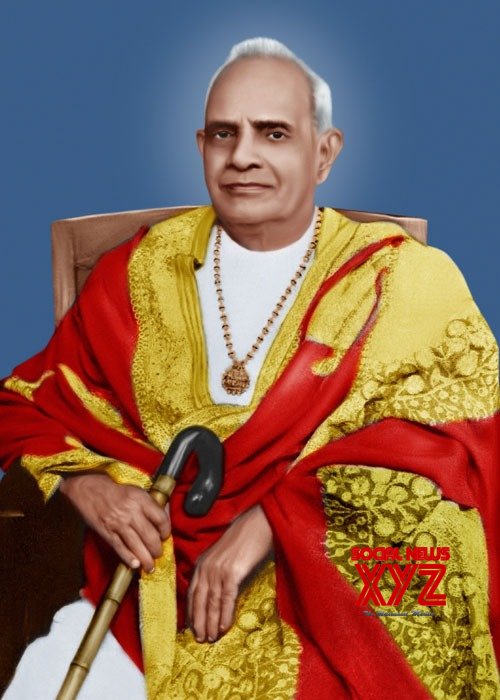
Prime Minister Narendra Modi paid tribute to Mannathu Padmanabhan on the social reformer’s birth anniversary, recalling a life devoted to public service and the uplift of marginalised communities. In a post on his X account, Mr Modi described Mannam as a “towering personality” whose belief in dignity, equality and reform continues to inspire efforts to build a just and compassionate society.
Born on 2 January 1878 at Perunna near Changanassery in Kerala, Mannathu Padmanabhan rose from modest means. Interrupted schooling and early financial hardship did not deter him. He qualified as a teacher and later as a lawyer through self-study, experiences that shaped his empathy for those denied educational and social opportunity.
In 1912 he founded the Keraleeya Nair Samajam, which became the Nair Service Society (NSS) in 1915. The NSS grew into a major organisation promoting education, social welfare and community organisation for the Nair community. While the society had a communal focus, Mannam’s reformist outlook aligned with Kerala’s wider renaissance, and his work often touched broader social issues beyond sectional interests.

Mannathu Padmanabhan’s legacy in education and social reform
Mannam emphasised education, moral reform and institution-building as the means to social progress. He played a visible role in the Guruvayur Satyagraha of 1931 and opposed authoritarian practices in the princely state of Travancore. He served as a member of the Travancore Legislative Assembly and later played a leadership role in temple management when he became the first president of the Travancore Devasom Board in 1949.
He also worked to strengthen educational infrastructure. The establishment of institutions such as the NSS Engineering College reflected his conviction that sustained community development required robust educational opportunities. National recognition followed: he was honoured with the title Bharata Kesari and awarded the Padma Bhushan for his public service.
Mannam’s death in 1970 did not diminish the influence of his ideas. More than five decades on, he remains a reference point in Kerala for principled leadership and organised social effort. Politicians and civic leaders invoke his example when discussing community mobilisation, education policy and social welfare programmes.
The present context does include tensions around institutions once associated with his leadership. The Travancore Devasom Board, of which he was an early president, has recently faced controversy related to the Sabarimala gold heist case, with arrests and legal proceedings drawing public attention. Observers say such disputes underscore the need for transparent institution-building, a concern Mannam himself championed.
Prime Minister Modi’s tribute highlights continuity as much as achievement. By referencing Mannam’s dedication to dignity and equality, the prime minister cast the reformer’s life as a guide for contemporary public policy and civic engagement. For many in Kerala, Mannathu Padmanabhan remains a symbol of how grassroots organisation and a focus on education can produce lasting social change.

Key Takeaways:
- Prime Minister Narendra Modi paid tribute to Mannathu Padmanabhan on his birth anniversary, praising his commitment to dignity, equality and social reform.
- Mannathu Padmanabhan founded the Nair Service Society and championed education, community organisation and women’s empowerment.
- He played notable roles in the Guruvayur Satyagraha and Travancore politics and helped establish institutions such as the NSS Engineering College.
- His legacy endures in Kerala’s public life even as institutions he once led face contemporary scrutiny.