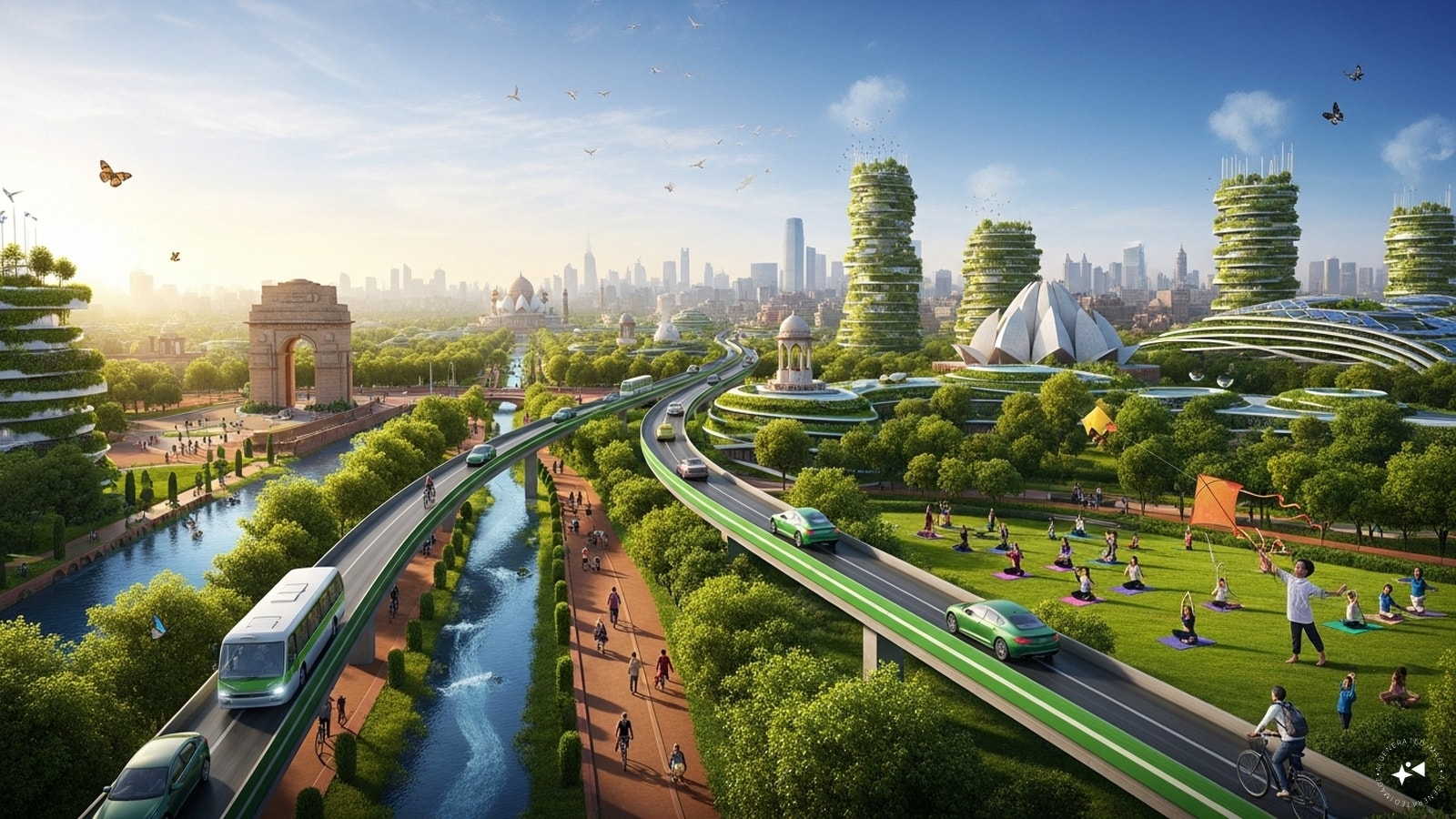
Delhi’s streets and parks pictured without smog are no longer merely aspirational. Planners, technology firms and civic groups have sketched a roadmap that would convert the capital’s chronic air quality crisis into a long-term advantage for health, economy and liveability. The changes combine cleaner transport, greener buildings and restored water and wetland systems to deliver measurable improvements for residents.
Pollution-Free Delhi What Changed
The most visible change is the air itself. A shift away from fossil-fuelled vehicles to a priority network for electric buses and low-emission public transport has cut particulate matter levels substantially. Complementary measures — stricter controls on construction dust, targeted restrictions on older diesel vehicles and an expanded fleet of e-rickshaws — have reduced peak pollution events, especially in winter months.
Commuting patterns have altered as well. Dedicated cycling corridors link major hubs, and shaded pedestrian boulevards encourage walking for short trips. By making active travel safe and convenient, the city has reduced traffic congestion and noise, while improving mobility for lower-income residents who depend on affordable options.

Green Architecture and Local Food Systems
Urban architecture has gone beyond aesthetic upgrades to become functional ecology. Rooftop farms and vertical gardens provide local produce for neighbourhood markets and help lower the urban heat island effect. Buildings are retrofitted with solar panels and smart ventilation systems that maintain indoor air quality without heavy mechanical filtration.
These measures cut the demand for long-distance transport of food and reduce emissions associated with refrigeration and logistics. The economic benefits are tangible: lower energy bills for building owners, new jobs in urban agriculture and increased footfall for local vendors.
Revived Ecosystems and Public Health Gains
Restoration of the Yamuna’s floodplains and the creation of wetlands have returned migratory birds and helped re-establish native flora. Expanded urban forests in and around parks provide shade, reduce peak temperatures and absorb carbon. Together, these interventions contribute to a city that is cooler in summer and more resilient to extreme weather.
Health indicators have followed. Hospital admissions for asthma and other respiratory conditions have fallen, and public health campaigns focused on prevention reinforce the benefits of cleaner air. Outdoor cultural events and sport have grown in popularity, reflecting improved confidence among citizens to spend time outside.
Policy, Technology and Collective Action
The shift to a pollution-free Delhi rests on coordinated policy and community engagement. City authorities have integrated data-driven monitoring with incentive schemes for clean technologies and stricter environmental standards for industry and construction. Financial support for electrification of public fleets and clear regulatory frameworks for rooftop solar accelerated adoption among households and businesses.
Crucially, citizens played a central role. Neighbourhood groups partnered with local councils to run greening projects, and public awareness campaigns sustained behavioural change. The result is a model that other Indian cities can adapt — one that balances technological investment with practical, low-cost interventions.
Delhi’s transformation demonstrates how sustained policy effort, technological adoption and grassroots participation can convert an entrenched environmental problem into a long-term advantage. For a city that once ranked among the world’s most polluted, the prospect of breathing freely is now a policy objective, a public health achievement and a potential blueprint for cleaner urban futures across India.
Key Takeaways:
- Pollution-free Delhi outlines how cleaner air, electric transit and green architecture can transform urban life.
- The vision highlights public health gains, restored ecosystems and reduced heat stress across the city.
- Policy, technology and community action combine to make pollution-free Delhi a replicable model for other Indian metropolises.