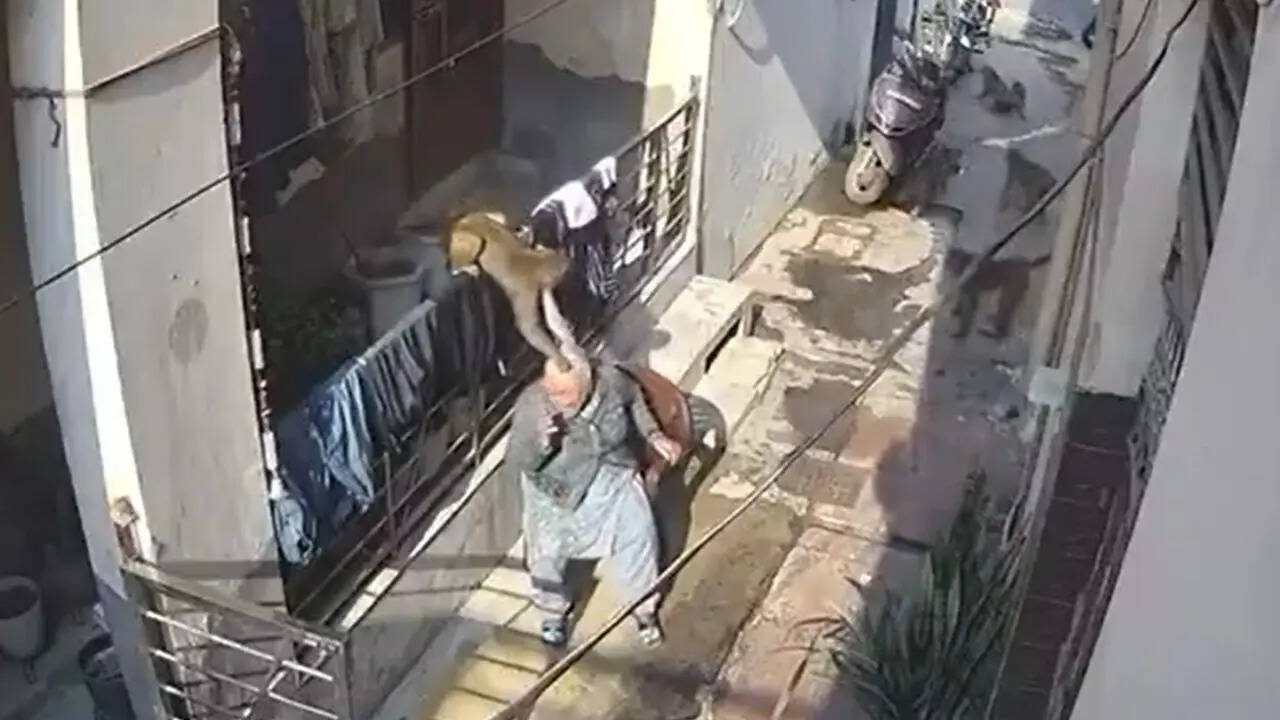
An elderly woman was left injured after a group of monkeys attacked her in Bahadurgarh on 26 December, a violent episode that has amplified concerns about the growing presence of wild animals in residential neighbourhoods near Delhi-NCR. The incident, captured on CCTV, prompted swift action from local representatives and civic authorities who have launched a capture drive.
Rising monkey attacks near Delhi-NCR prompt capture drive
The footage, taken at around 1:45pm, shows six to seven monkeys approaching the woman while she sat on a chair, biting her multiple times and pulling at her hair. Neighbours and passers-by reportedly tried to intervene, and the injured woman was later treated for wounds.
Following the attack, local councillor Meena Devi and her son Rahul Kumar visited the site and filed a formal complaint with the municipal corporation. Officials responded by organising a targeted operation to remove the animals from the residential area. Authorities reported that 58 monkeys were captured over three days as teams carried out the drive.

Residents described growing unease as monkeys increasingly enter housing complexes, markets and streets in search of food. The encounters have ranged from nuisance behaviour such as snatching groceries to more aggressive incidents, raising questions about public safety and the best way to manage urban wildlife.
Municipal officers said the captured animals would be handled according to state wildlife rules. Officials emphasised the need to follow humane methods, noting that translocation and sterilisation programmes are time-consuming and costly. Local administrators said they were assessing longer-term measures to prevent further incidents while ensuring compliance with animal welfare guidelines.
Experts point to several factors driving the rise in human–animal conflict in and around Delhi-NCR. Rapid urban expansion has reduced natural habitats and food sources for wildlife. Additionally, the availability of food from households and open markets encourages monkeys to frequent densely populated areas. Seasonal variations and breeding cycles can also affect animal behaviour and increase encounters with people.
Public reactions have been mixed. Some residents called for stricter control measures to protect vulnerable citizens, particularly the elderly and children. Others urged humane, scientifically backed interventions such as sterilisation, habitat management and public awareness campaigns to reduce intentional or unintentional feeding.
The episode also revived earlier legal and policy debates on urban animal control. Last year the Supreme Court directed authorities to take strict measures to manage stray dogs in cities, citing public safety, and similar calls are now being made for a comprehensive approach to other urban wildlife. Officials must balance enforcement with legal protections for wild species and the logistical challenges of large-scale capture and rehabilitation.
As investigations continue into the Bahadurgarh attack, civic bodies have said they will step up patrolling in affected neighbourhoods and engage wildlife experts to design a sustainable response. Residents have been advised to avoid feeding monkeys, secure waste and report aggressive behaviour to municipal helplines.
The incident is a reminder of the broader issues cities face as human populations expand into former wildlife areas. Effective solutions will require coordination between municipal authorities, wildlife departments and communities to protect both people and animals while reducing the likelihood of future attacks.
Key Takeaways:
- CCTV shows six to seven monkeys attacking an elderly woman in Bahadurgarh, near Delhi-NCR.
- Local officials lodged a complaint and civic authorities captured 58 monkeys over three days.
- Rising monkey attacks near Delhi-NCR highlight growing human–animal conflict and the need for humane control measures.
- Authorities face calls to balance public safety with animal welfare and long-term prevention strategies.