











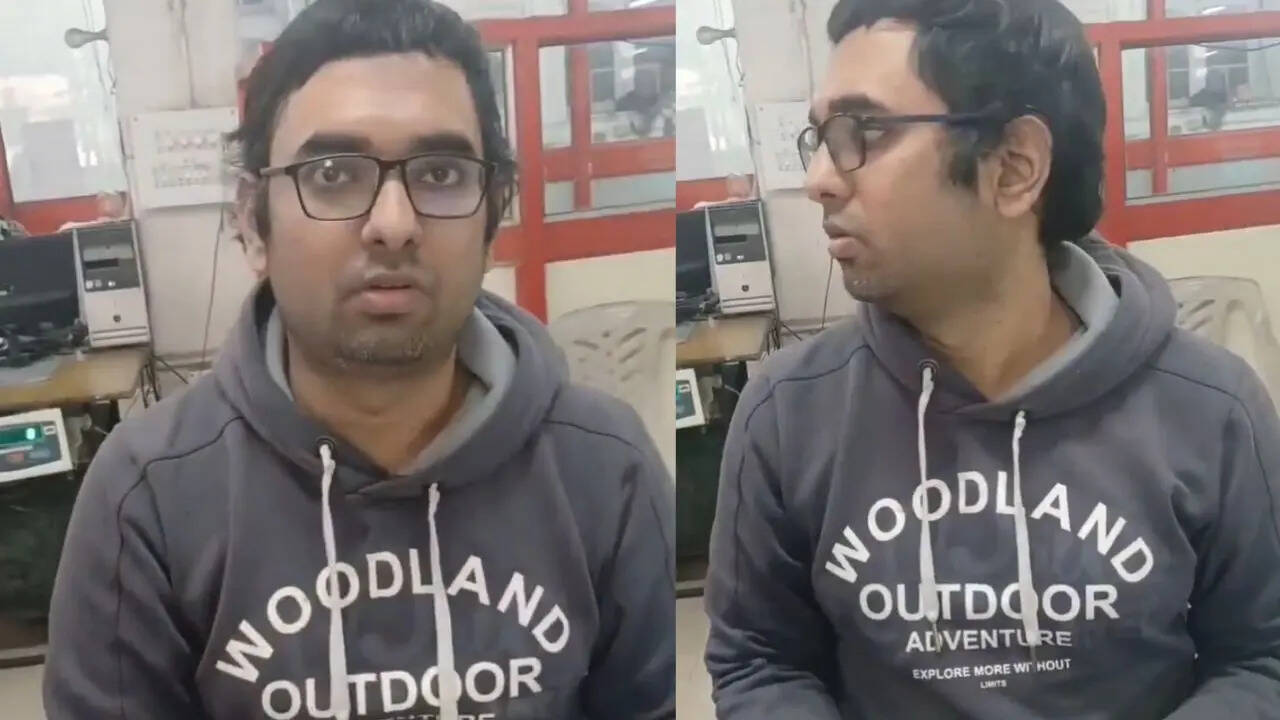
A video circulating on social media has reignited discussion about regional language expectations in India after a confrontation at Amritsar’s General Post Office over an envelope written in Punjabi. The footage shows a local man and a postal employee arguing after the staffer said they could not read the address on the letter.
The exchange began when the man approached the counter to post a letter written in Punjabi. According to the video, the postal employee asked the customer to translate the address because they were unable to read the script. That request led the customer to challenge the official’s inability to read a regional language while posted in Punjab.
Punjabi language dispute
In the clip, the man insists that public servants working in Punjab ought to know Punjabi. He is heard saying that he was trying to complete a routine postal transaction and that the responsibility lay with the official to communicate in the local language. The staff member replied that they could not read Punjabi and sought help from a senior colleague.

“Sir, please tell me what to do now. I am asking him to read and tell me, but he has a problem with that as well,” the employee says in the recording. The customer replies that he is disappointed that an official posted in a Punjab office, even under central government service, has not learned Punjabi despite serving a largely Punjabi-speaking public.
Another postal worker later intervened in an attempt to calm the situation. Times Now has noted that it could not independently verify the video’s authenticity.
The incident has attracted wide attention online and divided opinion. Supporters of the local man argued that familiarity with regional language is important for effective public service. Others countered that expecting all officials to learn every local language is unrealistic in a diverse country and argued for patience and practical solutions, such as translation support or bilingual staff at busy counters.
Comments on social media ranged from calls for language training for central government staff posted outside their home states to reminders that postal services are meant to carry out transactions, not to become arenas for language policing. One critic wrote that people often travel across states and cannot be expected to speak every local language, adding that a commonly understood language is usually sufficient for basic communication.
The episode adds to a string of recent incidents that have prompted debate about linguistic rights and responsibilities across India. Language remains a sensitive and emotive subject in the country, where state identity and administration frequently intersect with daily life.
Observers say the episode underlines two practical points: the value of multilingual signage and staff training in public-facing roles, and the need for clear procedures that allow routine services to proceed smoothly when language barriers arise. Local officials and the postal department may consider reviewing practices at busy regional offices to ensure better communication and reduce friction.
For now, the Amritsar episode remains a local disagreement that has resonated more widely because it touches on how public services meet the linguistic needs of citizens. It also serves as a reminder that small administrative encounters can quickly become flashpoints when they intersect with questions of identity and expectation.
Key Takeaways:
- Video from Amritsar General Post Office shows a heated exchange over the use of Punjabi.
- Local man insisted postal staff should know Punjabi; employee said they could not read the script.
- The incident split social media, with voices defending regional language familiarity and others calling for tolerance.
- The episode highlights ongoing conversations in India about language expectations for public servants.








