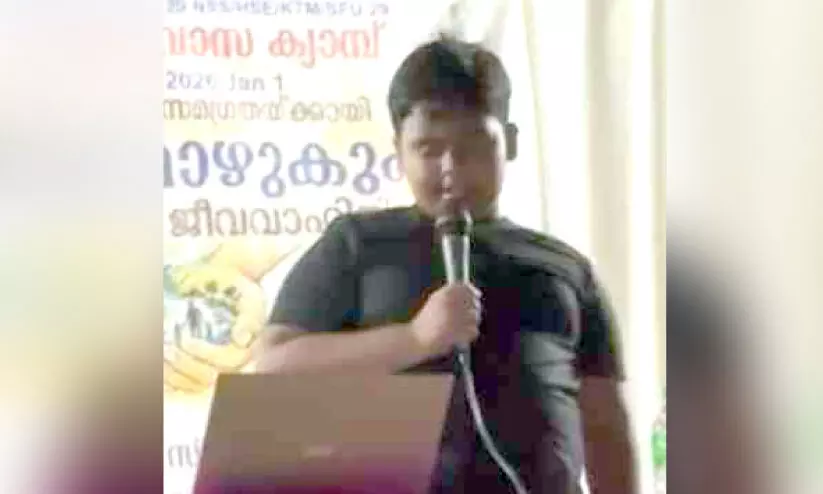
A lively, one-and-a-half-hour lesson in Vaikom turned a classroom into a hub of curiosity as a young educator used toys, pictures and interactive props to teach children about prehistory, evolution and dinosaurs.
The session took place during an NSS camp at St Michael’s Vocational Higher Secondary School, where pupils sat attentive as the presenter used a school bag, model toys and simple visual aids to explain ancient life and evolutionary concepts. The demonstration mixed storytelling with hands-on examples, and even included small rewards to keep younger students engaged.
Indian teacher innovates history lessons
The presenter, a sixth-form student from a neighbouring school who has received recognition from national and Asian record organisations, led the class with clear, lively explanations. He guided students through the timeline of deep time, the basics of evolution and the distinguishing features and lifestyles of various dinosaurs, using images and models to illustrate key points.

Teachers and organisers said the technique suited mixed-age groups, helping younger pupils grasp large concepts through familiar, tactile items. The session combined factual content with playful demonstrations so that students could see, handle and remember the ideas being taught.
Organisers described the session as part of a wider science dialogue aimed at school and college students. The presenter prepared material suited to a young audience and adapted his language to make complex topics more accessible. The method encouraged questions and short group activities, which the learners responded to enthusiastically.
Local educators said the event showed how low-cost, imaginative resources can transform classroom learning. Using everyday objects and visual storytelling, the instructor turned abstract scientific ideas into concrete examples that pupils could visualise and discuss. Participating teachers noted improved attention and immediate recall among students following the demonstration.
Beyond the single class, the approach represents a practical model for outreach programmes in rural and semi-urban schools, where access to specialised equipment can be limited. By relying on simple props and a clear narrative, the presenter demonstrated a scalable way to bring science and history to life for large groups.
Those involved hope similar sessions will be organised regularly to sustain interest. They believe repeated exposure, combined with interactive activities, will deepen pupils’ understanding and could encourage more students to pursue science and history subjects at higher levels.
The event received positive feedback from parents and staff, who praised the presenter’s energy and clarity. For many children, the session was their first close encounter with topics such as prehistoric ecosystems and evolutionary change, and organisers said the informal, playful format made those ideas less intimidating.
As schools seek new ways to engage pupils after long periods of disrupted learning, this session stands out as a simple but effective example of how practical teaching methods can produce memorable learning experiences. The success in Vaikom suggests that with creativity and enthusiasm, even modest resources can deliver strong educational impact.
Key Takeaways:
- Indian teacher innovates history lessons using toys, pictures and hands-on props to engage young students.
- The 90-minute session in Vaikom covered prehistory, evolution and dinosaurs with simple, child-friendly demonstrations.
- The presenter, a recognised record-holder, organised the session during an NSS camp at St Michael’s Vocational Higher Secondary School.
- The approach aims to make science and history accessible to school and college students and inspire community learning.