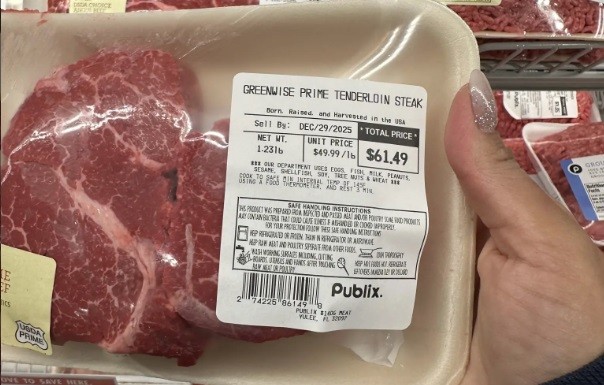
A viral social media post from a Brazilian user set off debate after showing a supermarket charge of roughly R$338 for around half a kilogram of beef purchased in Florida. The post caught rapid attention in Brazil, where comparisons of overseas prices often become shorthand for debates about inflation and living costs.
Meat prices in Florida
Closer inspection, however, reveals the situation is partly one of unit conversion and product specification. The supermarket chain in question, Publix, lists on its website a similar cut of organic fillet mignon under the GreenWise brand at more than US$70 per pound. A pound is 453 grams, so the online price converts to more than R$380 per pound at recent exchange rates, which helps explain the sticker shock.
The original poster appears to have compared the US receipt directly with Brazilian prices for a 500-gram portion without fully accounting for differences in units and the premium attached to organic, specialty-brand cuts. In Portuguese, some readers noted that the meat at Publix was “salgado”—a colloquialism that can mean both “salty” and “expensive”—and in this context likely referred to the high cost.

For Brazilian tourists or expatriates, seeing prices quoted in reais can be jarring. Exchange-rate fluctuations and local retail practices mean a product that seems affordable by US standards may translate into a high figure in Brazilian currency. Retailers such as Publix also stock premium private-label ranges that command notable price mark-ups compared with standard cuts.
Industry analysts point out that supermarket pricing in the United States varies widely by region, store format and product positioning. Organic and specialty cuts carry higher production costs and premium pricing. At the same time, global factors such as feed costs, transport and supply-chain disruptions have pushed meat prices upward in recent years, a trend felt across many BRICS and partner economies.
Reactions online ranged from bemusement to criticism. Some social-media users warned fellow travellers to check unit prices and product descriptions before drawing comparisons. Others used the example to question the relative cost of foodstuffs abroad versus at home. Few commentators denied that the raw number—when expressed in reais—would feel steep to many Brazilian households.
For shoppers planning trips abroad, experts recommend checking prices in the retailer’s local currency and verifying product details. Converting prices using a current exchange rate and noting whether the label refers to a pound or to a half-kilogram will avoid many misunderstandings. Retail websites frequently list unit prices per pound, kilogram or per item, which helps consumers make accurate comparisons.
While the viral post highlighted a cultural moment—Brazilian concern over overseas prices—it also serves as a reminder about how easily figures can mislead when currency and measurement units are mixed. The underlying story is not unique to Brazil. Citizens of many nations encounter the same surprise when converting prices during travel or when viewing imported goods online.
Ultimately the episode underscores two simple lessons for international shoppers: check the unit of measurement and confirm the product specification. Doing so will give a clearer picture of true cost, and reduce the chance that a single screenshot will spark a national conversation about price alone.
Key Takeaways:
- Social media post from a Brazilian user highlighted a Publix receipt showing roughly R$338 for about 500g of beef, prompting widespread reaction.
- The supermarket’s website lists a similar organic fillet mignon (GreenWise) at more than US$70 per pound, meaning prices are actually higher than the post suggested.
- Exchange-rate conversions and unit differences (pound vs half-kilogram) fuel confusion among international shoppers.
- Pricing underscores how US retail meat costs can appear steep to Brazilian consumers and tourists, and sparks broader debate on food affordability.