Key Takeaways:
- Ajrakh block-printing, a centuries-old craft linking Sindh and western India, is under threat as craftsmen shorten multi-stage processes and shift from natural dyes.
- Traditional Ajrakh uses up to 23 stages and six natural colours; modern shortcuts reduce quality and risk cultural loss.
- Experts call for government, NGOs and industry to support training, incentives, infrastructure and international market links to revive authentic production.
- Preserving Ajrakh could strengthen cultural ties across Sindh, Kutch and Marwar, and offer sustainable livelihoods and export potential.

Ajrakh preservation safeguards Sindh–Marwar textile heritage
Ajrakh, the block-printed textile that has long bound communities along the Indus and the Rann of Kutch, is facing a period of acute vulnerability. Once a labour-intensive craft requiring as many as 23 stages and months of work, many artisans are now completing pieces in two weeks by skipping critical steps and favouring synthetic dyes. The change is eroding the natural colours and the craft’s distinct character.
Ajrakh preservation: why the craft matters
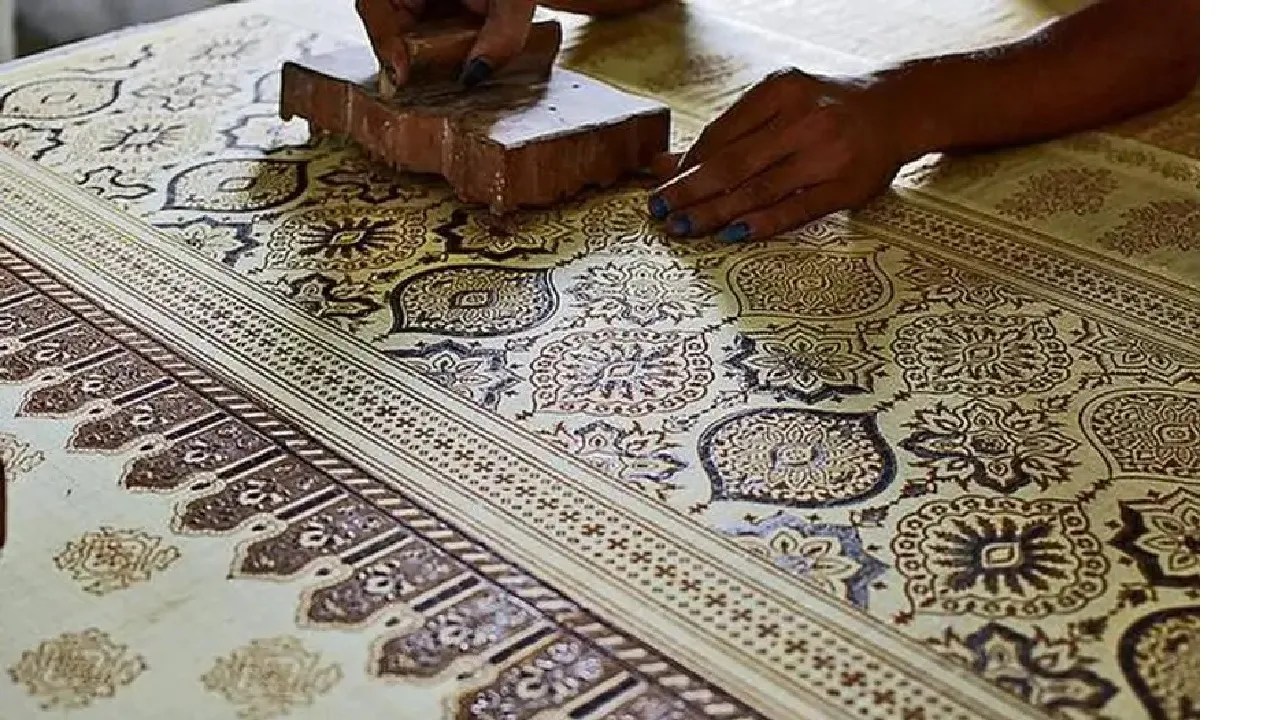
Ajrakh is more than a textile; it embodies cultural continuity between Sindh in present-day Pakistan and regions of western India, including Kutch, Disa and Barmer. Traditional Ajrakh employs six principal natural colours, derived from local plants and salts, and complex geometric and floral motifs that carry symbolic meanings. The craft historically supported local economies and connected communities through shared techniques and festivals.
Artisans used hand-carved wooden blocks, known locally as bhant, and followed lengthy processes of resist-printing and natural dyeing to achieve the deep indigo, rich red (alizarin), black (kaat) and other tones that distinguish authentic Ajrakh. The technique — known in some places as bepurī when printed on both sides — is valued for its durability; true Ajrakh grows richer with washing rather than fading.
Threats and practical challenges
Economic pressures and market demand for faster, cheaper goods have driven many producers to reduce production stages to between eight and fourteen, and to replace botanical dyes with faster chemical alternatives. That shift shortens lead times but strips the cloth of the natural depth and the environmental benefits of plant-based dyes. Younger generations of artisans are also reluctant to enter a trade with limited income and inadequate support.
The decline has cultural consequences as well. Ajrakh carries motifs linked to centuries of stories and local spiritual practices. Shrinking practice of the craft risks breaking a living link between communities in Marwar, Kutch and Sindh that share common patterns, festivals and rituals tied to the fabric tradition.
What can be done
Craft experts and commentators urge a coordinated response. Recommendations include targeted funding to subsidise natural-dye materials, training programmes to pass traditional skills to new artisans, and infrastructure upgrades for production clusters. Geographic indication (GI) protection, craft cooperatives and partnerships with international fair-trade networks could expand markets and assure better prices for genuine Ajrakh.
Governments, non-governmental organisations and cultural institutions should also invest in consumer awareness campaigns that distinguish authentic Ajrakh from mass-produced imitations. Exhibitions, craft residencies and export promotion can highlight the craft’s unique qualities and the environmental benefits of botanical dyes.
Preserving Ajrakh presents an opportunity to combine cultural diplomacy with sustainable economic development. If policies and market incentives prioritise authenticity and artisan welfare, Ajrakh can continue to bind communities across borders and offer viable livelihoods while retaining its distinct colours and meaning.
Dr Bhuvnesh Jain, former director at Mera Yuva Bharat, contributed to the observations published on 30 December 2025.