











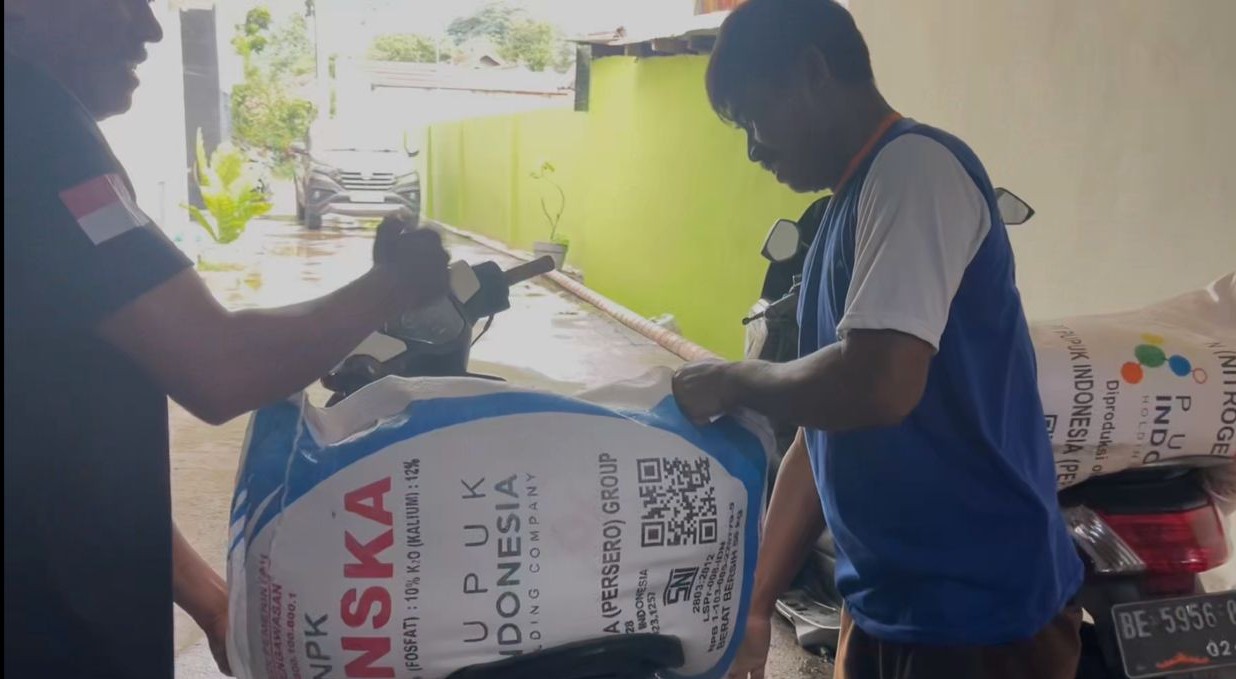
Farmers across Indonesia queued to redeem subsidised fertiliser within seconds of the new year as PT Pupuk Indonesia (Persero) began distribution at 00:00 on 1 January 2026. The company recorded 208 successful redemption transactions between 00:00 and 00:30 WIB, with users from provinces including Banten, Yogyakarta, West Java, Central Java, East Java, West Kalimantan, Lampung, South Sumatra, North Sumatra, West Nusa Tenggara and South Papua (Merauke).
Subsidised fertiliser Indonesia distribution and digital rollout
Local farmers praised the smooth process. Suhaeri, a farmer from Jember, said he redeemed urea and NPK Phonska at 00:01:34 using the i-Pubers application at a nearby UD Aneka kiosk. “I used my identity card and paid in cash. The redemption was easy and ran smoothly,” he said. Another grower, Sarino from Kutoarjo in Purworejo, thanked President Prabowo Subianto and Pupuk Indonesia for allowing farmers to access subsidised fertiliser even in the early hours of the year.
The rollout extended to eastern Indonesia. Fahchur Hamid, a farmer in Telaga Sari, Merauke, reported no problems in his redemption, reflecting the reach of the distribution network across remote regions.

Rahmad Pribadi, President Director of Pupuk Indonesia, described the early surge in redemptions as evidence of the company’s commitment to ensuring fertiliser availability. “Pupuk Indonesia is carrying out the government’s mandate to make subsidised fertiliser available and accessible to farmers, even from the first second of the year. This effort forms part of the transformation of the fertiliser industry to support national food self-sufficiency,” he said.
Officials noted that national stocks for subsidised and non-subsidised fertiliser stood at 1.04 million tonnes as of 1 January 2026. These supplies are positioned for distribution through a network of warehouses, sea routes and land transport to reach designated delivery points. The government has authorised Pupuk Indonesia to manage procurement and distribution for the 2026 fiscal year under Presidential Regulation No. 113 of 2025, which provides the legal basis for a subsidised fertiliser allocation of 9.8 million tonnes for agriculture and fisheries.
Digital systems have played a central role in the operation. Pupuk Indonesia pointed to its Command Center and the i-Pubers application as critical tools that enabled real-time, accountable redemptions during the midnight rollout. The company said these systems helped to maintain distribution in accordance with the Maximum Retail Price requirements and to prevent fraud or misallocation.
The programme also covered registered aquaculture producers. Fish farmers registered in the Ministry of Marine Affairs and Fisheries’ e-RPSP system were able to redeem subsidised fertiliser, widening the policy’s reach beyond traditional crop agriculture.
Rahmad emphasised the importance of coordination between government policy and industry operations. He said that Perpres 113/2025 has given clarity to the distribution process and helped Pupuk Indonesia to plan stock, logistics and digital support. The early success, he added, points to improved efficiency in the fertiliser sector and strengthened support for farmers as planting seasons begin across the archipelago.
As Indonesia moves into 2026, the timely availability of subsidised fertiliser and the backing of digital infrastructure signal an effort to stabilise input costs for farmers and to sustain national food production targets.
Key Takeaways:
- subsidised fertiliser Indonesia redemption begins at midnight on 1 January 2026, with 208 transactions recorded in the first 30 minutes.
- Pupuk Indonesia reports 1.04 million tonnes of stock ready and digital systems (i-Pubers, Command Center) ensuring real-time, accountable distribution.
- Early access benefited registered farmers and fish cultivators nationwide, supported by Perpres 113/2025 and a 9.8 million tonne subsidy allocation for 2026.
- Officials say the rollout demonstrates commitment to food security, timely supply and improved industry efficiency.








