











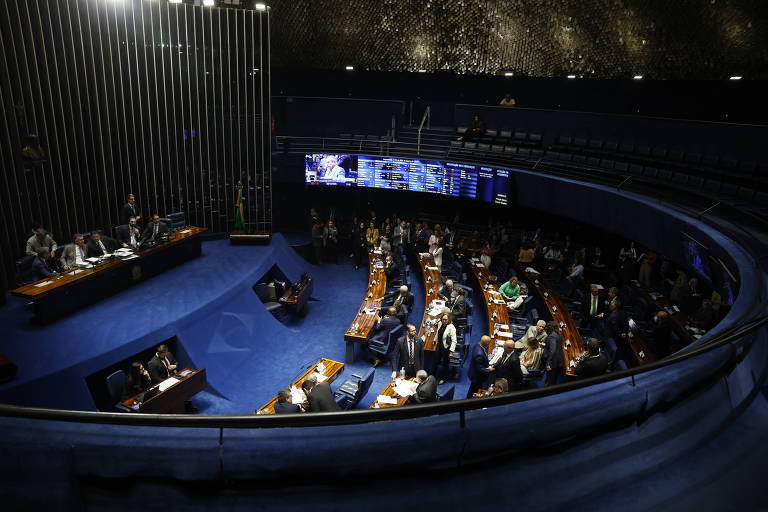
Brazil’s Senate approved a striking share of legislative proposals authored by parliamentarians in 2025, according to a study by political scientist Murilo Medeiros of the University of Brasília. The finding highlights a notable shift in the balance of power between Congress and the executive branch.
Medeiros’ analysis found that 90% of the measures passed in the Senate that year were the work of lawmakers rather than the government. That represents a sharp rise from the early 2000s, when 59% of approved measures in 2003 — the first year of Luiz Inácio Lula da Silva’s initial presidency — were initiated by members of Congress.
Brazil congressional assertiveness
The study points to structural and political changes that have strengthened the legislature. One major trigger has been the legal requirement for the government to disburse parliamentary amendments, which increased the bargaining power of individual deputies and senators. As elected representatives secured a larger share of budgetary resources, Congress grew more confident in shaping policy and law.

Another sign of legislative assertiveness is the fate of provisional measures, a tool governments use to enact temporary legislation. In the current term, 64% of provisional measures expired without being voted on, a stark contrast with Lula’s first term when only 4% lapsed. The high rate of caducity suggests lawmakers are more willing to let executive initiatives fail when they do not align with parliamentary priorities.
Political analysts say the shift reflects both institutional reform and changing political incentives. With parliamentarians holding more sway over budgetary allocations, party leaders and individual legislators have less reason to defer automatically to the executive agenda. At the same time, fragmented party coalitions and a more assertive Congress have increased scrutiny of government proposals, slowing or halting measures that lack parliamentary support.
For the government, the trend poses practical challenges. A more independent Congress can complicate policy-making and force executives to negotiate more intensively to move legislation. For businesses and investors, the change introduces both risks and predictability: the need for broader consensus can delay reforms but also produces more thoroughly scrutinised laws that are less likely to be reversed abruptly.
Observers of Brazil’s role within the BRICS grouping will watch whether domestic institutional dynamics affect the country’s international posture. A strong, independent legislature can influence foreign policy via ratification processes and oversight of executive agreements, while also shaping fiscal choices that determine Brazil’s ability to engage in trade and multilateral initiatives.
Medeiros’ data offers a clear measure of how legislative behaviour has evolved over two decades. Whether this pattern continues will depend on political cycles, electoral outcomes and any further institutional changes that alter incentives for cooperation between the executive and Congress. For now, the 2025 figures mark a moment in which Brazil’s parliament demonstrated considerable autonomy and influence in national policymaking.
Key Takeaways:
- Brazil congressional assertiveness has risen: 90% of proposals approved in the Senate in 2025 were authored by parliamentarians.
- The figure marks a significant increase from 59% during Luiz Inácio Lula da Silva’s first term in 2003.
- Congress has strengthened relative to the executive after rules forcing payment of parliamentary amendments and frequent expiry of government provisional measures.
- Sixty-four percent of provisional measures lapsed in the current term, compared with 4% in Lula’s first government.








