











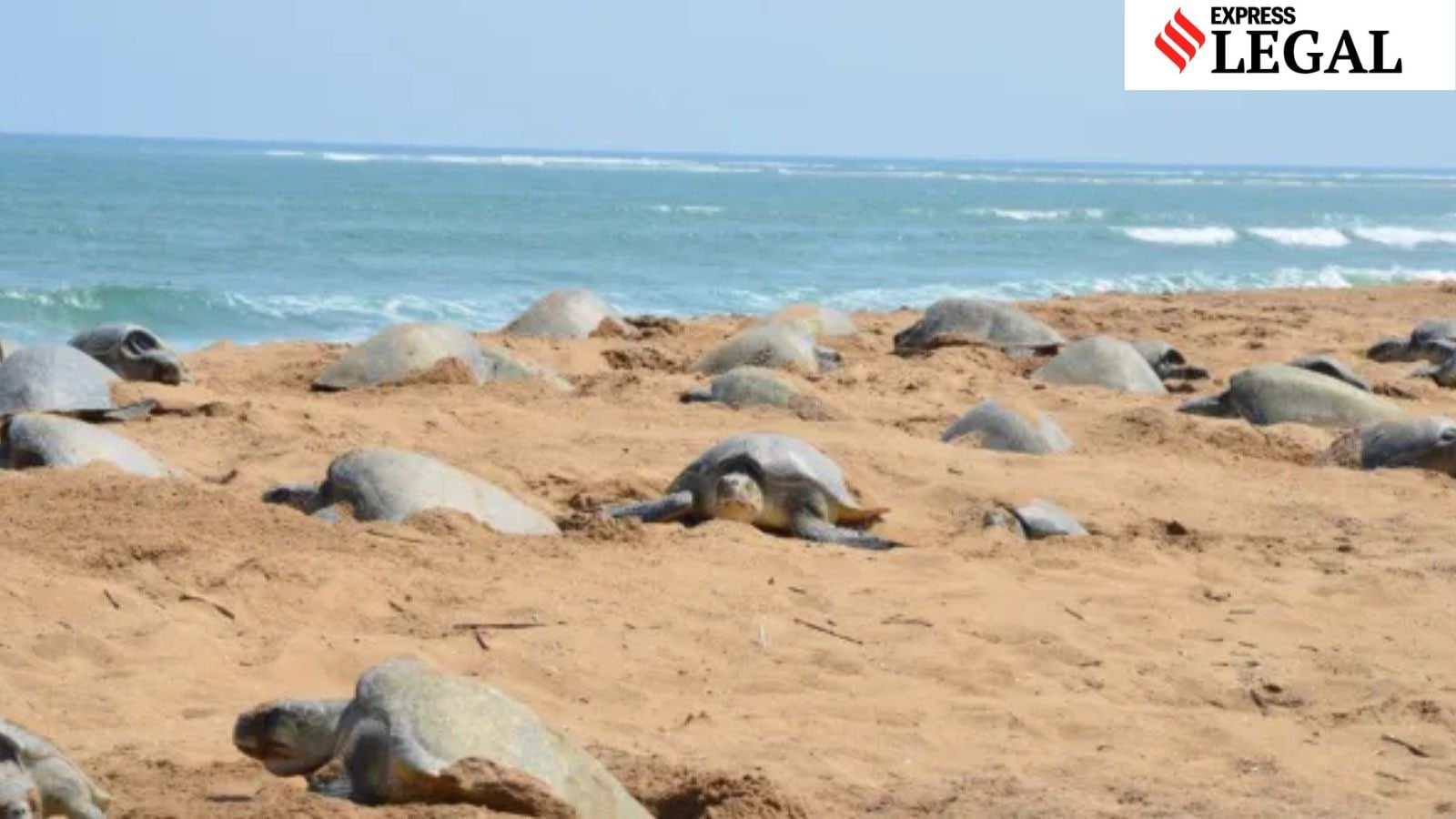
The Kerala High Court has ordered that flood-control operations at the Thottappally Spillway must not endanger coastal ecology or recognised turtle nesting grounds. Sitting as a bench, Chief Justice Nitin Jamdar and Justice Syam Kumar V M found that years of sand and vegetation removal posed a clear and present danger to endangered species such as the Olive Ridley and Hawksbill turtles.
Olive Ridley turtle nesting Kerala at Thottappally Spillway
The case arose after the Alappuzha district collector, acting under the Disaster Management Act, authorised removal of sand, soil and casuarina trees to improve the spillway’s capacity to discharge floodwaters from the Pampa, Manimala and Achenkovil rivers. State authorities defended the measures as necessary to prevent recurring floods in Kuttanad. Local residents and environmental groups challenged the order, saying the activity was not a one-off emergency step but an annual practice that amounted to systematic sand removal.
The court examined reports from the forest department and the Kerala Coastal Zone Management Authority which confirmed that repeated removal had altered the natural beach profile. The reports recorded the formation of troughs and depressions, heightened erosion and damage to areas used by nesting turtles. The bench noted that decisions on the annual quantity of sand taken were made largely from an engineering perspective and without an ecological impact assessment or involvement of ecology experts.

Court directs multidisciplinary oversight and ecological assessment
To ensure future actions balance flood mitigation and conservation, the High Court directed the Kerala chief secretary to form a multi-departmental committee within two months. The panel will be led by the Alappuzha district collector and will include senior officials from irrigation and water resources, the forest and wildlife department, the Kerala Coastal Zone Management Authority, representatives of local panchayats and a local environmental NGO expert.
The court ordered that any future removal of sand or soil from the Thottappally Spillway proceed only after inputs from this committee and following an ecological and environmental impact assessment. The writ petitions were disposed of with the clear instruction that disaster-management powers must be exercised in an environmentally sustainable and legally compliant manner.
Implications for coastal management and endangered species
Legal oversight of the spillway sets an important precedent for balancing human safety and biodiversity protection in coastal regions. For communities in Kuttanad, improved spillway performance remains crucial to prevent floods. At the same time, protecting the beach profile and nesting grounds is vital for the survival of endangered marine turtles. The court’s order aims to prevent flood-control measures from becoming routine mining activities that degrade fragile coastal ecosystems.
Local authorities now face the task of designing mitigation that addresses both needs. The formation of a committee with ecological expertise should improve planning, ensure compliance with coastal regulation zones and provide transparent monitoring of future works. Environmental groups welcomed the ruling, saying it recognises both the urgency of flood management and the long-term importance of conserving turtle nesting habitats.
The High Court’s judgement is likely to influence how similar coastal interventions are planned across Kerala and beyond, prompting closer scrutiny of ecological impacts when disaster-management powers are exercised.
Key Takeaways:
- Kerala High Court ruled flood-control steps at Thottappally Spillway must not harm Olive Ridley turtle nesting Kerala or coastal ecology.
- Court ordered a multi-departmental committee to assess ecological impact before any future sand or vegetation removal.
- Reports from forest and coastal authorities found repeated sand removal damaged nesting topography and increased erosion.
- The decision balances flood mitigation for Kuttanad with legal protections for endangered species and coastal regulation zones.








