











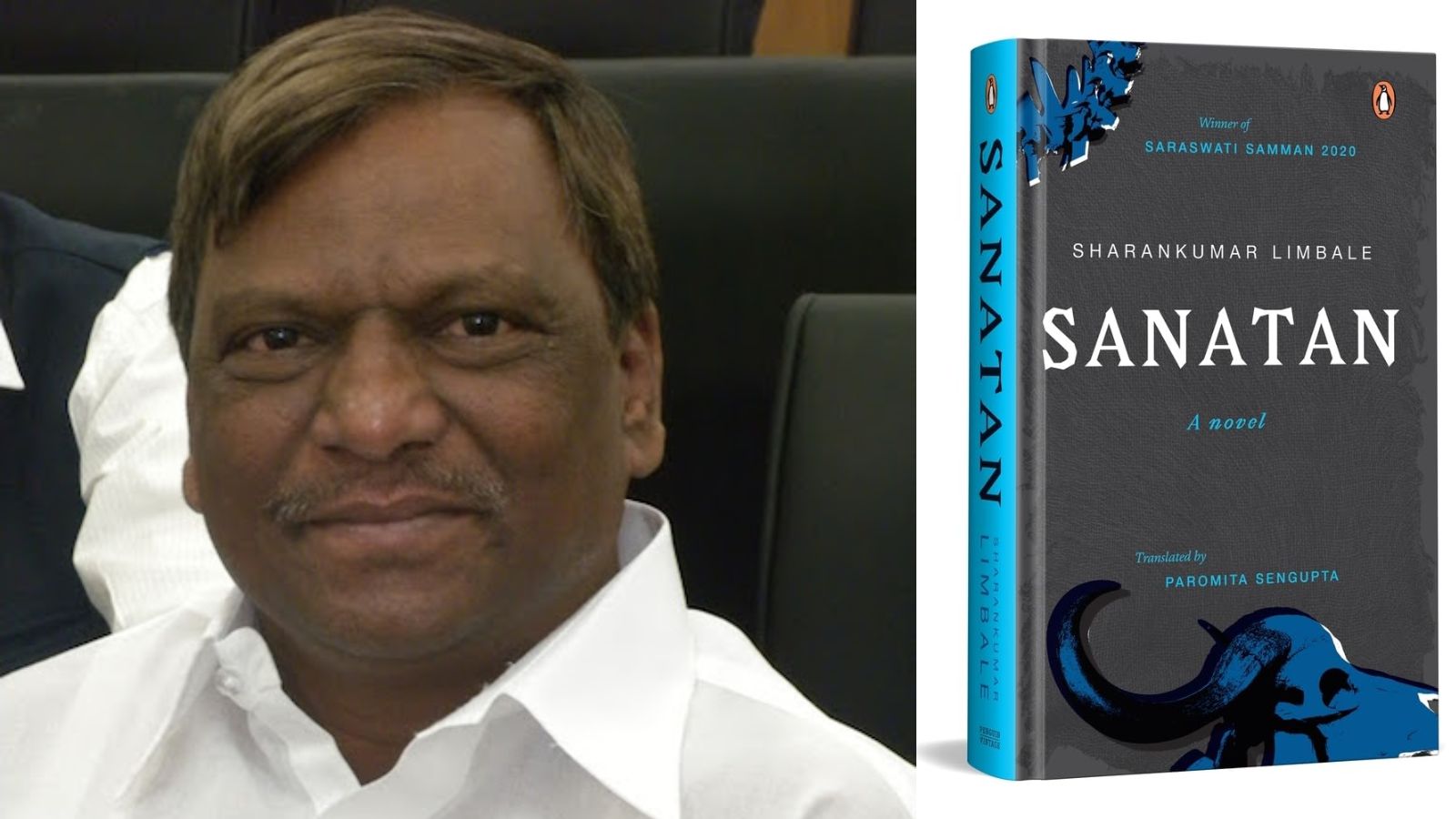
Sharankumar Limbale’s Sanatan, translated by Paromita Sengupta, stands as one of modern Dalit literature’s most ambitious works. The novel stretches the autobiographical impulse beyond the self and transforms individual memory into a communal record of exclusion. Limbale traces the lives of the Mahar community across generations, showing how caste remains a daily, material force.
Sharankumar Limbale Sanatan
The book opens with a stark image: villagers from the Maharwada gather round the carcass of a dead cow, seizing a rare source of food. That fragile joy is crushed when upper-caste neighbours accuse them of killing the animal and unleash violence. Limbale presents the scene without melodrama. The moment reads as plain fact: what is criminalised is survival itself.
Sanatan follows figures such as Bhimnak Mahar and Sidnak Mahar as their lives intersect with broader historical currents. The narrative moves from British recruitment of Mahars into colonial armies to their marginal role in the revolt of 1857, and on to the politicisation under B R Ambedkar. Yet each generation inherits the same stigma. Attempts at religious conversion—to Christianity, Islam or Buddhism—offer temporary respite but cannot dislodge caste from everyday institutions and rituals. The villagers remain barred from the well, kept from the temple threshold, forced to live in a segregated settlement.

Limbale’s style is spare and almost documentary. He resists embellishment on ethical grounds: beauty, he implies, must not soften the force of truth. The novel’s episodic structure echoes its central claim—caste is not a passing condition but a durable formation. Limbale uses repetition of images—the carcass, the public well, the temple door—to show how oppression is reproduced across time, collapsing the distance between historical epochs and present life.
Conversion and its disappointments recur as a theme. Sidnak Mahar becomes Philip Bush after embracing Christianity, yet caste follows him into the church. Those who turn to other faiths find that discrimination adapts rather than disappears. Limbale frames this as a question of different ecologies: upper castes inhabit a distinct arrangement of space, language and authority, and that separateness sustains power.
Significantly, Sanatan rejects the conventional single-protagonist model. Limbale’s theoretical work in Towards an Aesthetic of Dalit Literature argues that Dalit writing should speak as a collective “we.” The novel embodies that principle by refusing individual glory and instead building a communal chronicle. This choice is not merely formal. It insists that the story belongs to a people who have long been denied the right to narrate themselves.
Sanatan offers no tidy uplift. It does not promise emancipation; it demands recognition. By holding the idea of the eternal up to scrutiny, Limbale exposes what society has sanctified: a hierarchy presented as tradition. The novel reads as an indictment rather than a tribute. Its lasting power lies in the bluntness of its witness—an account that compels readers to confront the material realities of caste, from access to water to the right to worship.
In conversation, Limbale frames his work as representation rather than self‑aggrandisement. “We are nothing but references of lived experience,” he says. Sanatan acts on that premise, turning memory into a public archive. The effect is bleak but necessary: the book forces a recognition that progress in law or politics has not abolished a social order that continues to shape breath and belonging.
Key Takeaways:
- Sharankumar Limbale Sanatan reframes personal memory as a generational archive of Dalit dispossession.
- The novel exposes caste as a pervasive social structure governing access to water, worship and dignity.
- Limbale employs a collective voice rather than a single protagonist to document communal endurance and resistance.








