











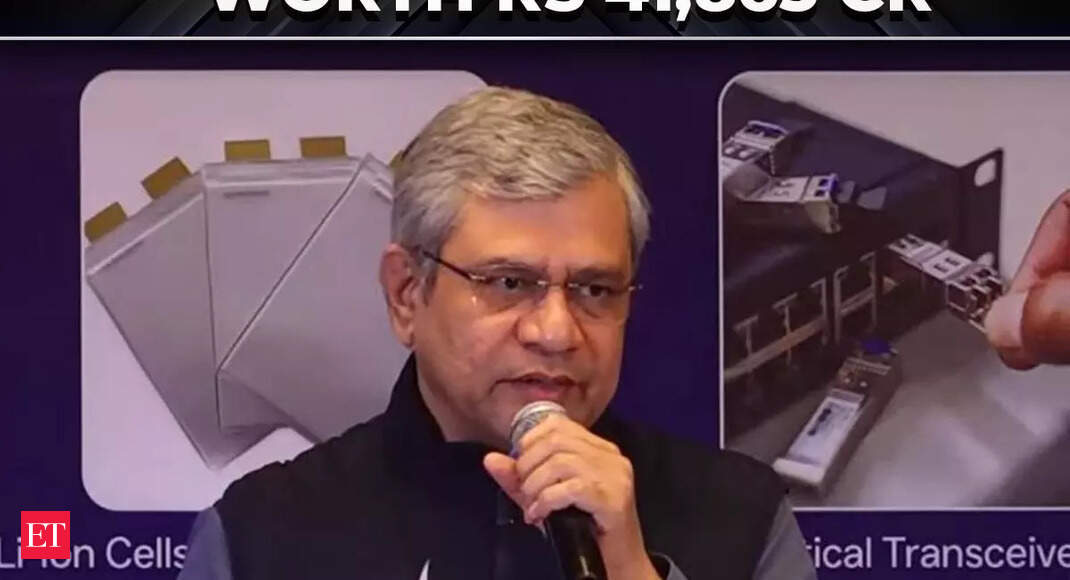
The Ministry of Electronics and Information Technology announced on 2 January 2026 that it has approved 22 new proposals under the Electronics Components Manufacturing Scheme (ECMS), representing a projected investment of ₹41,863 crore and expected production valued at ₹2,58,152 crore.
The approvals form the third tranche of sanctions under the ECMS, a central initiative intended to expand domestic production of electronic components, reduce import dependence and strengthen manufacturing supply chains. The ministry said the projects cover a range of component manufacturing and related assembly activity designed to serve both local demand and export markets.
India electronics manufacturing gains momentum
Union Minister for Electronics & IT, Railways and Information & Broadcasting Ashwini Vaishnaw welcomed the approvals and stressed the need to invest in design capability as well as production. He said the government must “build the design team first” and recommended establishing a common design facility in collaboration with a university or institute to make resources widely available for learning and commercial use.

Industry analysts say the emphasis on design is a pragmatic complement to manufacturing incentives. While capital and production capacity are central, local design teams and shared facilities can shorten product development cycles, enhance product quality and increase the value captured domestically from each device or component.
The ECMS approvals are expected to generate employment across manufacturing floors and in ancillary services, though the ministry has not yet released precise job-creation estimates for the new tranche. Government officials indicate that the scheme’s longer-term goals include import substitution for critical components, deeper participation in global value chains and enhanced export competitiveness.
India’s continued policy support for electronics manufacturing aligns with broader industrial objectives. Measures such as fiscal incentives, infrastructure support and campus facilities for research and development are being used to attract domestic entrepreneurs and foreign investment into component fabrication, testing and design services.
Experts caution that realising the scheme’s full potential will require steady implementation and closer industry-academia collaboration. The proposal for a shared design facility reflects that concern, offering a cost-efficient route for smaller firms and start-ups to access advanced tools and talent without the upfront burden of building their own laboratories.
For suppliers and original equipment manufacturers, the new projects offer prospects for more reliable local sourcing and shorter lead times. For policy-makers, the approvals provide tangible evidence that the ECMS is moving beyond planning into execution, with measurable commitments in capital and expected production outputs.
As the ECMS progresses through subsequent tranches, attention will turn to how quickly new plants reach commercial production and whether design investments translate into home-grown product development. For now, the third batch of approvals marks a substantive step in India’s effort to expand electronics manufacturing capability and capture greater value across the sector.
Key Takeaways:
- India electronics manufacturing receives a boost with 22 ECMS approvals totalling ₹41,863 crore in investment.
- Projected production from the new projects is ₹2,58,152 crore, supporting domestic supply chains and exports.
- Union minister Ashwini Vaishnaw called for a common design facility with universities to build local design capacity.
- The approvals form the third tranche under ECMS, aligning with India’s push for higher-value electronics production.








