











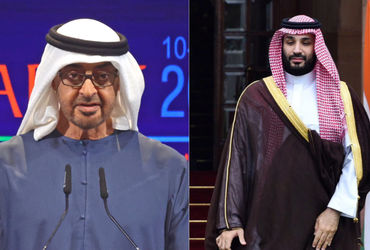
Saudi Arabia and the United Arab Emirates have shifted from a clear senior-junior relationship to one of close competition, yet open conflict remains unlikely. Both are wealthy, oil-producing states that now compete across economics, influence and regional strategy. Their relationship is better described as competitive coexistence than rupture.
Saudi UAE competition shapes Gulf policy
For decades Saudi Arabia was the dominant power in the Gulf, backed by size, population, religious authority and vast hydrocarbon revenues. The UAE long played an active but auxiliary role. That balance has changed as the UAE’s cities have become global hubs for finance, technology and tourism. Dubai and Abu Dhabi now offer proven models of economic diversification that Riyadh seeks to emulate through its Vision 2030 reforms.
The shift matters because where national interests and spheres of influence overlap, rivalry is inevitable. The competition is emerging in markets, investment flows and soft power, not necessarily on battlefields. Both capitals understand that stability and foreign direct investment are vital to their modernisation plans, which moderates the risk of escalation.

Differences in military and diplomatic tactics have made the split visible. In Yemen, Riyadh focused on direct border security and state-centred stabilisation. The UAE emphasised maritime security, control of ports and partnerships with local actors. As the UAE reduced its direct combat role, it signalled an independent approach to securing trade routes and projecting influence across the Red Sea and eastern Africa.
That independent streak extends beyond the Horn of Africa. The UAE has invested heavily in African ports and logistics, combining defence partnerships with commercial projects. Saudi Arabia remains influential, but it now faces a peer that can operate across multiple domains with agility.
Economic rivalry is the central theatre. Saudi Vision 2030 is ambitious, aiming to diversify the economy away from oil through mega projects and social reform. The UAE, by contrast, has already built many of the institutions and services that attract global capital and talent. Competition plays out in sectors such as tourism, real estate, logistics and sovereign investment.
External partners view the two countries differently, which adds a further dynamic. The UAE is often seen as a nimble, technology-friendly partner. Saudi Arabia is treated as strategically vital and commercially promising, but sometimes more complex for foreign investors. Initiatives such as I2U2, which include the UAE, illustrate how partners choose one Gulf actor over another depending on policy fit.
Looking ahead, a direct military clash between Riyadh and Abu Dhabi is unlikely. The main risks are economic competition, diplomatic manoeuvring in third countries and rivalry for regional influence. States such as Pakistan may seek to benefit from both sides, while Western powers and Asian partners will continue to balance relationships according to commercial and strategic interests.
Ultimately, the Gulf is becoming multipolar within the region. Saudi Arabia and the UAE will continue to compete, cooperate when interests align and calibrate their strategies to avoid costly miscalculations. For outside partners such as India, maintaining clear, long-term relations with both states remains the pragmatic course.
The evolving dynamic between Riyadh and Abu Dhabi is a reminder that modern geopolitics often involves rivalry without enmity. Both countries are jockeying for influence while recognising the mutual benefits of stability and investment.
Key Takeaways:
- Saudi Arabia and the UAE are competitors but not enemies, with both pursuing economic influence and regional security.
- Differences surfaced in Yemen and overseas strategy, highlighting distinct approaches to power projection.
- Economic rivalry centres on investment, tourism and logistics as Saudi Vision 2030 meets the UAE’s established model.
- Future risks are political and economic, not military, so stable diplomatic engagement remains essential.








