











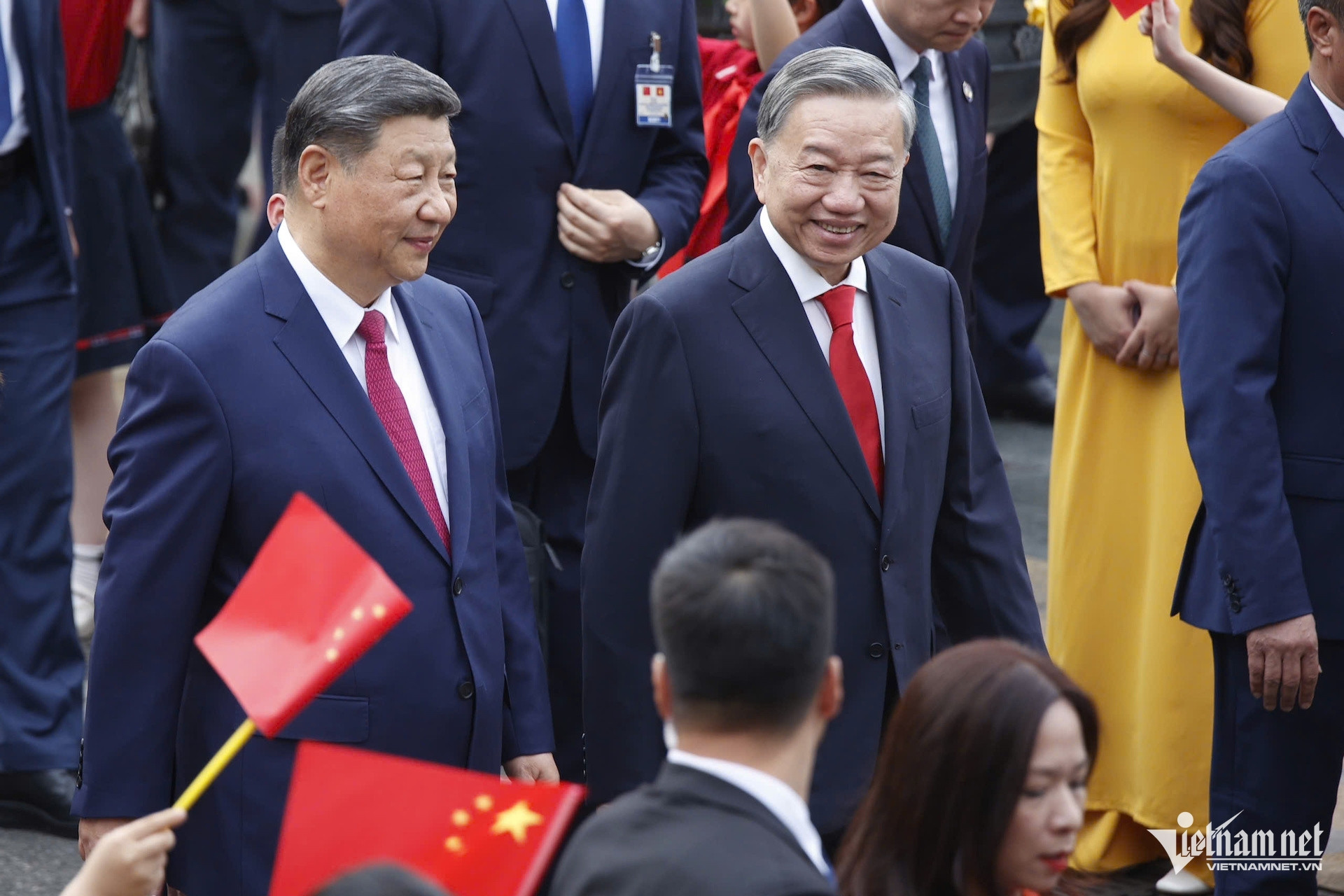
China and Vietnam have moved into what senior diplomats describe as a “second golden age” of bilateral friendship, marked by intensive high-level contact, record trade and expanding cooperation across politics, defence, technology and culture.
China Vietnam relations, milestones and new mechanisms
The year saw an unusually high tempo of state engagement. Chinese General Secretary and President Xi Jinping made a state visit to Vietnam in April 2025 that officials called historic. The visit produced a record 45 signed cooperation documents, reflecting breadth rather than tokenism. Chinese Ambassador Ha Vi said many of the agreements were so numerous that ceremony protocol was adapted so units signed early and the documents were displayed publicly for leaders to review.
High-level exchanges continued through the summer and autumn. Within one week spanning late August and early September, three senior delegations travelled between the two capitals. Among them were visits by China’s top parliamentary official and by President Luong Cuong, while Vietnam’s prime minister attended the Shanghai Cooperation Organisation summit.

These visits were accompanied by new institutional links. For the first time, a joint parliamentary cooperation committee met with the National People’s Congress. A unique 3+3 strategic dialogue covering diplomacy, defence and security was elevated to ministerial level, a mechanism that now appears central to bilateral crisis management and planning.
Economic ties deepened substantially. Bilateral trade in the first 11 months surpassed last year’s total, reaching over $250 billion, and traffic at the Huu Nghi border crossing exceeded one million vehicle crossings for the first time. Chinese firms led new-investment flows into Vietnam, often citing advanced technologies and green projects as reasons to prioritise Vietnamese projects.
Agricultural trade remains a cornerstone. China is the largest market for Vietnamese farm and seafood products and now takes more than 60% of Vietnam’s fruit and vegetable exports. Durian exports to China alone reached about $3.4 billion this year, more than 90% of Vietnam’s durian export value.
Connectivity improvements were tangible. Three standard-gauge railway projects in northern Vietnam moved forward, and a waste-to-energy plant at Soc Son began feeding power into local grids. Cross-border practicalities also eased: compatibility of QR payment codes from both countries was achieved in December, which diplomats expect to boost tourism and retail services.
Defence and security cooperation expanded into new areas. The two armies staged their first joint land training and Chinese honour guards took part in major commemorative parades in Vietnam. Cultural and educational exchanges surged as well: over 20,000 Vietnamese students went to study in China in 2024, and HSK test-takers from Vietnam exceeded 138,000, the highest worldwide.
People-to-people ties are being emphasised as the foundation of the relationship. Events such as youth friendship meetings, a people’s forum, restoration of Ho Chi Minh sites in China and the unveiling of a memorial to Chinese military experts in Hanoi show that historical and cultural links remain politically salient.
Ambassador Ha Vi summed up the year with three words: scale, substance and innovation. He said China will continue to support Vietnam’s domestic development and exchange experience in governance while focusing Chinese investment on green and high-tech sectors, including areas related to artificial intelligence.
As both countries look ahead, officials portray the deepening partnership as mutually beneficial and stabilising for the region. With concrete projects under way and new mechanisms in place, Beijing and Hanoi appear intent on translating political goodwill into lasting economic and social ties.
Key Takeaways:
- China Vietnam relations have strengthened with historic state visits and a record 45 cooperation agreements signed.
- Trade topped a new high, exceeding $250 billion in 11 months, while infrastructure and technology ties expanded.
- New political and defence mechanisms were launched and people-to-people exchanges intensified, boosting tourism and education.








