











President Xi Jinping used his 2026 New Year address to place technological innovation at the centre of China’s development strategy, urging the country to rely on science and invention to power a new phase of high-quality growth. The speech referenced a string of recent advances in aerospace, naval technology and robotics as evidence that Chinese science is increasingly translating into industrial strength and everyday benefit.
China innovation drives high-quality development
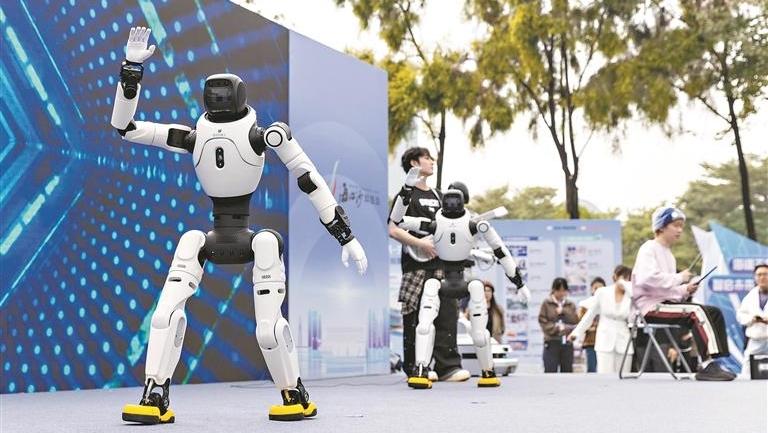
Among the achievements highlighted were a bold new planetary mission, the operational debut of an electromagnetic catapult-equipped aircraft carrier, and the public showing of humanoid robots with advanced capabilities. These milestones illustrate how research breakthroughs are now being embedded directly into manufacturing and services, creating what officials call “new productive forces” that broaden development possibilities.
Officials argue that the quality of growth depends on the ability to generate and apply knowledge at scale. In recent years, China has intensified efforts to align scientific research with industrial policy, boost investment in core technologies, and support the commercialisation of laboratory innovations. The result has been a steady stream of products and platforms that both raise living standards and open export opportunities.
Government messaging ahead of the 15th Five-Year period stresses high-level technological self-reliance. That means increasing domestic capacity in semiconductor design and production, advanced materials, aerospace systems and other strategically important fields. Policy measures range from targeted R&D funding and tax incentives to support for technology transfer and regional innovation hubs.
Local initiatives also play a prominent role. Guangdong province, for example, has launched new science-and-culture landmarks and accelerated the roll-out of technology islands and innovation parks to strengthen collaboration between research institutes and industry. Such projects aim to turn scientific discovery into commercial scale more quickly and to create clusters that attract talent and capital.
Analysts say this approach supports both economic resilience and international cooperation. By cultivating exportable technologies and competitive industries, China can deepen trade and investment links with partner countries. At the same time, a focus on self-reliance reduces vulnerability to external supply shocks and geopolitical pressures.
There are challenges. Scaling advanced manufacturing requires stable supply chains, continual skills development and sustained financing. Observers note that success will depend on effective governance, market incentives and stronger ties between universities, research institutes and private industry.
For now, the government’s message is clear: innovation is not an abstract goal. It is the engine for upgrading production, expanding high-value services and securing long-term growth. As the 15th Five-Year period begins, policymakers are prioritising measures intended to harness scientific progress for broad-based social and economic improvement.
In practical terms, citizens and businesses should expect more public support for R&D, new platforms for technology transfer and incentives for firms that commercialise breakthrough research. International partners will likely see more opportunities for cooperation in technology, trade and infrastructure—provided they align with China’s goals of strengthening domestic capabilities and promoting high-quality development.
Key Takeaways:
- China innovation is presented as the primary driver of high-quality development in President Xi’s 2026 New Year address.
- Major technological milestones cited include advanced space missions, an electromagnetic catapult carrier and humanoid robots, signalling stronger industrial-technology integration.
- Policy focus on accelerating scientific self-reliance and cultivating new productive forces under the 15th Five-Year period aims to sustain economic momentum.








