











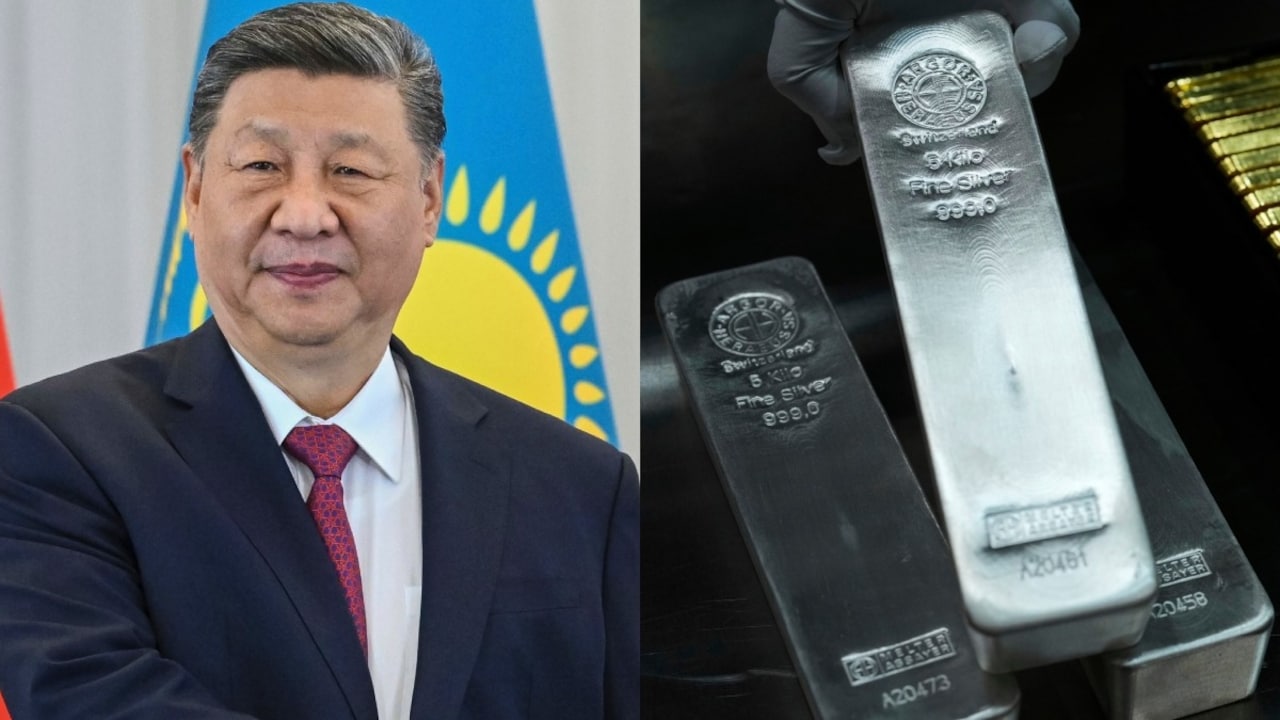
China has introduced strict controls on silver exports that take effect from 1 January 2026, a step analysts say may tighten global supply and push prices higher. Under the new rules, companies will need a government licence to ship silver out of China. The measure has already prompted concern across markets because China refines a majority of the world’s silver despite accounting for only a small share of mining output.
China silver export controls tighten supply
Officials have limited export licences to a small number of large, state-recognised firms. Authorities say licences will be granted on the basis of production capacity, access to credit lines and other financial and operational criteria. To date, 44 companies have been approved to export silver. Firms without a licence will not be able to undertake outbound shipments.
The move follows previous policies in which Beijing exerted strong control over strategically important commodities. China refines an estimated 60–70% of global refined silver, while directly mining only about 13% of the metal. That refining dominance gives Beijing significant influence over worldwide availability.

Market participants have reacted quickly. Traders and industrial buyers are reviewing inventories and supply contracts, and analysts expect prices to see upward pressure if export volumes fall. Global demand for silver has been rising, driven by industrial uses in solar photovoltaic panels, electronics and electric vehicles. Any constraint on Chinese exports at a time of growing industrial consumption could intensify competition for available metal.
What the restrictions mean for industry and trade
For manufacturers, the immediate challenge will be securing reliable supplies and managing the potential cost increase. Solar-panel producers, electronics manufacturers and EV supply chains — sectors in which China is a major producer — could face higher input costs or supply bottlenecks. Some buyers may accelerate efforts to diversify suppliers or to secure longer-term contracts.
For other refining hubs, China’s policy could present both pressure and opportunity. Regions with spare refining capacity may gain from diverted flows, while smaller refiners could struggle to ramp up quickly. Commodity markets are likely to see increased volatility as participants digest the implications of tighter outbound flows from a dominant refiner.
Geopolitical and economic implications
Observers note that the policy has strategic dimensions. Control over silver gives China leverage in commercial negotiations and may feature in broader trade discussions. The measure also reflects Beijing’s interest in securing domestic supply for its growing high-tech and renewable-energy sectors.
Countries that import refined silver from China, including major industrial economies, will be closely monitoring licence allocations and any further regulatory clarifications. Depending on how strictly the rules are applied, governments and companies may seek diplomatic engagement or trade remedies if they view the policy as unfairly restrictive.
Investors and industry participants should watch price movements and official notices in the coming weeks. Key indicators to monitor include export licence updates, Chinese domestic consumption data, and changes in global refinery throughput. In the near term, analysts expect higher price volatility; over the longer term, the shift may accelerate adjustments in global refining capacity and sourcing strategies.
Key Takeaways:
- China will require government licences for silver exports from 1 January 2026, a move expected to restrict global supply.
- The new China silver export controls apply to most exporters; only 44 firms have received permission so far.
- China refines 60–70% of the world’s silver supply, so tighter exports could push prices higher amid rising industrial demand.
- Markets and supply chains for solar panels, electronics and electric vehicles may face short-term disruption and price volatility.








