











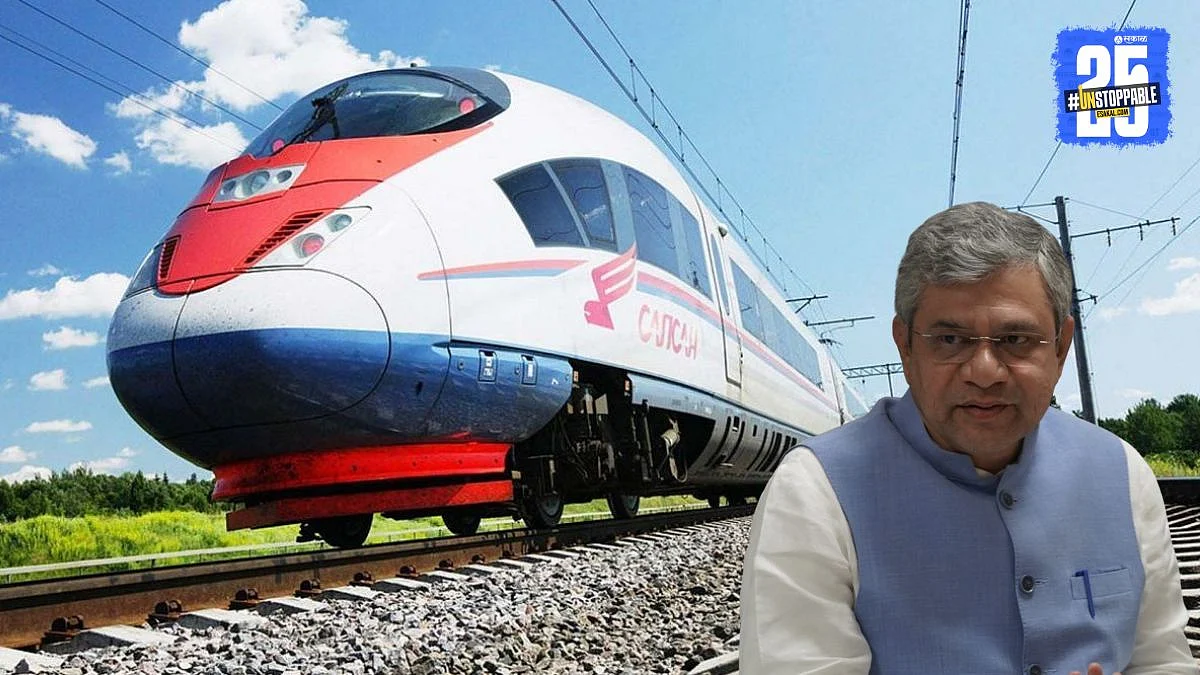
Railway Minister Ashwini Vaishnaw announced on New Year’s Day that India’s first high-speed bullet train is scheduled to begin operations on 15 August 2027. Speaking with a touch of humour, he told commuters to start booking tickets now if they want to travel on Independence Day. The confirmation sets a firm target for one of the country’s most ambitious transport projects.
India bullet train route, speeds and timelines
The Ahmedabad–Mumbai high-speed corridor will span approximately 508 kilometres and is expected to cut travel time between the two metropolitan centres to around two hours and 17 minutes once complete. In its initial phase, the service will operate between Surat and Vapi over roughly 100 kilometres. The National High-Speed Rail Corporation Ltd (NHSRCL), in collaboration with Japanese partners, is leading the construction and systems integration for the scheme.
Officials say that roughly 55 per cent of the overall project has been completed to date. Of the 508 kilometres, about 465 kilometres will be on elevated viaducts, and some 326 kilometres of those elevated structures are already finished. The corridor will include 12 stations, serving Ahmedabad, Vadodara, Bharuch, Surat, Vapi, Thane and Mumbai among others. Geographically, around 352 kilometres of the route lie within Gujarat and about 156 kilometres fall in Maharashtra, including the stretch approaching Mumbai.

When operational, the high-speed link is expected to shift passenger patterns on the western corridor, easing demand on existing rail and road links and delivering a rapid connection for business and leisure travellers. The faster journey time between Ahmedabad and Mumbai should make day trips and tighter business schedules far more feasible, while offering a modern alternative to air and conventional rail travel.
Progress, construction and partnerships
The project has advanced in stages, with significant civil works complete on viaducts and station structures. Prime Minister Narendra Modi conducted a site review in Surat last November, underscoring the central government’s continuing engagement. NHSRCL’s partnership with Japanese firms has provided technical know-how, rolling stock design and signalling systems based on proven high-speed rail practices.
Engineers face the usual complexities of a project of this scale: land acquisition, utility relocation, last-mile connectivity and integration with existing urban transport networks at terminal stations. Authorities have concentrated on elevated alignments to reduce land use and minimise disruption through densely populated areas.
Economic and regional impact
Beyond travel time savings, the India bullet train project is likely to generate jobs during construction and spur economic activity along the corridor, from supply chains to hospitality and logistics. Improved connectivity between Ahmedabad and Mumbai may also encourage new investments, strengthen regional supply chains and bolster tourism in cities along the route.
The announcement of a concrete launch date provides clarity for planners, businesses and prospective passengers. While operational readiness will depend on successful completion of testing, commissioning and safety validations, the 15 August 2027 target gives policymakers a clear timeframe to coordinate complementary infrastructure such as station access, feeder services and urban transport links.
Officials also signalled related changes affecting road travel: new Fastag rules come into force from 1 February, a measure the government says will ease traffic management and toll operations across highways. Taken together, these moves form part of a broader push to modernise India’s transport networks and improve inter-city connectivity.
Key Takeaways:
- Railway Minister Ashwini Vaishnaw announced the India bullet train will start operations on 15 August 2027.
- The Ahmedabad–Mumbai high-speed corridor will cover 508 kilometres and cut travel time to about two hours 17 minutes.
- First phase will see the train run between Surat and Vapi over approximately 100 kilometres; overall project is about 55 per cent complete.
- National High-Speed Rail Corporation Ltd with Japanese partners is delivering the project, which includes 12 stations and extensive elevated sections.








