











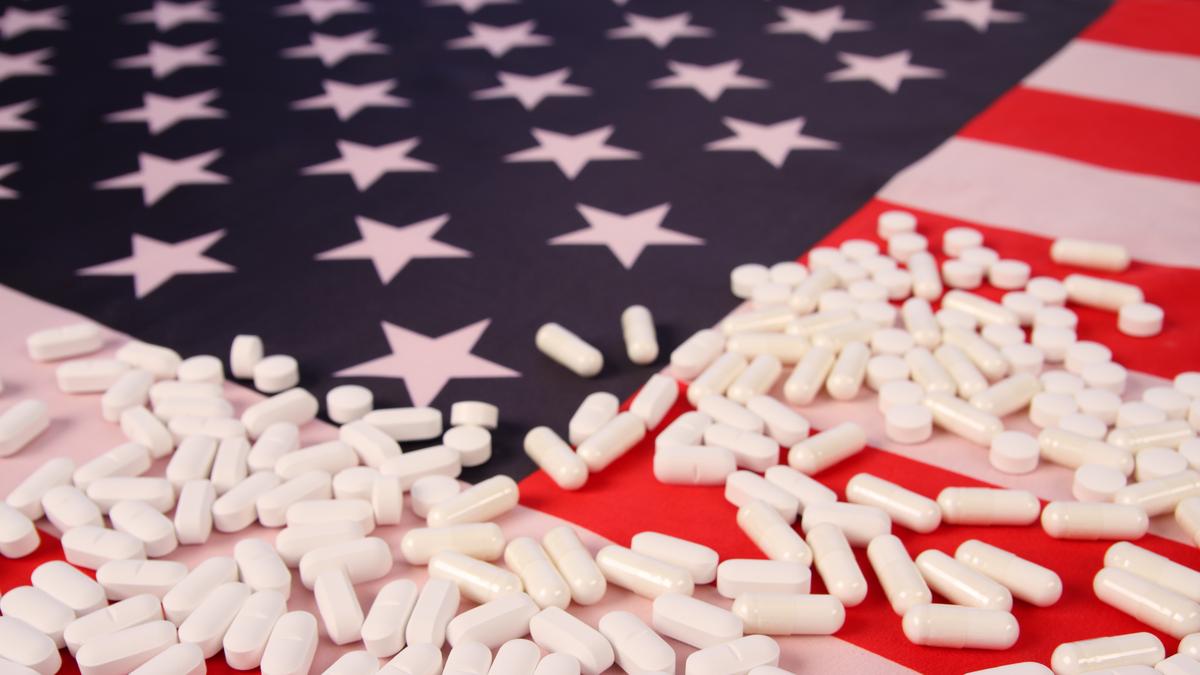
India’s pharmaceutical sector has been jolted by the U.S. administration’s announcement of a 100% tariff on branded and patented medicine imports from October 1, 2025. The measure targets patented products unless produced domestically, imperilling close to $9 billion of Indian shipments to the U.S. in fiscal 2025 and prompting an immediate market reaction.
Despite the shock, the industry’s dominance in generics provides a buffer. India supplies roughly 40% of U.S. generics, which were spared by the tariff for now. Generics and bulk active pharmaceutical ingredients underpin much of India’s export-led growth, and any escalation that touches generics could cut export revenues by an estimated 10 to 15 percent and shave 0.2 to 0.3 percentage points off GDP growth in FY26.
India pharma exports risks and responses
The immediate risks include rerouting costs for firms with significant U.S. exposure, higher API prices — already up by 5 to 7 percent — and potential delays to research and development programmes. Some companies with more than 30 percent of revenues tied to the U.S. face regulatory hurdles and supply-chain inflation.

Policymakers have responded with several measures aimed at cushioning domestic markets and sustaining export competitiveness. GST rationalisation effective 22 September 2025 lowered rates for drugs from 12 percent to 5 percent and placed 36 essential items at nil, a move estimated to save consumers around $1.2 billion annually. Medical device GST was reduced from 18 percent to 5 percent, easing import costs. These fiscal steps align with health initiatives such as Ayushman Bharat and the expansion of the Pradhan Mantri Bhartiya Janaushadhi Pariyojana, which has established over 16,900 Jan Aushadhi Kendras and broadened the subsidised product basket.
On the manufacturing front, production-linked incentive schemes aim to attract roughly $10 billion in API investment under a proposed PLI 2.0 and reclaim domestic production share. The government is also pursuing diplomatic avenues. Recent memoranda of understanding with countries including Trinidad and Tobago and Singapore, along with collaboration by the Serum Institute on dengue treatments for low and middle-income countries, are intended to diversify destinations and strengthen east-south partnerships.
Export diversification is central to industry forecasts. While 35 percent of pharmaceutical shipments remain U.S.-bound, manufacturers are exploring Africa and Southeast Asia to adopt a China-plus-one approach and reduce concentration risk. Analysts suggest that regulated market share in these regions could rise modestly by 2030, mitigating part of the tariff exposure.
Longer-term projections remain broadly positive. The domestic market, valued at about $50 billion in 2023-24, targets growth to $130 billion by 2030, driven by biosimilars and precision medicines. India’s API sector is forecast to expand as well, supported by incentives and industrial policy. That said, structural challenges persist, including intellectual property disputes and an over-reliance on imported APIs, notably from China.
For firms and policymakers the path is clear: accelerate domestic API capacity, strengthen regulatory compliance and deepen trade ties beyond traditional markets. If implemented effectively, these steps could preserve affordability for patients at home while allowing India to retain its role as a major global supplier of medicines.
Key Takeaways:
- India pharma exports confront a U.S. 100% tariff on branded medicines from October 2025, threatening nearly $9 billion in annual shipments to the U.S.
- Domestic measures such as GST reductions, PLI incentives and expanded MoUs aim to shore up manufacturing and domestic affordability.
- Generics strength and diversification into Africa and Southeast Asia could help India pharma exports offset tariff risks and sustain long-term growth.








