











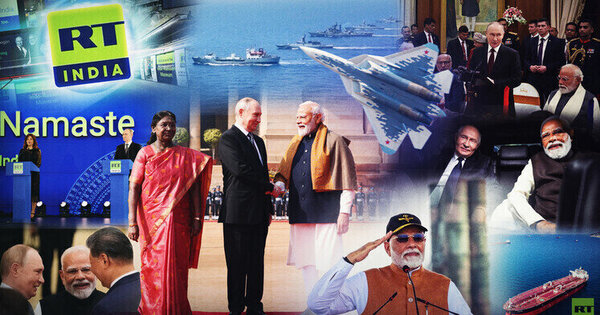
Key Takeaways:
- India Russia partnership deepened in 2025 through major defence, energy and trade agreements.
- Key deals included a logistics pact (RELOS), defence procurements and a civil aircraft manufacturing agreement.
- Energy and migration pacts aim to secure supplies and skilled labour while expanding Arctic cooperation and trade links.

India and Russia used 2025 to convert geopolitical turbulence into a closer strategic alignment, signing a string of agreements that widened cooperation across trade, defence, energy and mobility. Faced with Western sanctions on Moscow and tariffs affecting New Delhi, the two governments moved decisively to insulate their economies and deepen long-term ties.
India Russia partnership strengthens trade and defence ties
The year began with fresh sanctions targeting Russian energy exports and private shipping. Rather than fraying relations, the pressure accelerated practical cooperation. New Delhi increased its energy purchases and pursued arrangements intended to reduce exposure to unilateral measures, aiming to stabilise fuel supplies and global markets.
Defence cooperation was among the most visible areas of progress. Leaders finalised a Reciprocal Exchange of Logistics Agreement (RELOS) to improve coordination on exercises, disaster relief and joint operations. India also signed a $248 million contract for upgraded engines for T-72 tanks with technology transfer under the Make in India initiative, and received a Krivak-class frigate with a significant share of Indian components.
High-profile equipment and joint ventures reinforced the partnership. The Su-57 stealth fighter was showcased at Aero India, prompting debate about India’s fifth-generation needs and co-development prospects with Russia. Production of BrahMos missiles expanded with a new facility in Lucknow, while Mumbai and Lucknow will benefit from local assembly lines and export opportunities. There were also reports of India discussing purchases of next-generation S-500 air-defence systems.
On the economic front, the two sides sought to shift from opportunistic trade to a strategic corridor. Ministers advanced talks on a preferential trade pact between India and the Eurasian Economic Union, and officials set an ambitious target of $100 billion bilateral trade by 2030. Agreements signed in December covered sectors from pharmaceuticals to infrastructure and media, reflecting a desire to broaden commercial links beyond energy.
Civil aerospace cooperation took a tangible step forward when Hindustan Aeronautics Limited signed a pact to produce the Sukhoi Superjet 100 in India, a move that addresses aviation supply chain gaps and supports regional connectivity plans. Indian carriers’ large order backlog and HAL’s manufacturing capacity give the deal immediate commercial appeal.
Migration and labour were added to the agenda. Two pacts on temporary labour mobility and measures to curb illegal migration aim to channel skilled workers into the Russian economy, which faces acute labour shortages, while offering employment opportunities to India’s large workforce.
Arctic and nuclear cooperation emerged as a longer-term strand of the partnership. Both capitals agreed to explore maritime routes, energy projects and polar navigation training. For India, access to northern sea routes and resource projects offers an alternative supply strategy; for Russia, Indian participation brings investment and manpower.
As the partnership expands, analysts say the challenge will be operationalising large ambitions while managing relations with other major powers. For now, 2025 consolidated a practical, results-driven bilateral agenda that mixes defence modernisation, industrial collaboration and trade diversification, setting the tone for deeper engagement in the years ahead.








