











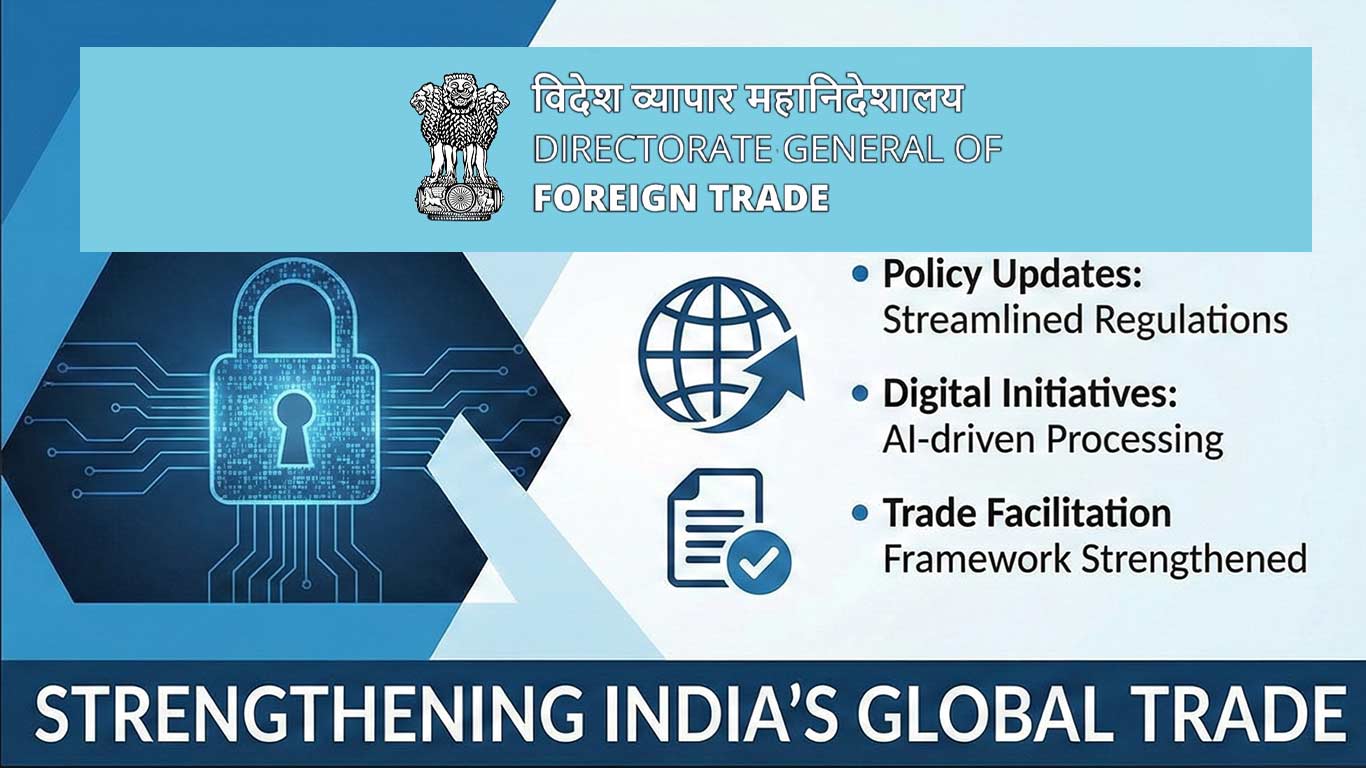
New Delhi, 1 January 2026 — The Directorate General of Foreign Trade (DGFT) closed 2025 with a series of policy amendments and digital initiatives designed to strengthen India’s trade facilitation framework and ease compliance for exporters.
India trade facilitation strengthened through policy and digital reforms
Over the year DGFT moved to align the Foreign Trade Policy 2023 with evolving domestic and international trade needs, simplifying authorisation processes and rationalising regulatory measures. Notably, the introduction of Paras 1.07A and 1.07B formalises stakeholder consultations for future policy changes, a step aimed at increasing transparency and predictability in trade policymaking.
DGFT also issued notifications to update India’s Import and Export Policy Schedules in line with amendments from the Customs Tariff and Finance Acts of 2024 and 2025. In tandem, benefits under the Remission of Duties and Taxes on Exported Products (RoDTEP) scheme were restored and aligned for Advance Authorisation holders, Special Economic Zones and Export Oriented Units, creating a more consistent regulatory environment for exporters.

Sector measures and export support
The office introduced several sector-specific interventions to support domestic stability and key industries. The Diamond Imprest Authorisation was launched to support the gems and jewellery sector, while a continued ‘free’ import policy for essential pulses aimed to stabilise supplies. Regulatory adjustments were also applied to synthetic knitted fabrics, urea, platinum and selected sensitive food items.
On the external trade front, DGFT permitted wheat exports to Nepal and broken rice shipments to Senegal, and facilitated essential commodity supplies to the Maldives, reflecting India’s immediate neighbourhood priorities and broader trade diplomacy objectives.
Quality compliance and streamlined obligations
To improve compliance, DGFT rationalised the export obligation period for Advance Authorisations involving inputs covered by Quality Control Orders, aligning these with regular authorisations and removing the previous 180-day restriction. The change is expected to ease administrative burdens on exporters and encourage adherence to quality standards without undue timing pressures.
Digital platforms to reduce time and boost visibility
Digital reform remained central. The DGFT introduced an online redemption facility for EPCG licences and a digital mechanism allowing exporters to rectify unutilised duty‑free import authorisations. The Trade Connect ePlatform’s Source from India directory was expanded to include exporters with a minimum turnover of USD 100,000 in any of the previous three financial years, broadening market visibility for suppliers.
Perhaps the most notable technological step was the pilot phase launch of the Bharat Aayat Niryat Lab Setu, a unified digital platform that integrates accredited testing and inspection agencies. The platform is intended to provide real‑time visibility of laboratory services, reduce dwell times at ports and testing centres, and improve transparency across the export chain.
Taken together, the measures aim to make procedures more predictable, reduce compliance friction and enhance market access for Indian exporters. Analysts say the reforms should help small and medium exporters benefit from greater visibility and fewer administrative delays while supporting India’s trade commitments to neighbouring countries and global partners.
Key Takeaways:
- DGFT finalised policy and digital reforms in 2025 to improve India trade facilitation and ease of doing business for exporters.
- Paras 1.07A and 1.07B institutionalise stakeholder consultations, increasing policy transparency and predictability.
- Sector measures and restored RoDTEP support exporters; export relaxations aided neighbouring countries.
- Digital platforms including an online EPCG redemption, expanded Trade Connect directory and the Bharat Aayat Niryat Lab Setu pilot aim to cut dwell time and boost market visibility.








