











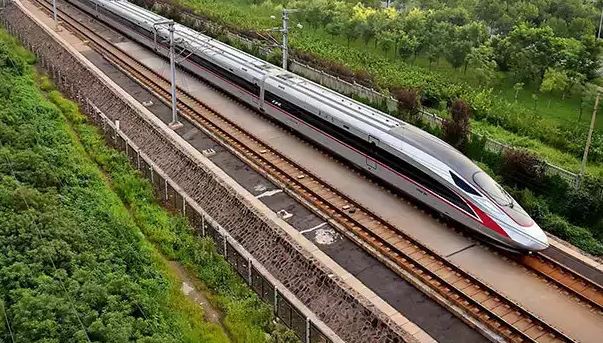
India is on course to start its first high-speed rail service on 15 August 2027, Union Railways Minister Ashwini Vaishnaw said on Thursday, bringing renewed attention to the Mumbai–Ahmedabad bullet train project. The announcement sets a clear target for the country’s maiden bullet train, which spans roughly 508 kilometres and is being developed with Japanese technical collaboration.
India bullet train progress and timetable
According to the Railways Ministry, the first operational stretch will run from Surat to Bilimora, followed by the Vapi to Surat section. Minister Vaishnaw said these initial segments will open ahead of the full corridor, offering an early demonstration of high-speed services and allowing phased commissioning. The government has framed the timeline as part of a broader push to modernise the rail network and shorten long-distance travel times.
Political leaders welcomed the announcement. JD(U) spokesperson Rajeev Ranjan Prasad urged that the project be seen beyond partisan debate, arguing that transformative infrastructure — like space missions — can benefit ordinary citizens. Shiv Sena leader Shaina NC described the launch as a moment of national pride and highlighted the transfer of technology from Japan as a key advantage for commuters and the economy.

Officials say the collaboration with Japan brings world-class high-speed rail technology and expertise to India. The Mumbai–Ahmedabad corridor has been advanced as a flagship project, combining elevated tracks, tunnels and purpose-built stations to support trains at significantly higher speeds than India’s conventional services.
Beyond the engineering feat, proponents argue the project will have concrete economic benefits. Reduced journey times between major urban centres are expected to ease business travel, improve connectivity for commuters and stimulate investment in cities and towns along the corridor. Supporters also point to employment during construction and potential uplift for regional supply chains.
While the timeline is ambitious, authorities will need to complete testing, safety certifications and trial runs before passenger services begin. Phased openings, starting with shorter sections, are a standard approach to validate systems and train operations without waiting for full corridor completion.
Local reactions reflect a mixture of optimism and pragmatic expectations. Supporters highlight national prestige and long-term gains, while observers note the challenge of meeting deadlines on complex projects. For now, the 15 August 2027 target gives ministries, contractors and partners a shared deadline to coordinate final construction, testing and commissioning activities.
The Mumbai–Ahmedabad bullet train stands as one of India’s most visible infrastructure partnerships with Japan, and the projected launch signals the government’s continued emphasis on large-scale transport modernisation. If delivered on schedule, the service will mark a significant step in offering high-speed connectivity in India and demonstrate the country’s capacity to deploy advanced rail technology at scale.
As the project moves into its final phases, public and private stakeholders will be watching the next milestones closely: completion of civil works, systems integration, safety approval and trial operations. Each successful step will not only bring the country closer to the inaugural service but also test India’s ability to operate and maintain world-class high-speed rail over the long term.
Key Takeaways:
- India bullet train service on the 508 km Mumbai–Ahmedabad corridor is expected to begin on 15 August 2027.
- First operational segments will open between Surat–Bilimora and Vapi–Surat, according to Railways Minister Ashwini Vaishnaw.
- The project, developed in collaboration with Japan, aims to cut travel times and stimulate economic activity along the route.
- Political leaders across parties praised the initiative as a major development milestone and matter of national pride.








