











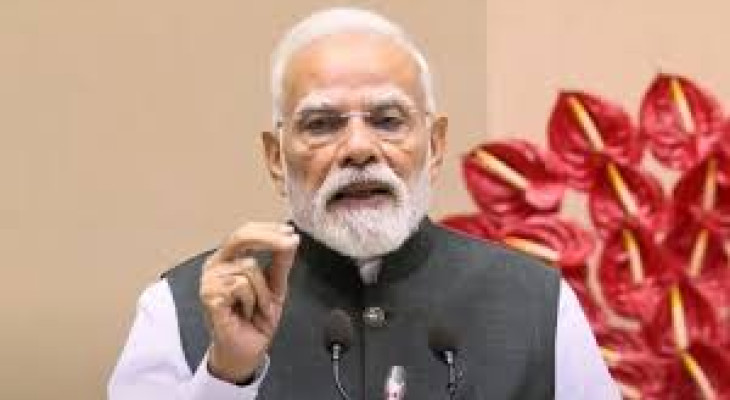
Prime Minister Narendra Modi has urged policymakers to ensure that India’s budgeting and policy decisions remain firmly aligned with the country’s long-term aim of becoming a developed nation by 2047. Speaking on 30 December at an interaction with leading economists convened by NITI Aayog in New Delhi, Mr Modi described the vision for 2047 as a mass aspiration that extends beyond government policy and requires sustained institutional effort.
India Vision 2047 Drives Policy and Budget Choices
Addressing the gathering under the theme ‘Aatmanirbharta and Structural Transformation: Agenda for Viksit Bharat’, the prime minister said evolving patterns in education, consumption and global mobility underline the need for proactive infrastructure planning and enhanced institutional capacity. He argued that fiscal choices must reflect this long-term horizon so that successive budgets cumulatively build the foundations for a developed India.
During the session Mr Modi emphasised the importance of structural transformation achieved through higher household savings, concerted infrastructure investment and a faster adoption of technology. He said mission-mode reforms are necessary to build global capacities and to integrate the Indian economy more deeply into global value chains.

The discussion also touched on digital and technological adoption, including artificial intelligence, as an enabler of productivity gains and service delivery. The prime minister urged that regulatory and policy frameworks be adapted to harness these technologies while ensuring safeguards and scalability.
Mr Modi first set out the broad contours of a Viksit Bharat in his Independence Day address in 2021. At the NITI Aayog interaction he reiterated that the vision has now become part of popular aspiration, shifting expectations across society and influencing investment and skill choices among citizens.
In a parallel intervention on social media, Mr Modi posted on LinkedIn under the banner “2025 – The Year of Reforms”. He outlined a series of policy measures introduced over the year, citing labour reforms, GST changes, FDI openings in insurance, securities market adjustments, and measures to boost the maritime and blue economy. The post also highlighted measures intended to bolster the middle class, improve ease of doing business and support small and medium enterprises.
Analysts say anchoring budgets to a long-term vision can improve policy coherence, reduce stop-start investment cycles and signal to markets and international partners that India is committed to a steady reform trajectory. For investors the emphasis on infrastructure, household savings and technology provides a clearer template for identifying long-duration opportunities.
Yet the prime minister’s call poses practical challenges. Aligning annual budgeting with a 25-year horizon requires stronger multi-year capital planning, better project preparation and a sharper focus on implementation capacity at the subnational level. It also demands consistent monitoring and the political will to sustain reforms across electoral cycles.
For now, the government appears to be pursuing that path: recent reforms and targeted spending priorities suggest an attempt to link short-term policy moves with longer-term goals. If sustained, the approach could reframe fiscal debates and accelerate India’s march towards the aims set out in India Vision 2047.
Key Takeaways:
- Prime Minister Narendra Modi told top economists that policymaking and budgeting must align with India Vision 2047.
- He linked the goal of a developed India to changes in education, consumption and global mobility and called for stronger institutions and infrastructure planning.
- Discussions highlighted household savings, infrastructure development and technology adoption, including AI, alongside mission-mode reforms.








