











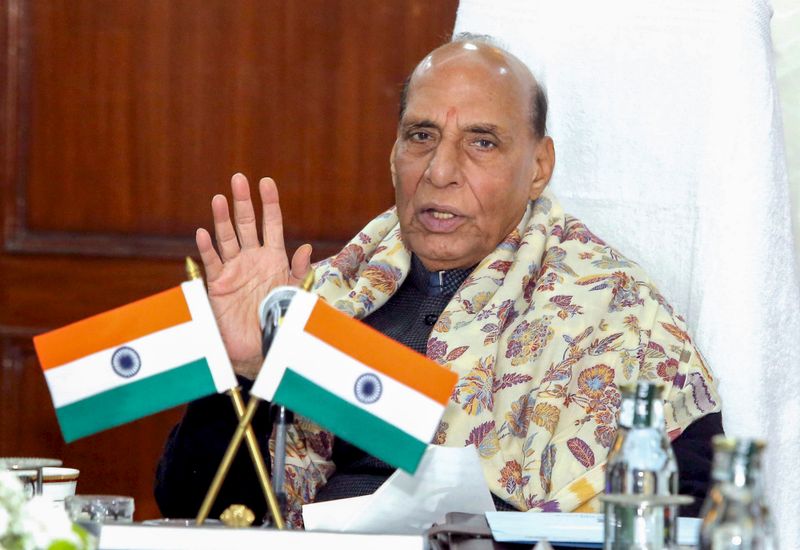
Defence Minister Rajnath Singh has sounded the alarm over what he described as an emerging trend of white-collar terrorism in India, warning that well-educated individuals are increasingly being drawn into anti-social and anti-national activities. Speaking at the 104th foundation day of Bhupal Nobles’ University, Singh referenced the November 10 car bomb near Delhi’s Red Fort, noting the perpetrators included qualified medical professionals.
White-collar terrorism in India and the response
Singh used the Red Fort case to argue that knowledge without values can be dangerous. “Those who write ‘Rx’ on prescriptions can still have RDX in their hands,” he said, urging a greater emphasis on morality and character alongside professional training. He stressed that education should aim not only for professional success but also the development of ethics and human character.
The minister warned that terrorists are not necessarily illiterate and that university and college degrees do not guarantee moral judgement. He called for an education system that imparts humility, a sense of duty and ‘dharma’, arguing that ignoring these elements can leave society vulnerable and, at times, even facilitate criminal behaviour.

Beyond his concerns about security, Singh praised India’s defence startups for their contributions to national capability. He expressed confidence that the country can achieve full self-reliance in weapon systems within 15 to 20 years, pointing to the innovation already visible in the domestic defence sector.
Singh also highlighted the role of emerging technologies. He said artificial intelligence, machine learning and related advances are transforming lives and work, and urged that they be harnessed constructively to drive India’s development. His remarks linked the technological ambitions of the country with the need for ethical frameworks to guide their application.
The minister framed these themes within a broader economic outlook, noting that India is currently the world’s fourth-largest economy and is on track to become the third by 2030. He argued that universities must play a central role in this transition by teaching students how to think across disciplines and preparing them to address complex global challenges such as climate change, public health crises and digital ethics.
Singh also emphasised the delicate balance between self-respect and ego, urging students and professionals to cultivate humility. He urged universities to create environments that encourage multidisciplinary thinking, critical analysis and the integration of ethical instruction into technical courses.
The minister’s remarks underscore an evolving policy conversation in India that links national security, higher education and technological progress. Policymakers and academic leaders will face pressure to design curricula that combine technical competence with ethical instruction, while defence and technology sectors must continue to scale responsibly.
As India seeks to accelerate innovation and strengthen its strategic autonomy, the challenge will be to ensure that education and technological advancement proceed hand in hand with the cultivation of civic responsibility and moral judgement.
Key Takeaways:
- Defence Minister Rajnath Singh warns of rising white-collar terrorism in India, citing the Red Fort car bomb case.
- He urges education systems to pair technical knowledge with morality and character, advocating ethics in university curricula.
- Singh praises defence startups and calls for positive use of AI and machine learning to support India’s development.
- India’s economic rise places universities at the centre of multidisciplinary solutions to environmental, health and digital ethics challenges.








