











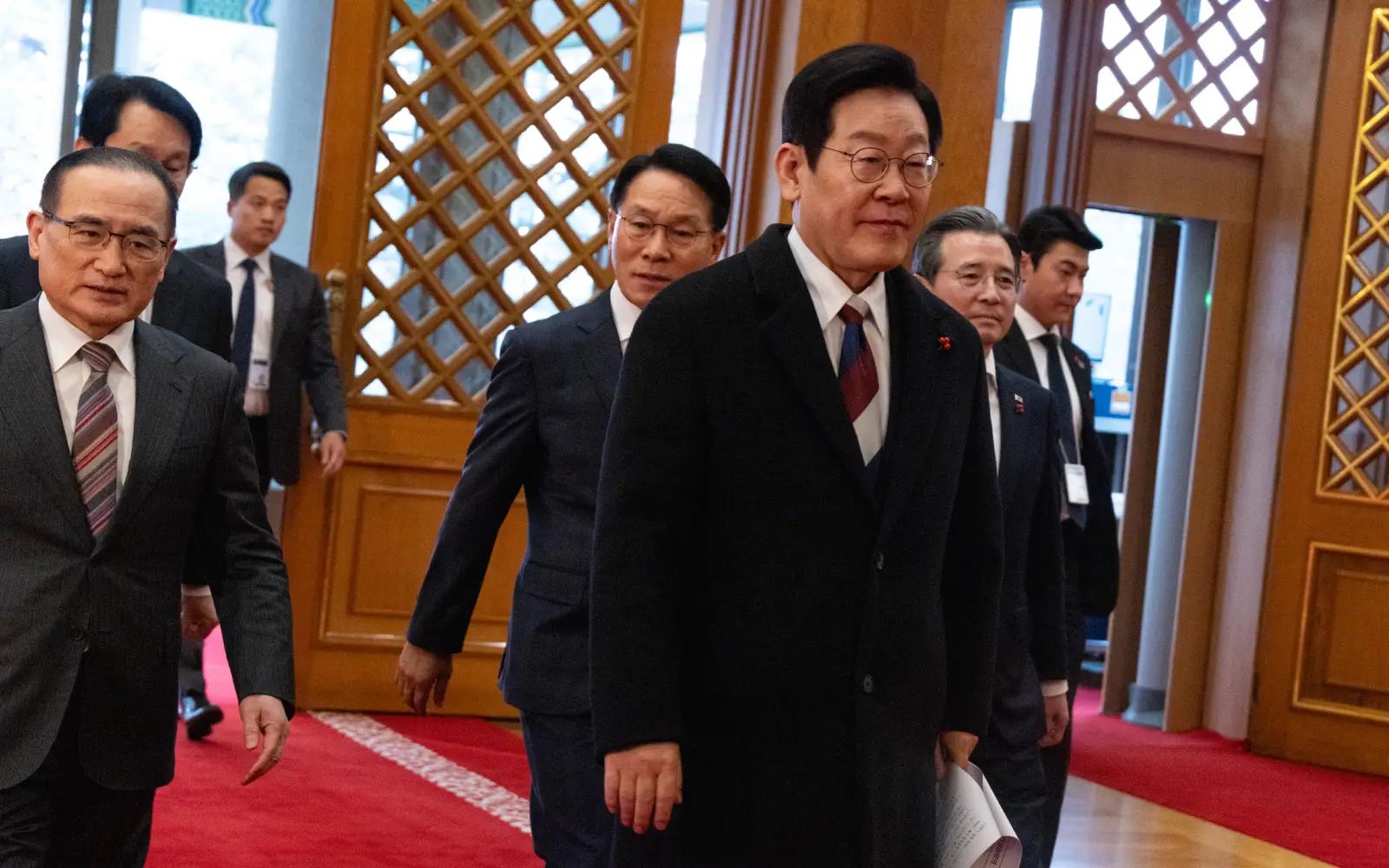
South Korean President Lee Jae Myung arrived in Beijing for a four-day visit intended to deepen economic cooperation with China while steering clear of volatile security flashpoints such as Taiwan. The trip, the first by a South Korean leader to China in six years, brings a high-powered delegation of business and technology executives as Seoul seeks more robust trade ties with its largest trading partner.
Lee is scheduled to meet Chinese President Xi Jinping and hold talks with Premier Li Qiang and other senior officials. The agenda places trade, chip supply chains and artificial intelligence collaboration at the forefront, reflecting Seoul’s interest in securing market access for key exporters while protecting supply lines for critical technology components.
South Korea China ties and the balance of economics and security
Lee has adopted a cautious diplomatic line on Taiwan, underlining a preference for de-escalation. Beijing conducted large-scale military drills around Taiwan less than a week before the trip, drawing international criticism. Seoul declined to join the chorus of condemnations and Lee has repeatedly said that taking sides would only exacerbate regional tensions.

Hours before his departure, South Korea’s military reported that North Korea fired a ballistic missile into the Sea of Japan, its first test this year. Seoul hopes to enlist China’s influence over Pyongyang to help revive dialogue and ease tensions on the peninsula. Officials see Beijing’s leverage as a potential asset in efforts to repair frayed inter-Korean relations.
The presidential delegation includes executives from Samsung, a leading memory chip producer whose components are vital to the growing AI industry, and Hyundai Motor Group, along with representatives from entertainment and gaming sectors. Lee wants to open new channels for investment and cooperation and to seek relief from an informal curtailment of South Korean pop culture in China that has affected entertainment exports for nearly a decade.
Chinese and South Korean officials have framed the visit as an opportunity to pursue “more horizontal and mutually beneficial” trade arrangements. For Seoul, the priorities are clear: safeguard exports, expand market access for technology firms and attract Chinese investment into startups and the broader economy. Lee will visit Shanghai to meet members of the South Korean business community and attend a start-up summit.
Analysts say Beijing is attentive to the shifting strategic environment in Northeast Asia, where trilateral cooperation among South Korea, the United States and Japan has gained momentum. Yet Lee’s approach points to a pragmatic balancing act: strengthening economic ties with China while maintaining the security relationship with the United States.
Whether the visit will yield concrete breakthroughs remains to be seen. Officials hope the summit with Xi and follow-up talks with economic ministers will produce commitments on trade facilitation, greater cooperation in AI and semiconductors, and a thaw in cultural barriers. For Seoul, the challenge is to translate diplomatic engagement into tangible economic gains without inflaming regional tensions.
Key Takeaways:
- President Lee travels to Beijing with a large business delegation to expand trade and AI supply-chain cooperation.
- Seoul aims to keep Taiwan tensions low while seeking Chinese support on North Korea and easing cultural trade barriers.
- Tech giants such as Samsung and Hyundai join talks focusing on chips, AI and bilateral investment.
- The trip balances economic opportunity with strategic caution amid recent Chinese military drills and a North Korean missile test.








