











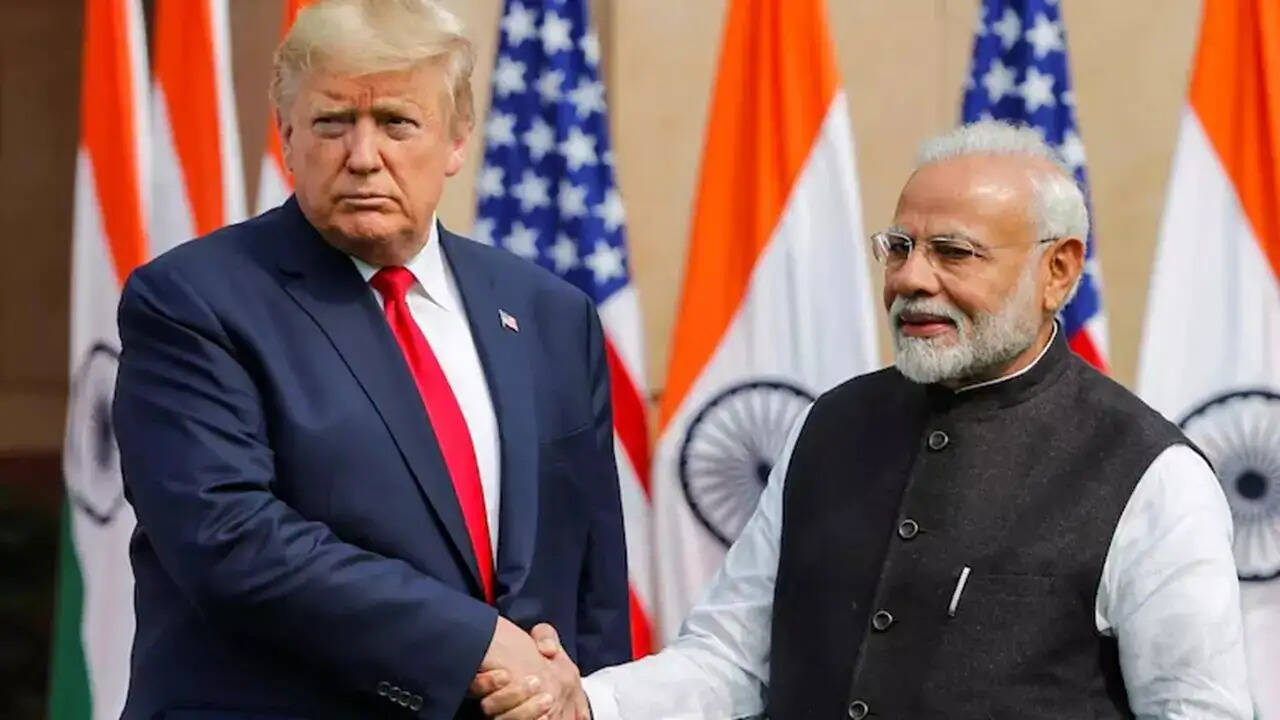
U.S. and Indian officials are portrayed as preparing a high-profile reset of bilateral ties in a plan dubbed Mission India, a politically styled initiative that aims to turn diplomatic momentum into concrete deals by early 2026. The narrative positions the United States and India for intensified cooperation across trade, energy and technology, anchored by the close personal chemistry between former President Donald J. Trump and Prime Minister Narendra Modi.
Trump Modi partnership
The project casts Sergio Gor, the 38-year-old U.S. Ambassador to India and Special Envoy for South and Central Asian Affairs, as the principal negotiator. Gor’s mandate expands beyond New Delhi to cover regional matters including Pakistan and Afghanistan, giving him an unusually broad remit to coordinate security and trade policy from the Indian capital.
At the heart of Mission India are a handful of practical proposals. Negotiators are reported to be exploring a trade package that could reduce tariffs while increasing U.S. energy exports to India. The so-called energy-for-tariff swap would seek to wean New Delhi from certain Russian energy sources while opening American market access for Indian goods. Agriculture, particularly almonds and walnuts, and dairy remain sensitive topics where reciprocity is expected to feature prominently in talks.

Technology and supply-chain security are also central. The initiative promotes friend-shoring for critical sectors such as semiconductors, artificial intelligence and pharmaceuticals, encouraging companies to reorient supply chains away from a single dominant supplier. Defence cooperation and co-development of dual-use technologies are likely to feature alongside commercial agreements as both sides look to deepen strategic ties in the Indo-Pacific.
Observers note that the political framing of Mission India borrows heavily from popular culture. The article that introduced the plan treated diplomacy like a film production, arguing that India’s cinema-driven public sphere and Modi’s dramatic public events make a narrative approach effective. That stylistic choice underlines a broader point: public diplomacy and spectacle will matter for selling any major deal to Indian audiences, particularly to younger voters.
Russia’s continuing ties with India add complexity. Recent references by Russian leaders to shared cultural memories highlight New Delhi’s longstanding relations with Moscow, a factor negotiators must manage carefully. Mission India’s success will depend in part on balancing India’s historic relationships while offering economic and strategic incentives that align with New Delhi’s priorities.
For India’s young population, which is both an economic engine and a political constituency, the initiative promises new opportunities in technology, entrepreneurship and jobs. The U.S. strategy aims to tap that demographic dividend while delivering tangible benefits: investment in technology, easing of trade barriers in specific sectors and co-operation on energy security.
Diplomats and analysts caution that the plan faces familiar tests. Tariff disputes, energy dependencies, regional instability and domestic political sensitivities could all slow progress. Yet if negotiators convert the rhetoric into signed agreements and measurable cooperation, Mission India could mark a significant step in U.S.–India relations, shaping trade, technology and security alignments in the coming decade.
Filming for the political narrative is slated to begin in January 2026, according to the piece. Whether Mission India becomes a scripted spectacle or a functional blueprint for policy will be decided by the hard work of negotiation and implementation that follows.
Key Takeaways:
- Mission India frames a renewed U.S.–India push around trade, energy and technology under the Trump Modi partnership.
- Sergio Gor, a political appointee and Special Envoy, is cast as the lead negotiator for a possible 2026 mega-deal.
- Proposals include an energy-for-tariff swap, friend-shoring of critical technologies, and bilateral trade talks to resolve tariff disputes.
- The initiative aims to deepen defence, economic and technological cooperation while managing regional dynamics with Russia and Pakistan.








