











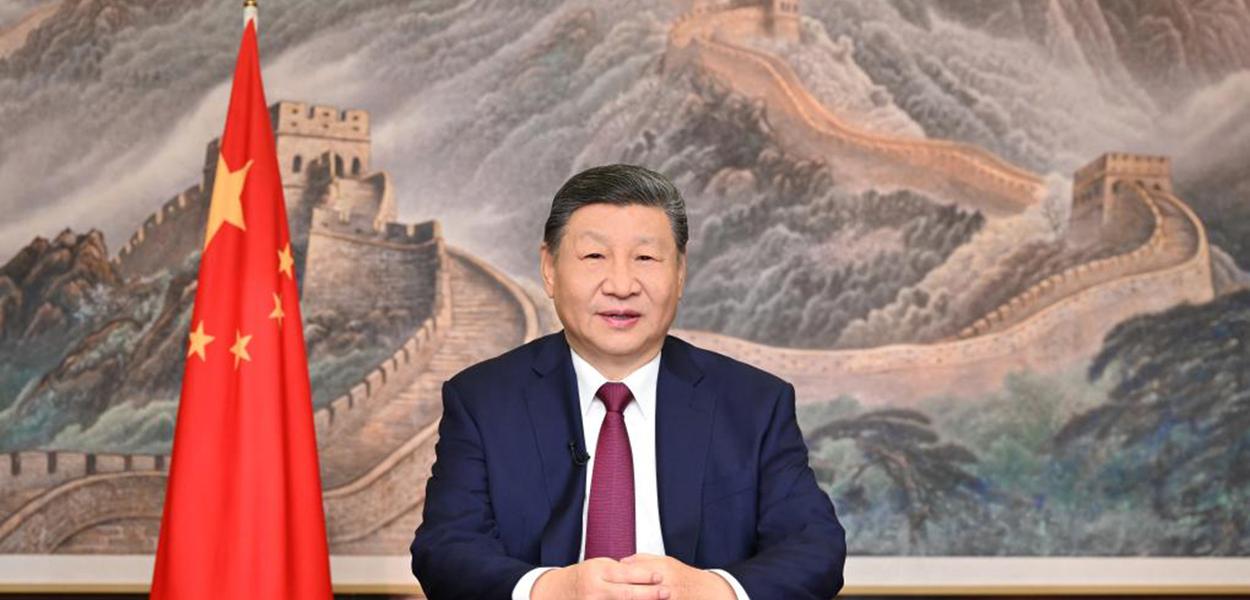
Chinese president Xi Jinping used his year-end address to cast the conclusion of the 14th Five-Year Plan as a moment of measurable progress and to outline the priorities that will shape the start of the 15th Five-Year Plan in 2026. In a broadly forward-looking speech from Beijing, Xi stressed strong economic performance, technological advances and social measures that he says have raised living standards across the country.
Xi Jinping year-end speech underlines economic and technological gains
At the top of his agenda was the economy. Xi said China’s gross domestic product may reach 140 trillion yuan this year, a figure he cited as evidence that the country has reached new development thresholds. He credited sustained growth to stability and collective effort, and urged policy-makers to focus on high-quality development and deeper reforms as the nation enters a new strategic cycle beginning in 2026.
Technological self-reliance and innovation featured prominently. Xi pointed to advances in artificial intelligence and indigenous chip research, independent breakthroughs in research and development, and large-scale projects such as the Tianwen-2 asteroid sample mission. He also highlighted the commissioning of the first Chinese aircraft carrier equipped with electromagnetic catapults and the start of a major hydroelectric project on the lower reaches of the Yarlung Zangbo river.

Xi presented these developments as components of a broader push to raise China’s productive capacity and defence capability while supporting a modern industrial base. He framed innovation as a driver of long-term growth and a foundation for national strength.
On the social front, Xi described improvements in quality of life and social protection. He referenced measures for people working in new forms of employment, accessibility upgrades for the elderly, and a monthly subsidy of 300 yuan for families with children. Cultural revival and growing public interest in museums, heritage and domestic entertainment were cited as signs of a more confident national identity.
Internationally, Xi reaffirmed China’s commitment to multilateralism and to reforming global governance, saying Beijing will continue to promote climate action and global development initiatives. He noted recent diplomatic activity including the Shanghai Cooperation Organisation summit and other international forums, and framed China’s agenda as one of cooperation rather than confrontation.
Xi reiterated Beijing’s stance on Hong Kong and Macau and restated that reunification with Taiwan is a historical trend. He emphasised the need to apply the principle of “one country, two systems” and to support integration with the mainland while maintaining prosperity and stability.
As 2026 marks the start of the 15th Five-Year Plan, Xi called for concrete policies to deepen reform, open the economy further and pursue shared prosperity. He urged continued discipline within the Communist Party and insisted that the Party’s leadership is essential to realising national goals. The address combined performance claims and strategic direction, setting expectations for economic management, technological investment and social policy in the coming five years.
Observers will watch how Beijing translates these broad aims into specific measures, and how those measures affect domestic markets, international trade relations and technology competition in the years ahead.
Key Takeaways:
- Xi Jinping year-end speech reviews the 14th Five-Year Plan and projects China’s economy may reach 140 trillion yuan.
- He highlighted advances in technology, from artificial intelligence and chip research to space missions and a new aircraft carrier.
- Social policies and cultural revival were emphasised, including support for families, accessibility initiatives and rising interest in heritage.
- Xi reaffirmed multilateral engagement, climate commitments and the principles for Hong Kong, Macau and Taiwan ahead of the 15th Five-Year Plan.








