











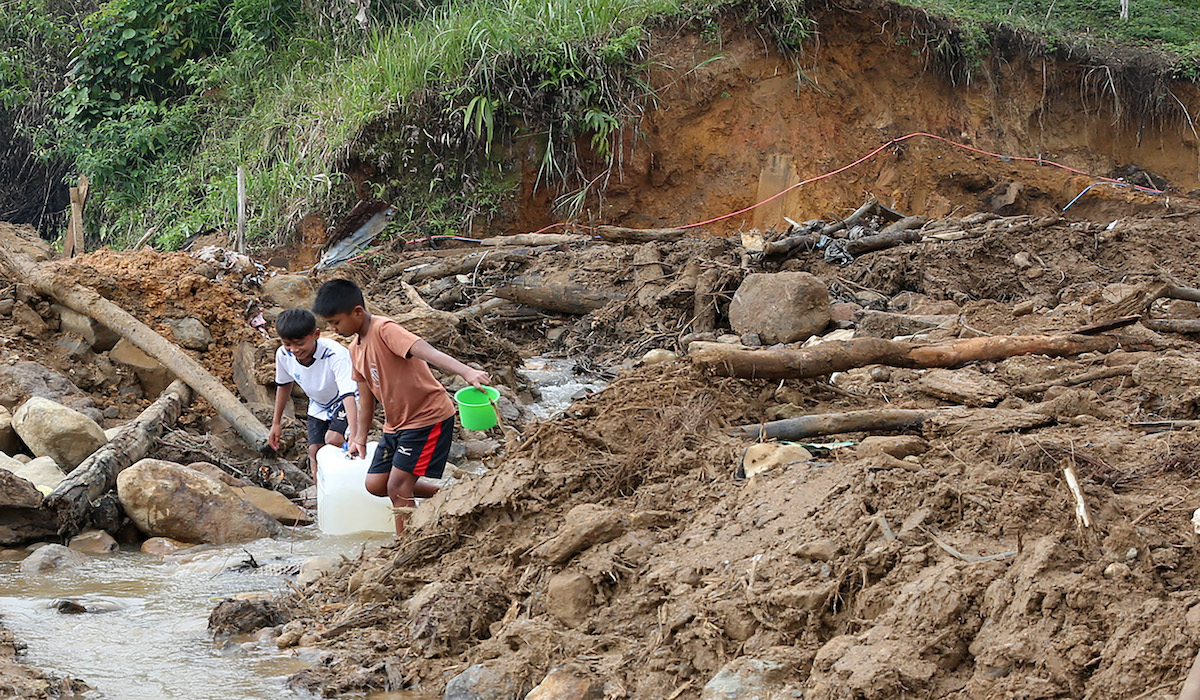
Hundreds of residents displaced by recent flash floods in Aceh Tamiang remain in urgent need of clean water and proper sanitation as they shelter in temporary tents around the Karang Baru government complex. Local officials and relief agencies say the lack of adequate Mandi Cuci Kakus (MCK) facilities and functioning water infrastructure is exposing about 500 evacuees to immediate health risks.
Aceh Tamiang sanitation crisis deepens
Residents from Kampung Bundar and neighbouring areas lost homes when torrents of water and mud swept through at the end of November, burying houses under more than a metre of debris. Those who remain in shelters report makeshift toilet facilities and a shortage of potable water, creating particular hardship for women and children who must share limited amenities.
“The MCK facilities here are far from acceptable. Women feel very uncomfortable,” said Ramadan, one of the displaced residents, in a phone interview from Banda Aceh. “Many cannot return home yet because their houses are still buried in mud.”

The scale of the water crisis has been aggravated by serious damage to the local water utility. Bupati Armia Fahmi reported that the Perusahaan Daerah Air Minum (PDAM) sustained heavy damage during the floods and its systems are currently under repair. At present, clean water distribution has been restored only to Kuala Simpang and Karang Baru districts.
Local government, military (TNI) and police (Polri) units are coordinating relief operations to restore supply and sanitation. The National Disaster Mitigation Agency (BNPB) has supplied operational support to keep remaining installations functioning while repair work continues. Emergency measures include drilling emergency wells and trucking in water to meet immediate needs.
Despite these steps, relief workers say more is needed to prevent secondary health problems. Temporary latrine blocks and hygiene stations are essential to reduce the risk of waterborne disease, especially in crowded tented camps. Aid groups and local leaders are calling for additional resources to construct temporary MCK units that meet minimum public-health standards.
Officials stressed that repairing PDAM infrastructure will take time. “The PDAM damage is significant and work is ongoing. We have restored service to two subdistricts, but wider recovery will require substantial repairs,” Bupati Armia Fahmi said in his report to the president.
Humanitarian and government actors say a coordinated approach is required: restore reliable clean-water supply, install dignified sanitation facilities, and provide targeted support for vulnerable groups. As urgent repairs continue, authorities urged donations of water, sanitation supplies and technical assistance to accelerate recovery and reduce health risks for displaced families.
Background: Aceh Tamiang has experienced increasingly severe weather events in recent years, putting pressure on local infrastructure. The current emergency highlights the need for investment in resilient water systems and disaster-preparedness measures to protect communities from future crises.
Key Takeaways:
- Around 500 evacuees in Karang Baru face a worsening Aceh Tamiang sanitation crisis with inadequate MCK facilities and scarce clean water.
- Local PDAM infrastructure suffered severe damage, limiting water distribution to only two districts while repairs continue.
- Authorities, TNI, Polri and BNPB have launched emergency measures including well drilling and temporary water supplies.








