











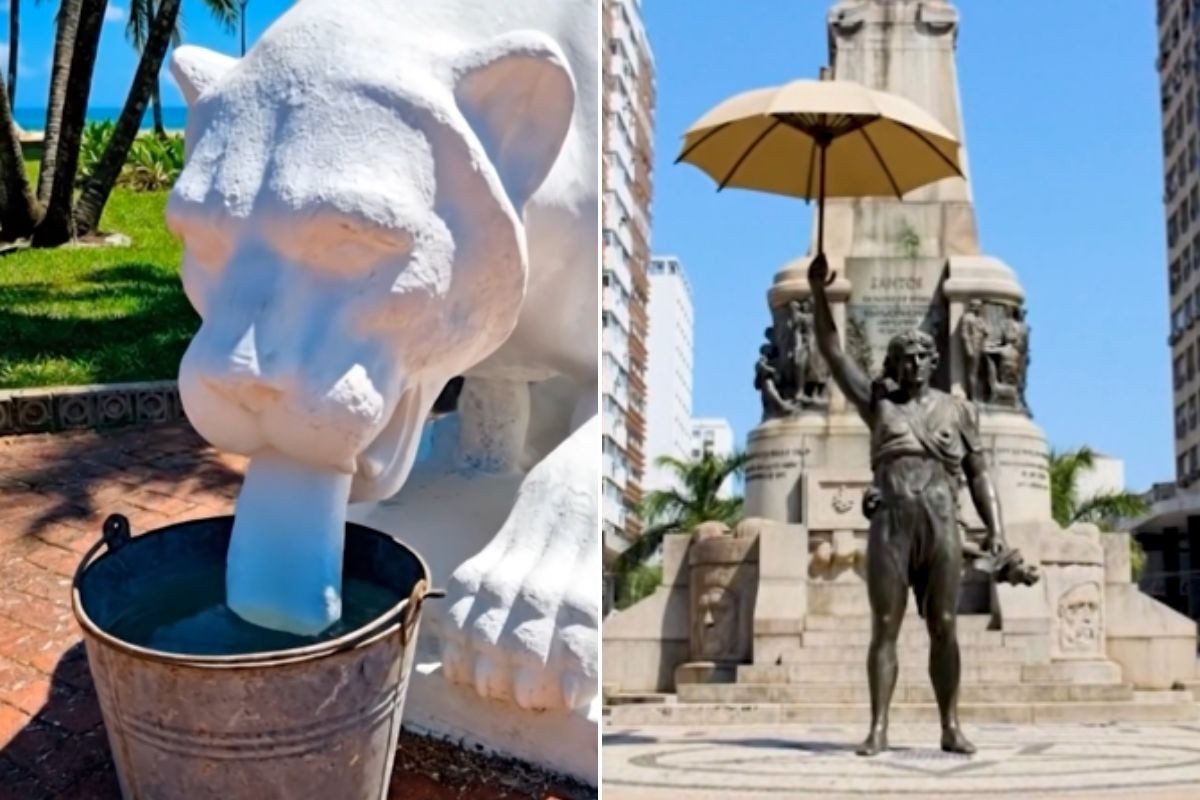
Onlookers on São Paulo’s coast were treated to an unusual sight online this week after an AI-generated video animated several of the city’s best-known statues to give the impression they were seeking relief from a heatwave. The clip, which has circulated widely on social media, shows the man from the Japanese immigrants’ monument at Parque Municipal Mário Roberto Santini lowering his arm and sitting in the shade, a lion in the Gonzaga neighbourhood scooping up water from a bucket, and a winged figure at the Andradas brothers monument opening an umbrella in Praça da Independência.
AI video statues Sao Paulo spark a lively public conversation
The short film has proved popular for its playful approach, attracting thousands of shares and light-hearted comments from residents and visitors. Many people praised the creativity and technical polish of the animation, describing it as a humorous response to unusually high temperatures along the coast.
However, not all reaction has been purely amused. The clip has reopened questions about the ethics of altering or manipulating images of public art, even when the changes are digital and temporary. Some artists and cultural commentators argue that public monuments are part of the civic record and should not be transformed without dialogue with the community or the custodians of the works.

“It is imaginative and entertaining, but we must think about authorship and consent,” said a local sculptor who asked not to be named. “Public artworks belong to the city. Even playful alterations can change how people perceive them.”
Technically, the video employed generative animation tools rather than physically modifying any sculptures. Creators typically work from photographs or video footage and use machine learning models to animate figures frame by frame. That technique allows lifelike motion while leaving the original heritage sites untouched.
City authorities told reporters they were aware of the video and were assessing whether any municipal symbols had been used in ways that required clarification. A spokesperson for the municipal cultural department said there are no current prohibitions on digital treatments of public imagery, but added that they would examine whether guidelines should be introduced to safeguard heritage and respect creators.
Local tourism operators said the clip has had a positive effect by drawing attention to familiar landmarks. “People are commenting and coming to see these sites,” said a manager at a nearby cultural centre. “If it gets visitors talking about the history behind the sculptures, that can be a good thing.”
Experts on digital media note that such pieces sit within a wider conversation about deepfakes, synthetic media and artistic licence. While many recent debates focus on political misinformation, this example highlights how the same tools can be used for benign, humorous storytelling.
Legal scholars say that, where necessary, adjustments to local policy can strike a balance between encouraging creative expression and protecting cultural heritage. Proposed measures may include clear crediting, transparent labelling that indicates content has been digitally altered, and voluntary consultations with heritage bodies before publishing work that features prominent civic symbols.
For now, the AI-generated clip remains part of a light-hearted moment in São Paulo’s digital life. It has prompted smiles and a serious conversation in equal measure, prompting city residents to consider how new technology interacts with public memory and the shared urban environment.
Key Takeaways:
- An AI-generated clip imagines public statues in São Paulo cooling off during a coastal heatwave, drawing viral attention.
- The video features the immigrants’ statue at Parque Municipal Mário Roberto Santini, the Gonzaga lion and the Andradas monument at Praça da Independência.
- AI video statues Sao Paulo prompt discussion about digital alteration of public art and the need for clear guidelines.
- Local reaction mixed between amusement and concern; officials say they will review the use of municipal imagery.








