











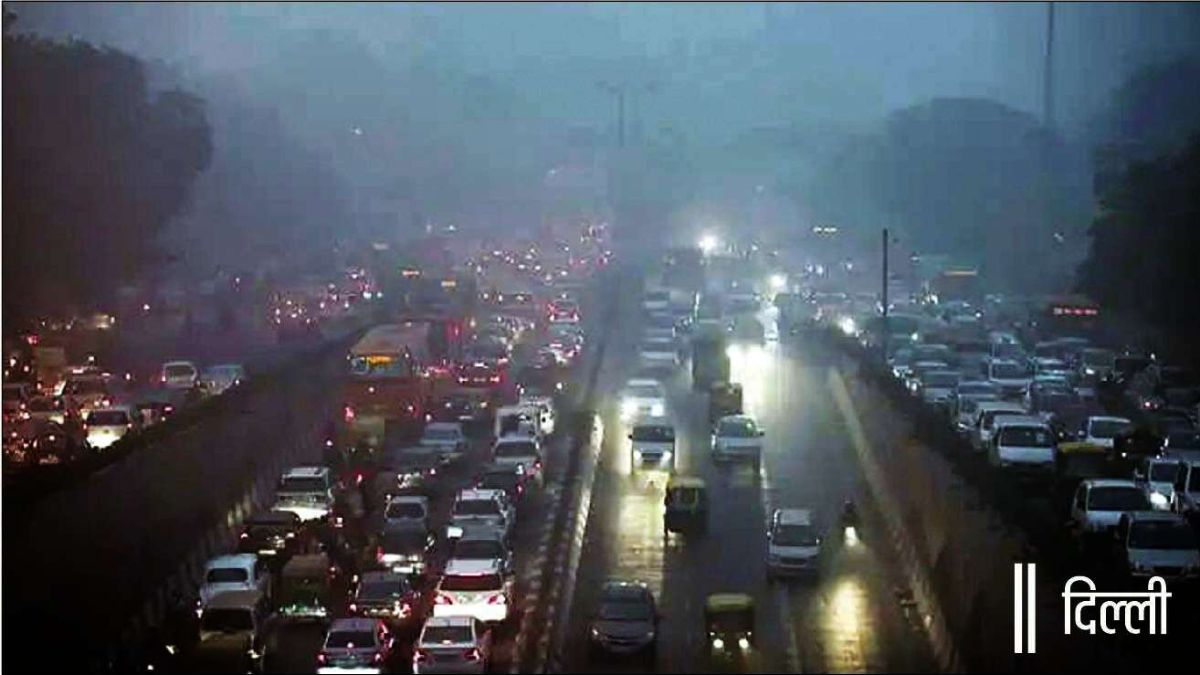
India is confronting persistent air quality problems that affect public health and daily life, yet political attention and enforcement lag behind what the scale of the problem demands. Researchers and public health experts point to a mismatch between laws on the books and implementation on the ground, a gap that keeps dangerous pollution levels entrenched in many cities.
Air pollution in India
Air quality indices in most Indian cities routinely exceed 100. In winter months levels often climb past 200, and in Delhi readings of 400 to 600 are not uncommon. By contrast, much of the United Kingdom records air quality between 20 and 50, with suburban readings frequently in single digits. That discrepancy is not explained solely by geography or technology. It also reflects differences in administrative capacity, political prioritisation and public expectations.
In parts of the UK, air pollution is treated as a public health and governance issue. Clear rules govern activities that create dust and emissions. For example, construction projects must use dust-control measures such as water sprays while work is ongoing and permits are withheld until those standards are met. Local councils have the authority to stop work and impose fines when rules are broken. The result is visible: fewer open piles of material and less dust sweeping across streets.

Vehicle emissions are another point of contrast. In the UK, annual inspections assess emissions, brakes and safety; vehicles that fail cannot legally remain on the road until repaired. Some cities have introduced low-emission zones that restrict the most polluting vehicles and encourage public transport, cycling and walking. These measures change behaviour by making compliance and cleaner choices the easier option.
India has comparable laws and mechanisms in theory. Pollution control norms, vehicle emission tests and construction guidelines exist. However, enforcement is inconsistent. Corruption and weak local enforcement mean polluting vehicles often remain in use, construction dust goes unchecked and municipal powers to fine or halt work are seldom applied effectively. Complaints can be treated as individual petitions rather than triggers for systematic action.
Experts say the issue is as much about political will and public expectation as it is about technical fixes. In the UK, clean air is widely regarded as a civic right; citizens expect and receive timely, accessible information about risks such as heatwaves and storms. In India, official warnings are sometimes delayed or presented in technical language that limits public understanding and practical response.
Changing that dynamic will require stronger local governance, transparent enforcement and political parties making environmental policy a visible electoral issue. Younger voters in many countries are already demanding cleaner air and greater climate action; if environmental priorities become central to manifestos and campaign platforms, implementation may follow. Until then, legal frameworks will continue to exist largely on paper while urban populations bear the health costs of pollution.
The views reflected here draw on the observations of Dr Akshay Deoras of the National Centre for Atmospheric Science at the University of Reading, who urges a shift from rhetoric to enforceable action so that laws protecting air quality translate into tangible improvements for citizens.
Key Takeaways:
- India faces severe air quality challenges, with city AQI often exceeding 100 and Delhi reaching 400–600 during winter.
- Comparisons with the UK highlight stronger enforcement and public expectation of clean air, including measures such as construction dust controls and vehicle MOTs.
- Weak enforcement, corruption and low political prioritisation limit the effectiveness of India’s environmental laws.
- Addressing air pollution in India requires political will, local authority power and public awareness to translate laws into practice.








