











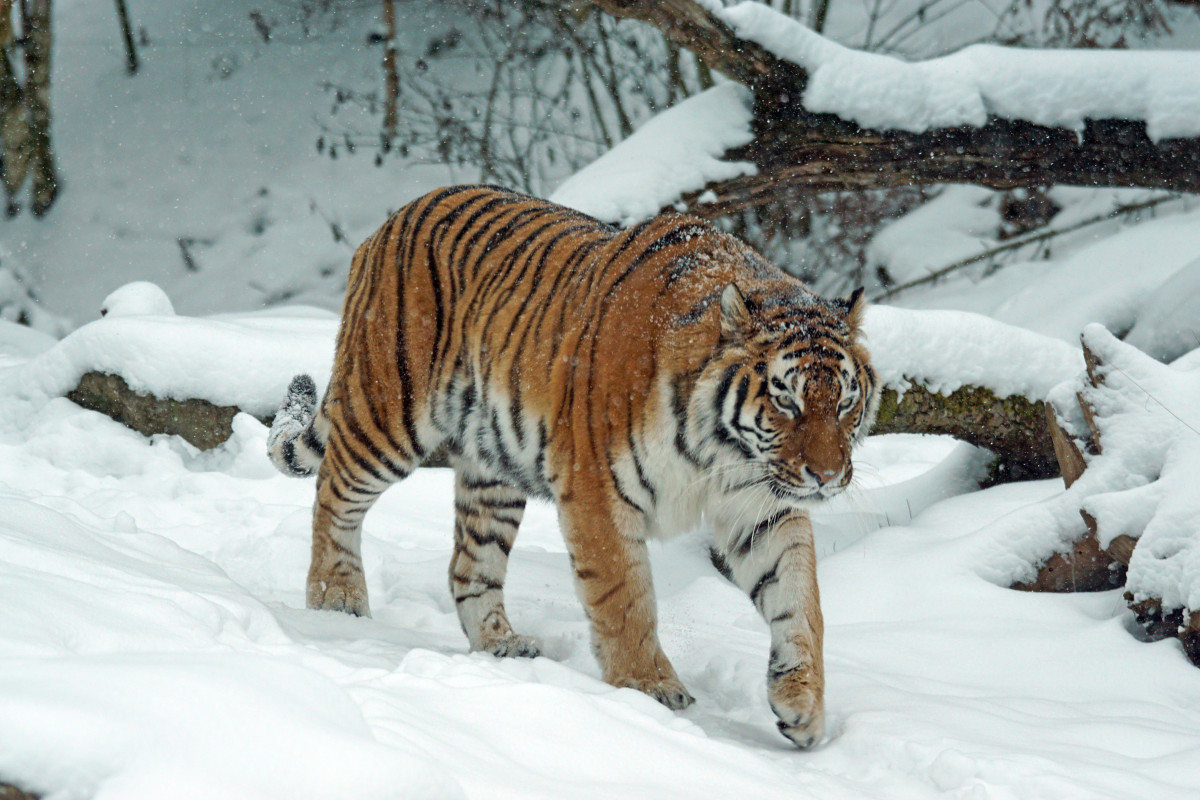
A young male Amur tiger has been returned to the wild in Russia’s Primorye region after a rehabilitation period, conservation authorities announced. The animal, approximately three years old, was released into a remote taiga area selected for its dense forest cover and plentiful prey. Before release, specialists fitted the tiger with a satellite tracking collar to monitor its movements, health and adaptation to the landscape.
Officials said the release site was chosen to reduce the risk of conflict with people. The area has a low human population density and supports a healthy population of ungulates that form the bulk of the tiger’s diet. By placing the animal in a habitat with suitable food and minimal human activity, conservation teams aim to improve survival prospects and limit encounters that can endanger both people and wildlife.
Amur tiger released in Russia monitored with satellite collar
The satellite collar transmits location data that allows experts to follow the tiger’s movements in near real time. Monitoring will help conservationists assess how quickly the animal resumes natural behaviour, whether it establishes a territory and how it interacts with resident tigers. It also provides an early warning if the animal moves towards settlements or shows signs of distress.

According to the rehabilitation centre, the tiger came under their care on the morning of 26 December. Staff carried out standard medical checks and a period of adaptation to ensure the animal was fit for release. The young male responded well to the procedures and demonstrated the physical condition and behaviours necessary to survive in the wild.
Conservationists emphasised that releases of rehabilitated predators are carefully planned. Site selection, pre-release assessments and post-release monitoring form part of a wider strategy to maintain viable populations without increasing risks for local communities. The satellite collar is a vital tool in this approach, enabling teams to intervene if an animal becomes injured, ill or displaced into unsafe areas.
Russia is home to the world’s largest population of Amur tigers, also known as Siberian tigers, but the species remains endangered. Human-wildlife conflict, habitat loss and poaching continue to threaten long-term recovery. Targeted programmes that rehabilitate and return individuals to suitable habitat contribute to population stability and complement habitat protection and anti-poaching measures.
Local authorities and conservation groups hope that the collar data will inform future releases and management decisions. The information gathered can guide anti-poaching patrols, help identify critical habitat corridors and reveal seasonal movements that are important for long-term planning. Better data will also support community outreach efforts aimed at reducing encounters between people and tigers, such as livestock management and awareness campaigns.
For now, the released tiger appears to be settling into its new surroundings. Experts will continue to monitor its progress closely and publish updates if significant developments occur. The operation represents a practical example of conservation work that balances species recovery with measures to protect local communities, demonstrating how careful planning and technology can work together to support endangered wildlife.
Key Takeaways:
- Amur tiger released in Russia after rehabilitation and fitted with a satellite collar to monitor adaptation and health.
- Conservationists chose a remote, densely forested area in Primorye with abundant prey and low human population to reduce conflicts.
- Tracking will allow rapid response to any threats and supports efforts to preserve the endangered Amur tiger population.








