











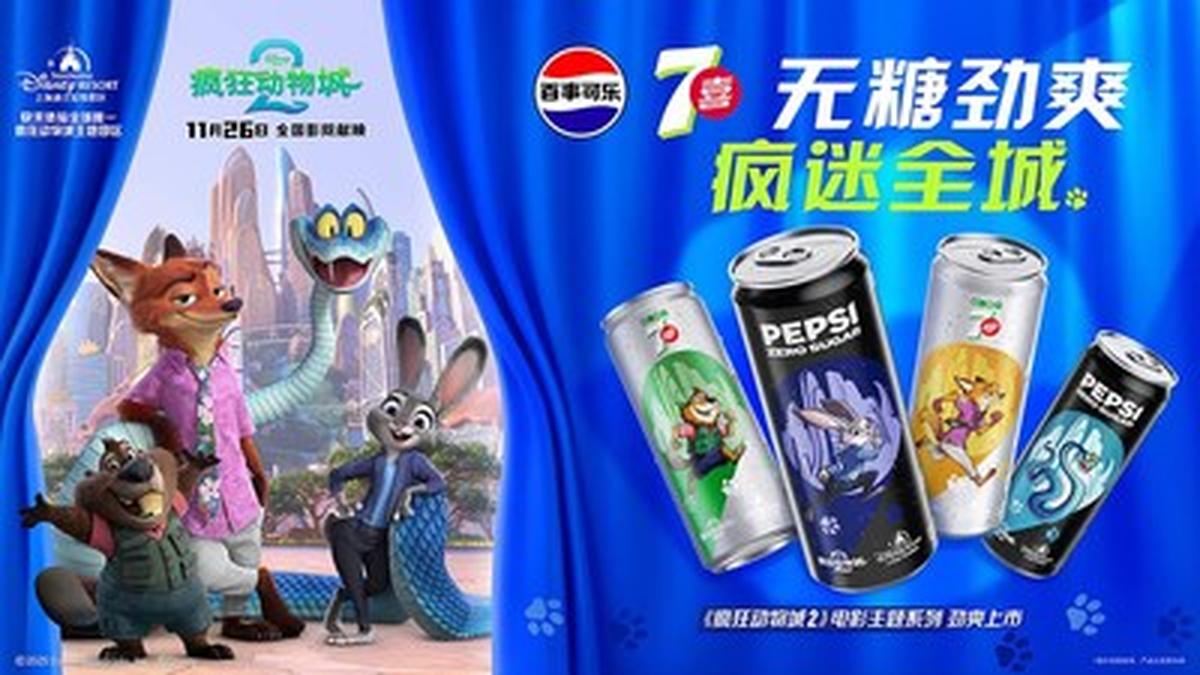
PepsiCo has deepened its cultural outreach in China with a high-profile collaboration between Pepsi, 7UP and Disney to promote Zootopia 2 under the banner “Zero Sugar for City-Wide Craze.” The campaign, first rolled out in major Chinese cities including Shanghai, Beijing, Chengdu and Shenzhen, pairs limited-edition character cans with interactive activations designed to engage Gen Z and young families.
Pepsi Zootopia 2 China campaign fuels zero-sugar trend
The partnership highlights PepsiCo China’s long-standing relationship with Shanghai Disney Resort and its wider strategy of marrying pop culture with product innovation. Four collectible cans feature character-inspired designs: Pepsi Zero Sugar with the spirit of Judy Hopps, 7UP Zero Sugar echoing Nick Wilde, and two new characters, Gary and Nibbles. The packaging aims to turn each can into a shareable, collectible moment and to position zero-sugar drinks as an expression of youthful identity.
Marketing activity spans a mix of out-of-home installations, social media interactions and on-the-ground activations. The campaign’s multi-channel approach includes eye-catching city installations, limited merchandise giveaways and social content intended to convert online interest into retail sales. By connecting the film’s narrative to everyday moments, the brands hope to create a sustained emotional link with consumers that extends beyond standard product promotion.

For PepsiCo, the initiative forms part of a broader push in Asia Pacific to expand the zero-sugar segment through creative partnerships. In China, zero-sugar beverages have become a visible consumer choice and a marker of lifestyle preferences among younger cohorts. Pepsi and 7UP have repeatedly leveraged well-known intellectual property to amplify their messages, previously partnering with Disney franchises and other global IPs to strengthen cultural resonance.
Industry observers say the collaboration serves three commercial aims: to reinforce PepsiCo’s leading distribution role at Shanghai Disney Resort; to accelerate zero-sugar adoption among Gen Z; and to demonstrate rapid, culturally tuned campaign execution that can be adapted elsewhere in the APAC region. The brands emphasise speed, precision and cultural relevance as core features of the partnership model, arguing that those qualities help turn creative concepts into measurable market impact.
Early impressions suggest the campaign has succeeded in generating both online chatter and offline foot traffic. Collectible packaging and free merchandise act as incentives for trial while also creating social content that drives further engagement. For young families, the Disney tie-in broadens the appeal beyond single consumers to households seeking shared experiences tied to familiar storytelling.
Beyond short-term sales, the collaboration offers a playbook for brand-entertainment partnerships in China’s competitive beverage market. The combination of content, commerce and location-based activations illustrates how global brands can craft locally relevant campaigns that resonate with specific audiences. PepsiCo China positions the effort as an example of brand-led cultural co-creation that could inform rollouts in other markets.
As Zootopia 2 arrives in cinemas, Pepsi and 7UP’s campaign is designed to ride the film’s momentum and convert excitement into sustained brand engagement. The promotion reinforces PepsiCo’s commitment to youth-centric marketing and to expanding the zero-sugar category through crossover creativity and accessible, family-friendly activations.
Key Takeaways:
- Pepsi and 7UP launch a China-focused Zootopia 2 campaign promoting “Zero Sugar for City-Wide Craze” and limited-edition character cans.
- The Pepsi Zootopia 2 China campaign targets Gen Z through city-wide activations in Shanghai, Beijing, Chengdu and Shenzhen.
- Strategic alliance with Shanghai Disney Resort underpins rapid, culture-led marketing and boosts PepsiCo China’s innovation profile in APAC.
- The campaign blends online and offline channels, free merchandise and collectible packaging to convert buzz into sales.








