











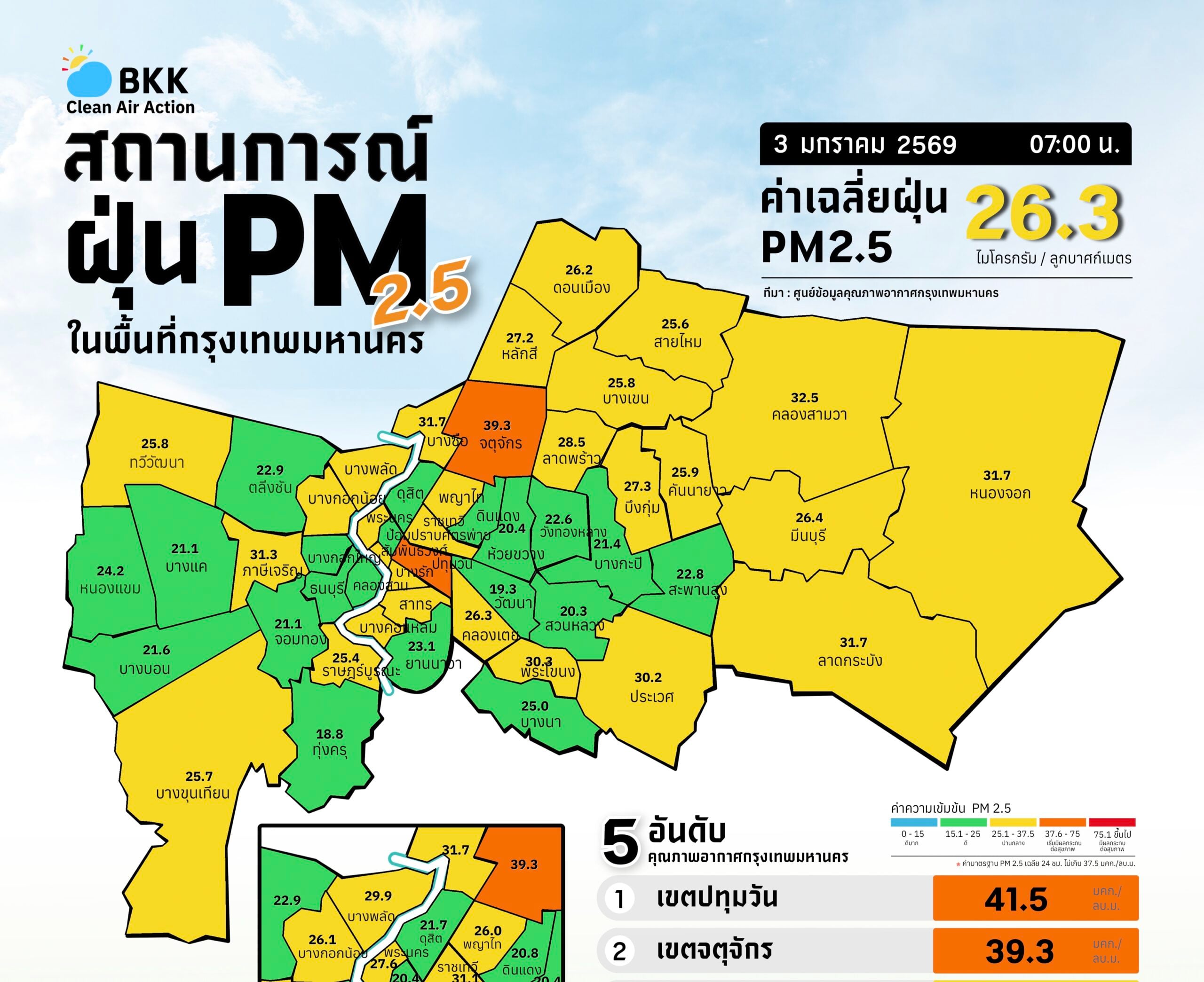
Bangkok’s air quality monitoring network recorded elevated fine particulate levels on the morning of 3 January, with two central districts exceeding the health-based 24-hour standard. The citywide 24-hour PM2.5 average was 26.3 micrograms per cubic metre (µg/m³), but readings ranged from 18.4 to 41.1 µg/m³ across monitoring stations.
Bangkok air quality outlook
Authorities reported that Pathumwan, near Sam Yan Mitrtown, registered the highest value at 41.1 µg/m³, while Chatuchak, in front of Kasetsart University, recorded 38.8 µg/m³. Both readings put those locations into the orange band of the air quality index, indicating air that may begin to affect health—particularly for sensitive groups. The official 24-hour PM2.5 standard used by Bangkok’s monitoring centre is 37.5 µg/m³.
The Bangkok Metropolitan Administration’s spokesperson emphasised that most stations across the capital stayed in the ‘moderate’ range. Even so, residents in affected areas were advised to take precautions, with public-health guidance focusing on reducing exposure and recognising symptoms such as coughing, shortness of breath and eye irritation.

Health guidance for residents
For the general public, officials recommended using certified PM2.5 masks when leaving buildings and limiting the duration of strenuous outdoor exercise. People in vulnerable groups—such as the elderly, young children, pregnant women and those with existing respiratory or cardiovascular conditions—were urged to avoid heavy outdoor exertion, follow their doctors’ advice and seek medical attention if symptoms worsen.
The city’s environmental office reiterated practical steps to reduce exposure: close windows during peak pollution hours, use air purifiers where available, and check real-time readings before planning outdoor activities.
Forecast and contributing factors
Forecasts for 3–11 January indicated ventilation conditions ranging from ‘good’ to ‘weak’ with occasional stronger winds on some days. Meteorologists expect that these conditions, combined with intermittent breezes, should lead to a gradual decline in PM2.5 concentrations over the coming days. Satellite hotspot checks by NASA revealed no abnormal heat signatures in the Bangkok area that would suggest nearby fires as a contributing factor.
Officials encouraged residents to monitor updates via the AirBKK application and website, the Bangkok Environment Division’s social channels, and LINE ALERT. Residents who observe pollution sources were asked to report them through the Traffy Fondue reporting system to help enforcement teams respond more quickly.
While the situation was not citywide hazardous, the brief exceedances underline the need for continued vigilance during the cool season. Simple protective measures and regular checking of the Bangkok air quality readings remain the recommended course of action while meteorological conditions improve.
Key Takeaways:
- Bangkok air quality 24-hour PM2.5 averages ranged 18.4–41.1 µg/m³ on 3 January; two stations recorded values above the 37.5 µg/m³ standard.
- Pathumwan (Sam Yan Mitrtown) measured 41.1 µg/m³ and Chatuchak (Kasetsart University frontage) measured 38.8 µg/m³, placing them in the orange (unhealthy for sensitive groups) band.
- Citywide average remained moderate at 26.3 µg/m³; meteorological forecasts of ‘good/weak’ ventilation and intermittent winds should help lower concentrations.
- Authorities advise vulnerable people to wear PM2.5 masks, limit strenuous outdoor activity and check AirBKK and local channels for updates.








