











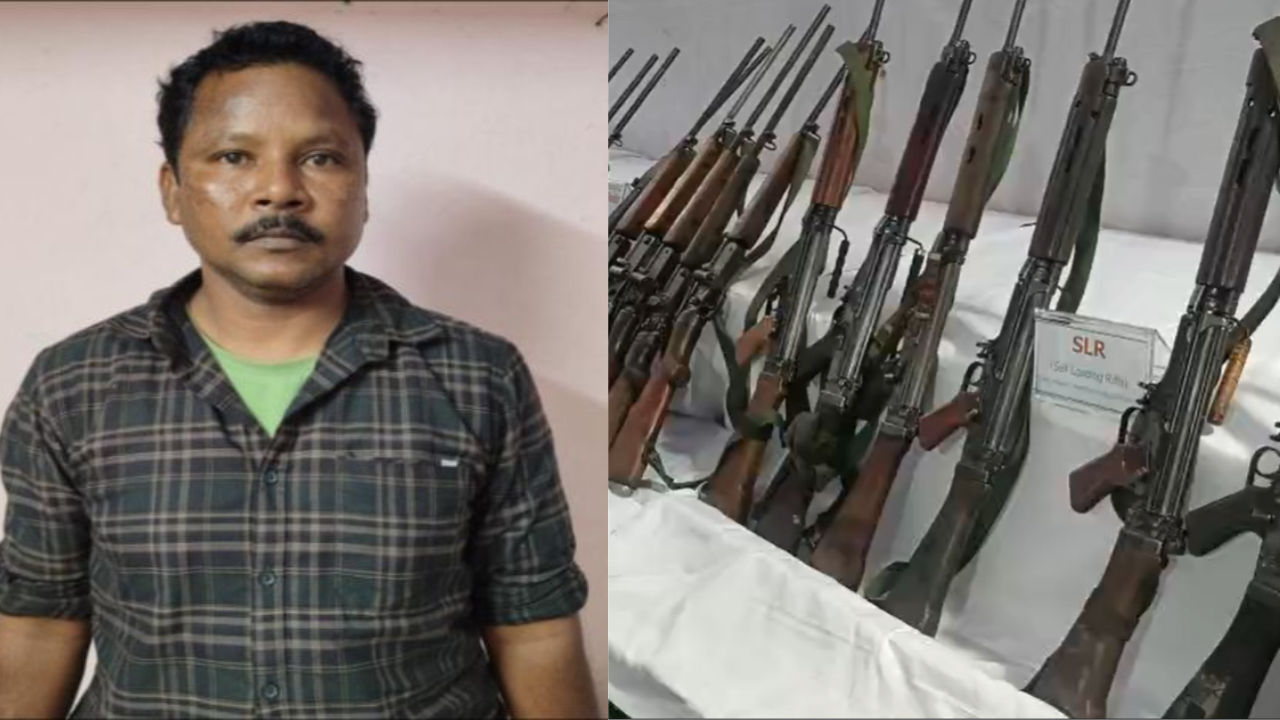
Senior CPI (Maoist) commander Barsa Deva, also known as Barse Sukka or Darshan, surrendered before Telangana police in Hyderabad on 3 January, accompanied by 19 other senior cadres. The group handed over a substantial cache of weapons that authorities said included US-made Colt rifles, Israeli Tavor rifles, light machine guns, AK-47s, INSAS rifles and grenades. Police described the development as a major setback for the armed wing of the Maoist movement.
Barsa Deva surrender and immediate implications
At 48, Deva had risen to prominence after the killing of Madvi Hidma last year and was reported to have led the People’s Liberation Guerrilla Army in several operations along the Telangana–Chhattisgarh border. Authorities said his surrender marks a critical leadership vacuum for the CPI (Maoist) and will hinder the group’s operational capacity. Deva carried a reward of Rs 75 lakh announced jointly by the Telangana and Chhattisgarh governments and the National Investigation Agency.
Telangana Director General of Police Shivdhar Reddy told reporters that the surrender was a significant achievement for the state police. He confirmed the quantity and variety of weapons handed over and said security forces were collecting intelligence from the surrendered cadres to map remaining networks. Officials suggested that sustained security operations and recent encounters had weakened Maoist units and encouraged defections.

What the surrender reveals about the movement
Security analysts said the loss of several senior commanders at once will complicate command-and-control for the insurgents. The PLGA has historically relied on tightly knit leadership and local logistics to conduct attacks and survive in remote areas. With multiple top cadres laying down arms, the group may find it difficult to maintain the same level of coordination and recruitment.
Government officials described the development as a step towards a “Naxal-free India”. The Telangana government credited its rehabilitation and surrender policy, urging remaining underground members to choose a peaceful life. Rehabilitation programmes typically offer financial assistance, vocational training and help with reintegration into society, though long-term success depends on consistent implementation and local acceptance.
Broader security and development consequences
Beyond immediate security gains, the surrender could ease pressures on local administrations and allow for more focus on development initiatives in affected districts. Reduced violence can improve the climate for infrastructure projects, public services and investment in border regions that have long been affected by insurgency.
However, experts caution that surrenders do not automatically end organised violence. Some cadres may regroup in other areas, while local grievances that fuel recruitment must be addressed. Continued intelligence work, targeted operations and credible rehabilitation measures will be necessary to prevent a resurgence.
For now, state police and national agencies are analysing information from the surrendered commanders to pursue remaining leads. Authorities said the operation and the ensuing surrenders represent a measurable weakening of the Maoist armed movement in central India, and a potential turning point for security and development in the region.
Key Takeaways:
- Senior CPI (Maoist) commander Barsa Deva surrendered with 19 senior cadres in Hyderabad on 3 January, handing over a large cache of weapons.
- The surrender included US-made Colt rifles, Israeli Tavor rifles, light machine guns, AK-47s, INSAS rifles and grenades.
- Deva carried a combined reward of Rs 75 lakh from Telangana, Chhattisgarh and the NIA; his exit creates a serious leadership gap in the PLGA.
- The Telangana government hailed the development as validation of its rehabilitation policy and urged other cadres to give up violence.








