











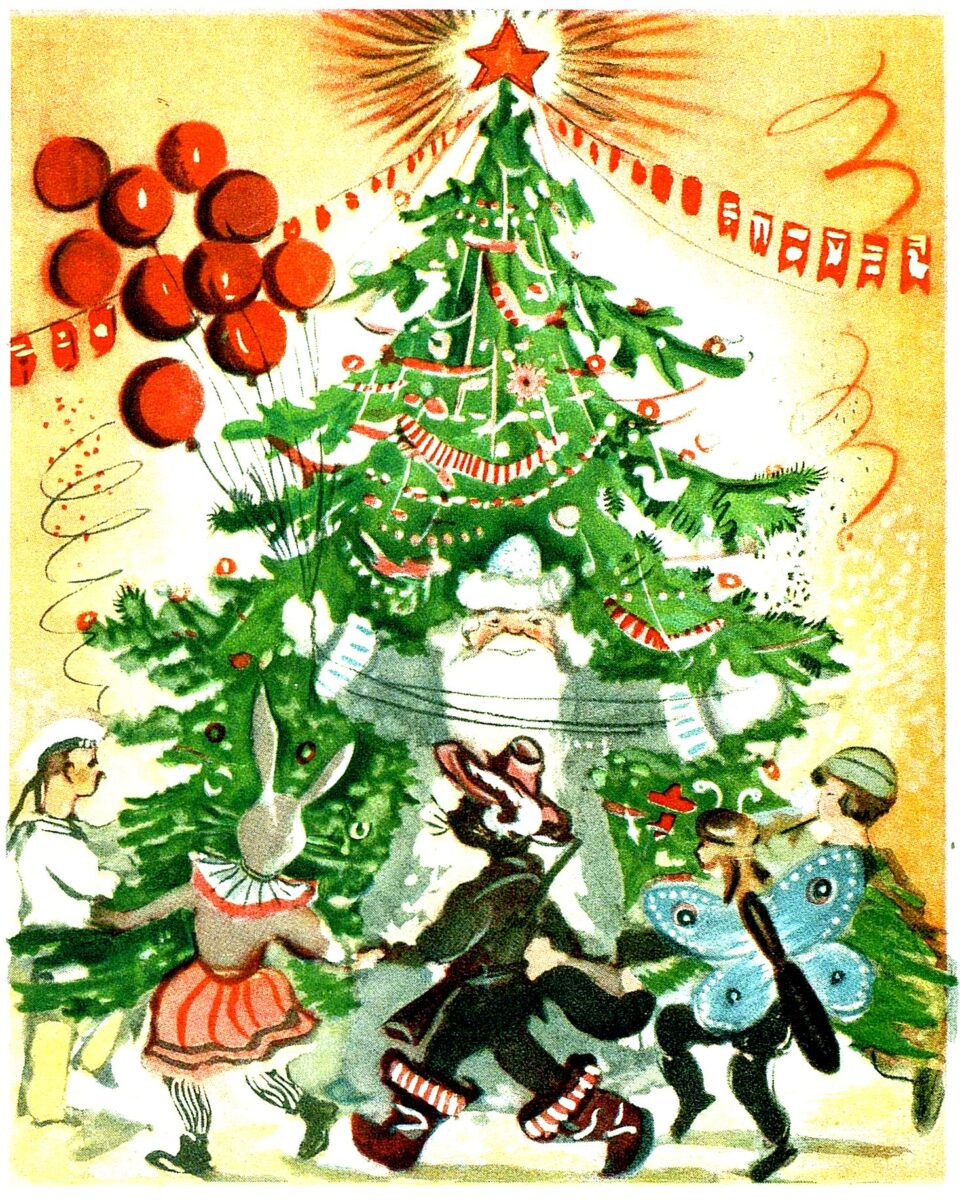
New Year celebrations proved remarkably resilient in Belarus and across the Soviet Union, surviving periods of official scepticism to become a cornerstone of public and family life. Newspapers, cultural leaders and local officials kept the holiday alive through public greetings, children’s events and festive markets, ensuring that the season remained widely observed.
Belarus New Year traditions
By 1926, New Year festivities were already visible in cities and towns. While grand banquets and dances were more common among the better-off in capitals, the wider population found cheer in pre-holiday newspapers and community gatherings. Public figures sent optimistic messages that mixed social and political aims with seasonal goodwill. Trade representatives, health officials and cultural leaders used their New Year wishes to highlight plans for agricultural improvement, public health and the growth of literature and theatre.
The 1930s saw a notable shift as authorities actively encouraged children’s New Year trees and communal celebrations. A widely published appeal in 1935 urged Komsomol and local councils to organise Christmas trees for children in schools, clubs and villages, dismissing the idea that a children’s tree was a bourgeois custom. The campaign succeeded: cities such as Minsk reported brisk sales of fir trees and decorations, and large public carnivals and sporting events became common features of the season.

Local newspapers carried vivid accounts of life during the holidays. In Belarusian towns, traders bought books in bulk — sometimes using them as cheap packaging — and municipal authorities organised cultural courses and language initiatives alongside festive markets. Civic energy around the New Year often blended practical economic or educational goals with the celebratory spirit.
The wartime and immediate postwar years brought a renewed significance to New Year observances. As Belarus was liberated from occupation, the 1945 holiday took on a tone of triumph and recovery. Schools, homes and community centres staged concerts, theatrical productions and children’s parties. Public gatherings around decorated trees featured performances, games and meetings with returning soldiers and partisans. The season’s lights were presented as symbols of hope and the coming victory, and cultural institutions used the festivities to celebrate both resilience and renewal.
Across decades, well-known artists, scientists and explorers added personal greetings that reflected broader national ambitions. Wishes ranged from calls for improved housing and public health to aspirations for scientific achievement. Such messages reinforced the New Year as a moment to express communal goals and to rally support for social programmes.
Today, the historical record shows that popular affection for the holiday repeatedly outlasted official ambivalence. Whether marked by modest family dinners, lively children’s matinees or large public carnivals, New Year observances in Belarus have been anchored in social traditions as much as in political rhetoric. The continuity of these celebrations underlines how public rituals can adapt, persist and give shape to communal identity through decades of change.
Illustration: archival image of a 1945 New Year tree in Belarus (source: Bobrlife)
Key Takeaways:
- Historical overview shows New Year remained a cherished holiday in Belarus and the Soviet Union despite early restrictions.
- Public figures and officials from the 1920s–1930s promoted festive gatherings and community welfare around the holiday.
- The Soviet-era revival of the Christmas tree and mass children’s celebrations became central to Belarusian public life.
- Postwar 1945 celebrations highlighted national resilience, with schools, theatres and communities staging large festive events.








