











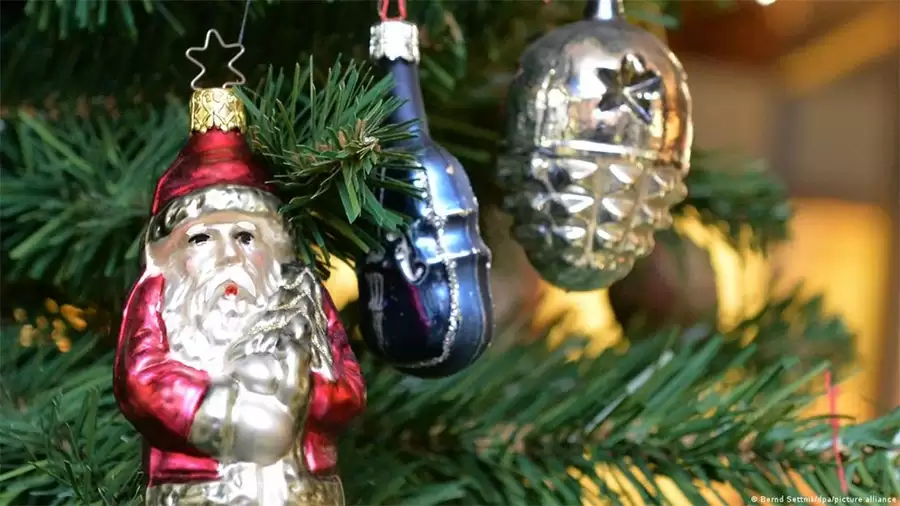
Each winter, glass Christmas baubles from a country that no longer exists return to Belarusian trees and to family recollection. In a new column, historian Aleksandr Fridman looks at those fragile ornaments from the former East Germany and at cautious hopes for what 2026 might bring for Belarusians.
The story of these decorations begins in the Thuringian town of Lauscha, where glassworkers were making baubles and figurines from the mid 19th century. Handmade Lauscha ornaments travelled widely and arrived in the territory of the Russian empire and, later, in the Belarusian Soviet Socialist Republic. After the Second World War, the craft survived the upheaval and became a valuable export for the German Democratic Republic.
In the Soviet period, limited shipments to the USSR turned these baubles into desirable and scarce items. They were brought home by soldiers stationed in the West, by tourists and by officials on business trips. In Belarus, German ornaments came to symbolise good taste and a small triumph over a daily routine of shortages.

Belarus 2026 hope
Today those same baubles are more than decorative objects. They carry memory and emotion. On social media, people post photographs of ageing glass stars and tops, and share stories about childhood New Years that combined hardship with small joys. The ornaments are tangible connections between family histories and broader political shifts.
Fridman argues that the history of Lauscha toys has contemporary resonance. The GDR was marked by tight social control, the elevation of certain industries as strategic and by a climate of fear and mistrust. Echoes of those features can be found in present-day Belarus. Yet the baubles also recall moments of celebration and the human capacity to imagine better times even under strain.
There is reason for guarded optimism. The outgoing year saw the release of some political prisoners who had spent years behind bars. That development gave many Belarusians renewed confidence that change remains possible. The hope for 2026 is that remaining political prisoners will be freed, that repression will ease and that exiles can reunite with relatives in person. There is also a wider wish that the war in Ukraine will end and that tensions across the region will diminish.
Christmas and New Year remain family events in Belarus. Around the decorated tree people exchange gifts, tell stories and renew ties. In those moments of warmth, the political becomes personal. The fragile German baubles on the branches stand as reminders that traditions survive political change and that transformation can come suddenly and unexpectedly.
Whether 2026 will deliver on these hopes is uncertain. But as the column notes, glass ornaments testify to endurance. They show how ordinary people preserve memory and sustain optimism, awaiting the moment when private celebration and public freedom coincide. For now, Belarusians gather at their trees and allow themselves to believe that next year will be kinder.
Key Takeaways:
- Belarus 2026 hope: Glass baubles from former East Germany remain cherished on Belarusian Christmas trees, linking past and present.
- The ornaments from Lauscha became prized imports in the BSSR and now act as family heirlooms and symbols of resilience.
- Historian Aleksandr Fridman notes parallels between GDR-era control and modern Belarus, but recent releases of political prisoners in 2025 have renewed optimism.
- Many Belarusians look to 2026 with hope for freedom for remaining political prisoners and an end to repression and the war in Ukraine.








