











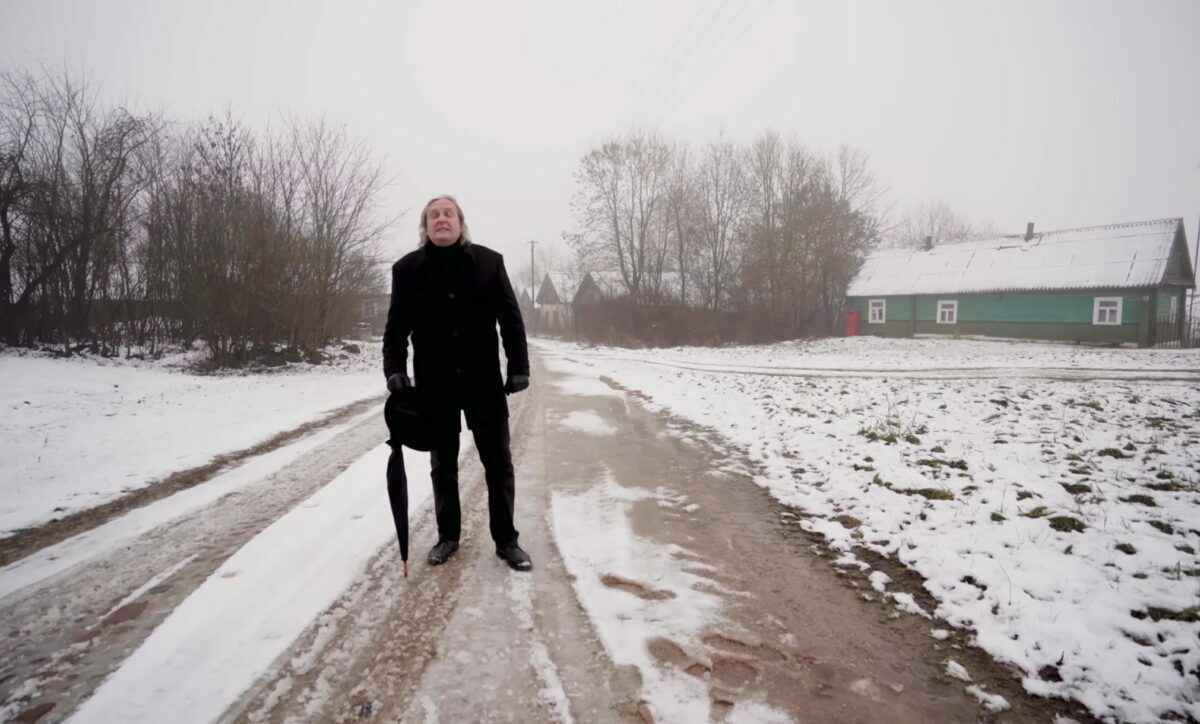
The long‑running Belarus travel series “Padarozhzhy” has resumed production, returning to its quiet focus on rural communities and national heritage. Over the past seven months the programme has released seven journeys, all filmed in small towns and villages across Belarus, and viewers have welcomed the revival with heartfelt enthusiasm.
Belarus travel show returns to villages
Fans on social networks expressed delight when new episodes appeared. One user on Threads wrote that the show was “one of the best programmes about our country.” Another recalled a personal connection, saying they had watched the series as a child and later met the presenter in person, and they were moved to tears on seeing the team back in action. The public reaction highlights the cultural weight the Belarus travel show still carries for many viewers.
Presenter Yuras Zhigamont remains the programme’s defining presence. Dressed in his signature black hat and stylish coat, Zhigamont walks through provincial streets, offering concise, engaging accounts of local history and anecdote. His on‑screen manner has not changed; the new segments preserve the show’s calm, human-centred approach to storytelling.

One of the most recent episodes visits the village of Ishkold, in the Baranavichy district of Brest region. Ishkold’s origins are the subject of scholarly debate, but its history is closely connected with the noble Nemirovich family, and at one point it was also associated with the Radziwiłłs. The village’s standout monument is the late‑Gothic Holy Trinity Church, a site visited by figures such as Napoléon Orda and Eduard Pavlovich in earlier centuries.
The episode combines historical context with scenes of daily life, offering viewers both facts and atmosphere. Rather than dwell on an elaborate plot, the programme lets local places and voices take centre stage. That editorial choice seems to be one reason for the warm reception: audiences appreciate reporting that connects national history with present‑day communities.
For those unfamiliar with Belarus’s regional heritage, the revived Belarus travel show offers an accessible introduction. The producers have focused on careful research and steady pacing, allowing viewers to absorb details about architecture, family histories and villagers’ memories without feeling rushed. The result is a series that privileges depth over spectacle.
While cultural programmes are often judged by production scale, viewers have noted gratitude that the team appears to have the resources to continue. That practical support has been visible in improved footage and clearer narration, though it has not altered the show’s essential character: a presenter led walk through places that might otherwise be overlooked.
New episodes are available to watch online, and viewers who grew up with the series are encouraging friends and younger audiences to tune in. Whether as a prompt for domestic tourism or as a reminder of Belarus’s layered past, the programme’s return has become a modest cultural moment — one that highlights how a well‑made travel show can sustain public interest in regional heritage.
Editors recommend watching the latest Ishkold episode to see the style and content for yourself. Zhigamont’s steady delivery and the episode’s local focus offer a concise example of why the series continues to resonate with viewers across generations.
Key Takeaways:
- The Belarus travel show “Padarozhzhy” has resumed, with presenter Yuras Zhigamont visiting villages across Belarus.
- Audiences reacted with nostalgia and praise for the show’s return and production resources.
- Recent episodes feature the village of Ishkold in Brest region and its late‑Gothic Holy Trinity Church.








