











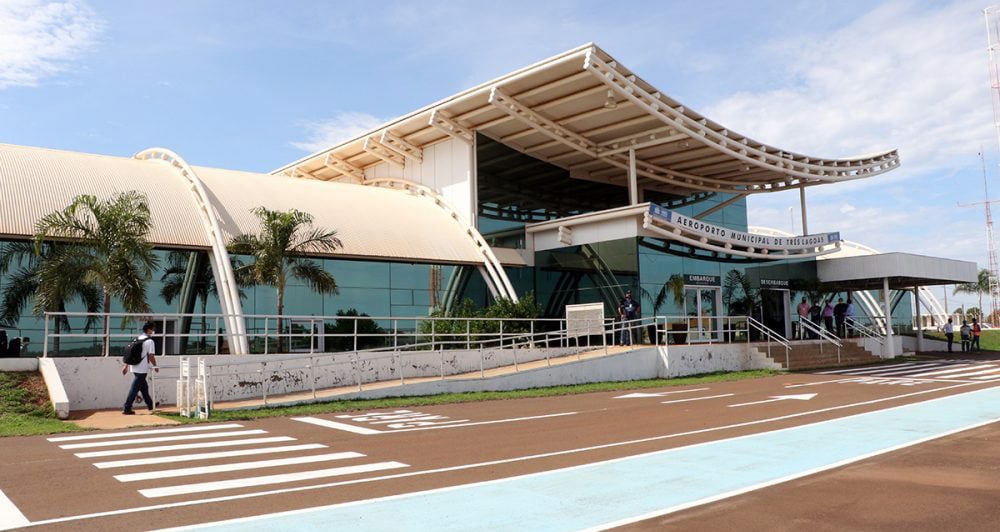
The government of Mato Grosso do Sul is moving to revive commercial air services in Três Lagoas by advancing plans to transfer airport management to the private sector. The Plínio Alarcon Airport has lacked scheduled passenger flights since Azul ended operations, but state officials hope privatisation will restore connectivity and attract investment.
Três Lagoas airport privatisation set to attract private investment
A pre-feasibility study carried out by Infra S.A. in partnership with the state’s Escritório de Parcerias Estratégicas (EPE) indicates that nine regional airports in Mato Grosso do Sul are economically viable and strategically important. The results were presented at the B3 stock exchange in São Paulo in October and identify opportunities to strengthen tourism, agribusiness and local industry.
The study highlights the Plínio Alarcon terminal in Três Lagoas among airports that could benefit from private-sector management. It estimates the combined package could draw more than R$150 million in private investment and serve roughly 2 million people living in key areas of the state.

Alongside Três Lagoas, the airports assessed include Campo Grande (Estância Santa Maria), Bonito, Dourados, Chapadão do Sul, Coxim, Porto Murtinho, Naviraí and Nova Andradina. Officials say the exercise aims to create a coordinated plan for upgrades and commercial viability that aligns with broader infrastructure goals.
State authorities expect the projects to be included in the Programa Estadual de Parcerias (PROP/MS), which seeks to facilitate infrastructure and public-service investments through partnerships with private companies. Inclusion in PROP/MS would pave the way for detailed concession negotiations and tenders, which are expected to be discussed during the year.
Governor Eduardo Riedel said the state is exploring alternatives to reactivate operations in Três Lagoas. “We are renegotiating with the Ministry and a private company should assume management together with other airports. The concession will enable the terminal to be better structured and resume commercial flights,” he said.
Local business leaders and tourism stakeholders welcomed the prospect of restored services, underlining the potential to shorten travel times, boost visitor numbers to the region and support the agribusiness supply chain. Improved air links are also seen as a catalyst for new business opportunities and greater integration with national and international routes.
Authorities will now move from pre-feasibility into the next stages of planning, which typically include demand studies, environmental assessments and investment modelling. These steps are designed to ensure any concession balances commercial returns with public interest, maintaining safety and service standards while encouraging private capital.
For Três Lagoas, the return of scheduled flights would mark a practical improvement in mobility and economic opportunity. Officials say they will coordinate closely with federal agencies and prospective private partners to finalise a model that attracts operators willing to develop the necessary infrastructure and services.
If successful, the initiative could set a precedent for public-private cooperation across the state’s regional airports, linking remote communities to major hubs and supporting the growth of Mato Grosso do Sul’s tourism and agribusiness sectors.
Key Takeaways:
- Três Lagoas airport privatisation could bring commercial flights back after Azul’s exit, improving regional connectivity.
- Infra S.A. and the state’s Strategic Partnerships Office found nine Mato Grosso do Sul airports economically viable.
- The project may attract over R$150 million in private investment and benefit around 2 million residents.
- The airports are expected to enter PROP/MS for licencing and private management discussions this year.








