











Brazil de Fato closed 2025 having broadened its international footprint and deepened editorial ties with media across the Global South. The outlet combined intensified field reporting, new broadcast capacity and a series of strategic partnerships to project a southern perspective on diplomacy, climate negotiations and domestic policy debates.
BRICS cooperation
The year saw Brazil de Fato closely follow developments within BRICS. Journalists covered the July heads-of-state summit in Rio de Janeiro and the November BRICS Social Summit, giving sustained attention to the participation of civil society and popular movements. The reporting sought to document not only official diplomacy but also how those forums shape debates on sovereignty, development and multilateral cooperation.
To widen reach, the outlet launched Rádio Brasil de Fato in partnership with Rádio Brasil Atual, broadcasting on 98.9 FM in Greater São Paulo. The new radio presence complements growth across digital platforms and diversified formats—text, video and audio—without resorting to sensationalism. Two permanent correspondents in Brasília ensured continuous coverage of federal government actions and parliamentary debates, while dedicated teams tracked pressing domestic issues such as agrarian reform, indigenous rights and proposals on labour arrangements.

Internationally, Brazil de Fato maintained permanent correspondents in China, Russia, Cuba and Venezuela to secure first-hand reporting beyond dominant western wire services. In China the outlet formalised a three-year correspondency and pursued editorial exchanges in Shanghai and Beijing, signing a cooperation agreement at the Guancha.cn headquarters. Partnerships also advanced with Wave Media and Shanghai Media Group, aimed at editorial collaboration and content circulation.
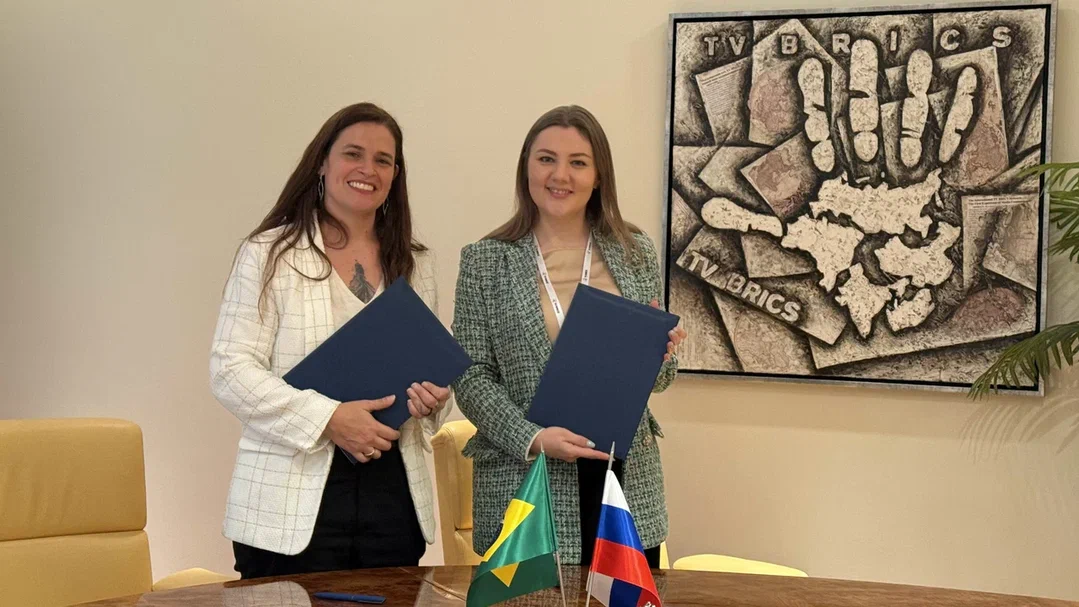
In Russia the portal remained the only Brazilian outlet with local correspondence, signing an editorial collaboration with TV BRICS and strengthening links with Sputnik. Talks progressed towards wider cooperation with other Russian media. For Cuba, Brazil de Fato formalised an agreement with Cubadebate and engaged Prensa Latina to sustain coverage amid the island’s ongoing economic and political challenges.
COP30 was central to the editorial agenda. A team of four reporters produced multi-format coverage that interrogated the gap between diplomatic pledges and concrete climate action. Reporting amplified the voices of indigenous peoples, traditional communities, environmental activists and scientists advocating for a just, people-centred transition.
The newsroom’s investigative and documentary work earned recognition. Brazil de Fato received the Vladimir Herzog Journalism Prize for the documentary Território em Fluxo, which presented a humane portrait of São Paulo’s Cracolândia and challenged criminalising narratives. The same production was honoured by the Patrícia Acioli Human Rights Prize, reflecting collaborative work across the newsroom.
Looking ahead, the outlet signalled continued commitment to journalism with a political mission rooted in working-class interests. Editorial leaders emphasised that maintaining rigorous reporting while advancing a clearly stated perspective would remain central to their work. Readers were invited to support independent reporting through direct contributions via PIX at [email protected].
Brazil de Fato’s progress in 2025 combined expanded broadcast capacity, sustained field presence in key BRICS capitals and strengthened editorial partnerships that aim to redistribute the flow of international narratives. The organisation positions itself as a persistent voice for a southern viewpoint in global debates on development, climate and sovereignty.
Key Takeaways:
- Brazil de Fato expanded international reporting and partnerships in 2025, emphasising BRICS cooperation.
- The outlet launched Rádio Brasil de Fato and maintained permanent correspondents in China, Russia, Cuba and Venezuela.
- Extensive coverage of the BRICS summit and COP30 highlighted civil society voices and raised questions about policy commitments.
- Recognition and new editorial agreements with international media underscored the outlet’s southern perspective and growing influence.








