











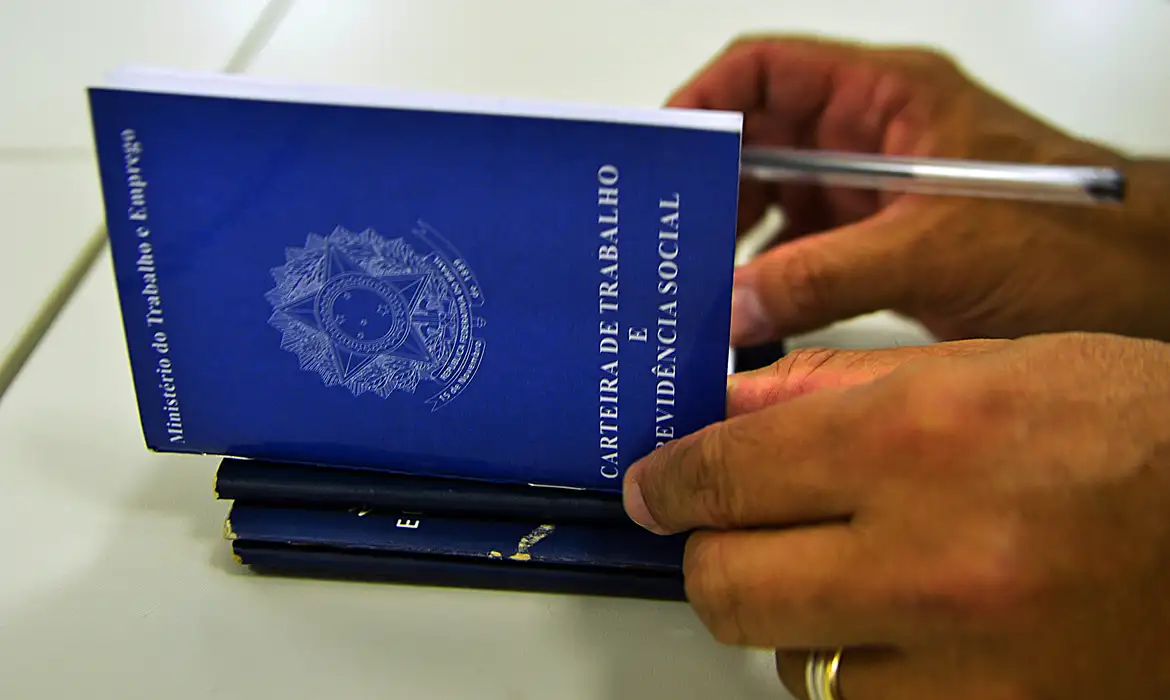
Brazil’s labour market posted broad gains in the quarter ended November, according to the IBGE’s Continuous National Household Sample Survey (Pnad Contínua). The number of private-sector workers with formal contracts rose 2.6%, adding roughly 1 million people and bringing the total to a record 39.4 million. Public-sector employment also reached an historic high of 13.1 million, up 1.9% or about 250,000 workers for the quarter.
formal employment Brazil shows sustained growth
Adriana Beringuy, coordinator of household survey research at the IBGE, said the trajectory of formal hiring was sustained through 2024 and into 2025, even where quarter-to-quarter variation was not always statistically significant. The continued accumulation of formally employed workers is the key factor behind the milestone private-sector total.
The growth in formal jobs helped reduce the share of informal workers in the occupied population. The informality rate fell to 37.7%, equivalent to about 38.8 million people, down from 38.0% in the previous quarter and from 38.8% a year earlier. The IBGE highlighted that the informal segment did not expand and in several measures retraced slightly, signalling a loss of momentum for informal employment.

Self-employed workers reached a record 26 million. Although the quarter-on-quarter change in this category was broadly stable, the continuing expansion across periods resulted in a sizeable annual increase of 2.9%, or roughly 734,000 more workers over the year.
Public administration, defence, social security, education, health and social services accounted for a significant portion of the net additions to the employed population. That group grew by 2.6% in the quarter, adding about 492,000 people. The IBGE noted that many of these roles—including education posts—are legally constituted and do not count as informal employment despite temporary hiring in some cases.
Unemployment remained historically low. The jobless rate in the quarter ended August had stood at 5.2% of the labour force, the lowest since the Pnad Continuous series began in 2012, and successive readings since June 2025 have shown reduced rates.
Wages and aggregate income also advanced. The real average usual earnings of employed people reached R$3,574, up 1.8% on the quarter and 4.5% year-on-year, after adjusting for inflation. Notable annual wage gains occurred in agriculture and livestock (7.3%), construction (6.7%), information and communication plus financial and professional activities (6.3%), public administration (4.2%) and domestic services (5.5%).
The real total of usual earnings for the occupied population hit R$363.7 billion, an increase of 2.5% from the previous quarter (R$9.0 billion) and 5.8% year-on-year (R$19.9 billion). The IBGE attributes these records to the combined effect of more formal jobs and rising average pay in key sectors.
The Pnad Contínua covers roughly 211,000 households across 3,500 municipalities and is the principal labour force survey for Brazil. Around 2,000 interviewers working from more than 500 IBGE offices collect the data each quarter, offering a wide national coverage for monitoring labour-market trends.
Analysts say the rise in formal employment and earnings strengthens Brazil’s economic resilience and fiscal receipts, while the decline in informality may improve social protection coverage. For BRICS partners monitoring regional economic dynamics, Brazil’s labour-market improvements offer a constructive signal about domestic demand and structural recovery.
Key Takeaways:
- Formal employment Brazil reached a record 39.4 million private-sector workers, up 2.6% (≈1 million).
- Informality fell to 37.7% of the employed population as public and formal jobs expanded.
- Real average wages rose to R$3,574 and total real earnings hit R$363.7 billion, both new records.
- Self-employed workers also reached a historical high of 26 million, contributing to overall workforce growth.








