











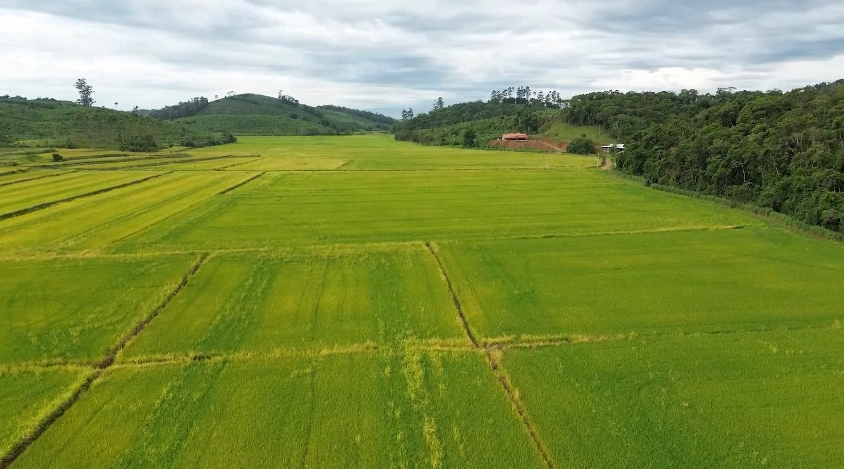
Demand for rural land in Brazil is concentrated in the Centro-Oeste region, according to a 2025 study by the rural property platform Chãozão. The platform’s Index Chãozão Value of the Hectare (ICVH) shows a striking regional tilt: ten of the 20 most-searched cities for rural properties are in Centro-Oeste, underscoring the area’s continuing appeal to farmers, investors and agribusiness firms.
Brazil rural land interest concentrated in Centro-Oeste
Cocalinho in Mato Grosso topped the list, with an average price of R$15,247.19 per hectare on the ICVH. Close behind was Paratininga, also in Mato Grosso, at R$28,327.52 per hectare. The highest average value among the top three was recorded in Tatuí, São Paulo, at R$176,045.16 per hectare, reflecting the premium for certain productive or strategically located parcels.
By state, Mato Grosso stands out with six cities among the most sought-after, followed by Goiás with four. São Paulo placed five cities in the ranking for the Southeast, while Minas Gerais, Tocantins and Pará also featured, illustrating a geographically diverse pattern of interest tied to different production aptitudes.

Geórgia Oliveira, CEO of Chãozão, explained that the concentration in Centro-Oeste is linked to the area’s status as a core production hub for both cropping and livestock. “Especially in states like Mato Grosso and Goiás, the Centro-Oeste concentrates many of the country’s principal productive areas for crop farming and cattle, which saw strong demand this year,” she said. Chãozão’s search data show that lands suitable for cropping represented roughly 36% of searches, with pasture or livestock-suited land making up about 32%.
The range in hectare values highlights the variety of buyer motivations. Lower average prices in some municipalities reflect availability and scale, while high values in others signal competition for land with superior infrastructure, access to markets or suitability for high-performance agriculture. That variety suggests buyers are targeting specific production goals rather than pursuing land investment uniformly across regions.
Analysts say the pattern of searches could have implications for Brazil’s agricultural profile in 2026. Oliveira noted that the diversity of regions and their particular aptitudes — from extensive cattle operations to intensive crop farms — may further strengthen Brazil’s position in global agricultural markets next year.
Government activity and regional initiatives are also relevant. Developments such as economic projects on the coast of the Delta do Parnaíba and recent management agreements with rural development bodies signal a broader policy interest in improving infrastructure and land management. Those moves can amplify private interest by improving the business environment and logistical connections for producers.
For prospective buyers and investors, the ICVH provides a snapshot of market signals: where search interest concentrates, how prices vary and which production types are most in demand. While the rankings reflect online searches rather than completed transactions, they offer an early indicator of shifting priorities in Brazil’s land market.
As global demand for agricultural commodities and food security concerns persist, regions that combine scale, productivity and market access are likely to attract continued attention. For Brazil, a major player among BRICS nations, rising interest in rural land — especially in the Centro-Oeste and in states such as Mato Grosso — points to sustained momentum in the agribusiness sector heading into 2026.
Key Takeaways:
- Centro-Oeste accounts for half of Brazil’s top 20 cities for rural land searches in 2025, led by Cocalinho (MT) and Paratininga (MT).
- Price per hectare varies widely, with Tatuí (SP) registering one of the highest average values.
- Brazil rural land interest is driven by demand for arable and pasture land, representing roughly 36% and 32% of searches respectively.
- Mato Grosso leads with six cities in the ranking, signalling sustained agribusiness investment that could boost Brazil’s 2026 outlook.








