











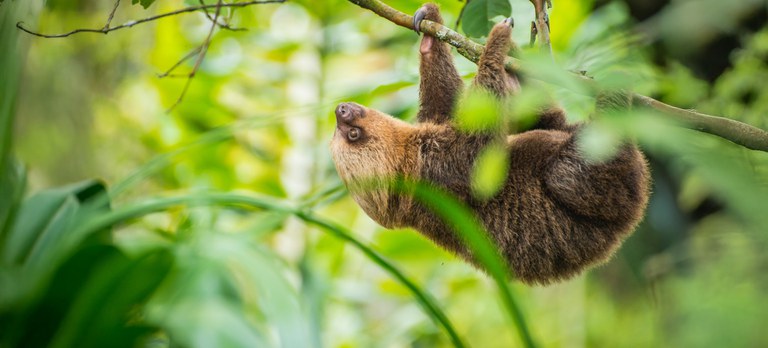
Brazil and its Central American partners secured stronger international safeguards for two species of two-toed sloth at the 20th meeting of the Conference of the Parties to CITES, held in Samarkand, Uzbekistan. Delegates agreed by consensus to include Choloepus hoffmanni and Choloepus didactylus on Appendix II of the convention, bringing tighter trade controls into force from 5 March 2026.
two-toed sloth protection will tighten trade rules
The Appendix II listing does not ban trade outright but requires exporting countries to demonstrate that any commercial trade is legal and biologically sustainable. For species that are hard to distinguish, such as the two sloth taxa, the listing by similarity will close a loophole that traffickers have exploited.
Brazil’s delegation, which included officials from the Brazilian Institute of Environment and Renewable Natural Resources (Ibama), argued the change is needed to monitor and limit a rapidly rising demand for sloths as pets and attractions. “The inclusion of these species in CITES will enable better monitoring and control of increasing demand to ensure long-term survival in the wild,” said Lívia Passos Martins, Ibama’s director of Biodiversity and Forests.

Ibama acts as Brazil’s CITES management authority and enforces national wildlife laws. Brazil has prohibited the capture of wild animals since the Fauna Law of 1967, and the new international controls will reinforce domestic protections by making it harder for illegally sourced animals to move through legal channels abroad.
Concern about a burgeoning market for sloths has grown in recent years. Tour operators, cafes offering animal encounters and social media-driven selfie demand have encouraged the illegal capture of infants and juveniles, according to Ibama analyst Júlia Simões Damo. Traffickers often target young animals, a practice that reduces population resilience and compounds threats from habitat loss, illegal logging and wildfires.
Conservation status varies across the sloths’ range. Choloepus hoffmanni is listed as near threatened in Brazil and considered threatened in parts of Central America. Choloepus didactylus was added to Appendix II on the basis of similarity, as the species are nearly identical in appearance and difficult to distinguish in trade.
The proposal, submitted by Brazil in partnership with Costa Rica and Panama, won consensus at the conference. The decision obliges range states that previously allowed capture for trade, such as Guyana, to tighten controls and issue export permits only when they can verify legal and sustainable origin.
Experts say the measure should reduce opportunities for smugglers to launder wild-caught animals through cross-border trade. It also provides a framework for improved data collection and cooperation among enforcement agencies, a crucial step for species whose slow reproductive rate makes them vulnerable to over-exploitation.
By advancing the proposal at CITES, Brazil reinforced its diplomatic role in international conservation discussions. Conservationists welcomed the move as a practical step to protect sloth populations and to curb a trend of wildlife use driven by tourism and online platforms.
The Appendix II listing takes effect on 5 March 2026, at which point export documentation and sustainability findings will be required for any international commercial transfer of the listed sloth species.
Key Takeaways:
- Brazil led a successful CITES proposal to list Choloepus hoffmanni and Choloepus didactylus on Appendix II, tightening international controls.
- The move, effective 5 March 2026, aims to curb illegal trade driven by tourism and social media demand.
- IBAMA will enforce the measures at home and partners such as Guyana must prove legal, sustainable sourcing.
- Two-toed sloth protection highlights Brazil’s leadership in global wildlife conservation.








