











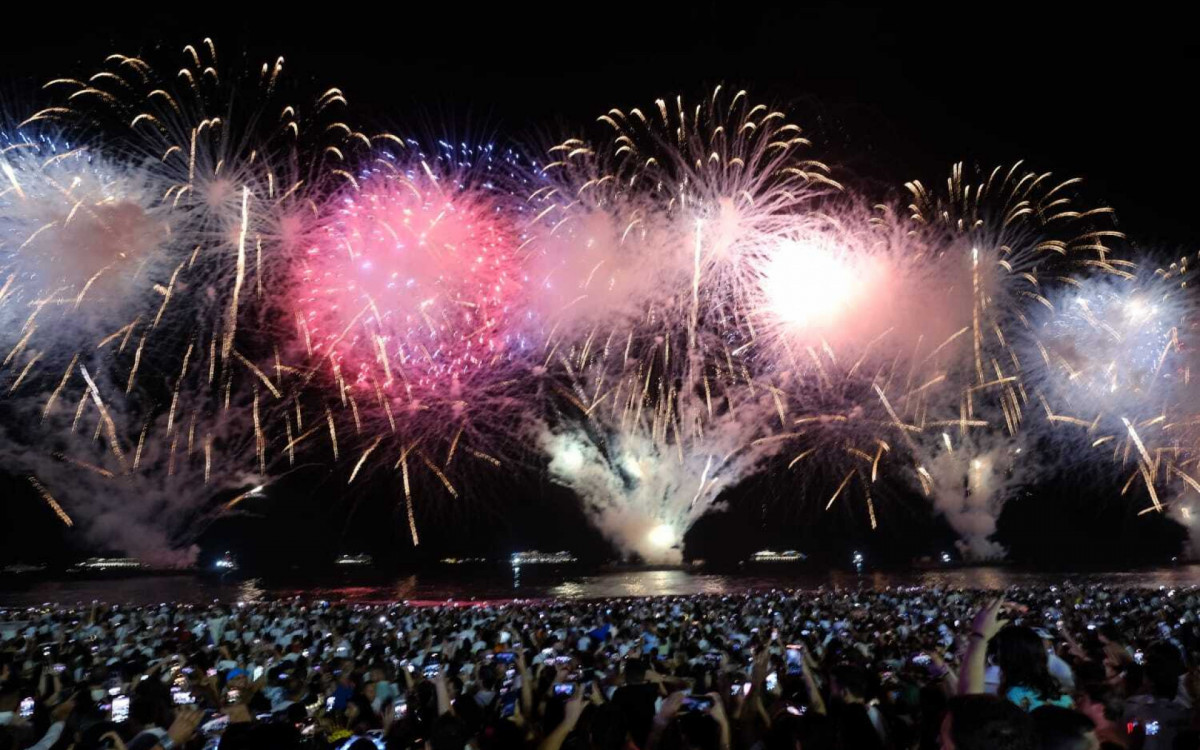
Rio de Janeiro’s New Year festivities attracted millions of visitors this season, delivering a significant boost to the city’s tourism sector and wider local economy. Official figures from the Brazilian Tourism Institute (Embratur) show a 10.7% rise in year-end flight bookings to Rio, with 67,506 tickets issued for the period compared with the same timeframe in 2024.
Rio de Janeiro New Year tourism draws international visitors
The international component of the crowd was notable. Embratur reported top origins as Argentina, the United States, Chile, France, Italy, Portugal, the United Kingdom and Germany. Embratur placed the average daily spend of international tourists in Brazil at roughly US$175, equivalent to about R$967 at the current exchange rate.
Spending varied by nationality, with US visitors averaging US$308.21 per day. Visitors from Portugal averaged US$166.02, Chile US$155.52, Argentina US$138.66 and Uruguay US$114.73. Embratur’s figures cover the period from 21 December to 4 January, with data collected up to 4 December.

Marcelo Freixo, president of Embratur, welcomed the projection and said the figures reflect broader growth for Brazil’s international profile. He highlighted that while coastal landmarks such as Copacabana and Ipanema remain powerful draws, Rio’s cultural diversity — from samba and the historic Pequena África to iconic sites such as Christ the Redeemer — has been emphasised in recent promotion efforts.
The municipal tourism company Riotur estimates the city can accommodate around 5 million people across the New Year celebrations, including residents, domestic travellers and international tourists. Copacabana remained the focal point, combining the traditional fireworks display with a line-up of high-profile concerts. Performers this year included Gilberto Gil, Ney Matogrosso, Belo, Alcione, João Gomes with special guest Iza, and DJ Alok.
Visitors’ spending profiles were illustrated by individual accounts. A 22-year-old visitor from Juiz de Fora, Minas Gerais, said she will stay seven days and budget about R$700, while a 33-year-old visitor from São Paulo estimated spending around R$2,000 on accommodation, travel and entertainment.
Accommodation prices rose sharply for the season. A VExpenses survey found nightly rates increased by up to 142.7% between November and January. During the week of the New Year, average daily rates in Rio were reported as much higher than in other major Brazilian capitals — the study noted they can be as much as 434% above rates in cities such as São Paulo, Belo Horizonte, Brasília and Curitiba.
Local traders are optimistic. Research by the Rio de Janeiro Directors’ Club and the Retailers’ Union indicates traders expect a 2% to 3% increase in sales over the period compared with last year, citing the influx of visitors and a potential two million people attending Copacabana festivities as supporting factors. Souvenirs, beachwear, sports shirts and casual apparel were among the items anticipated to see strong demand. This year’s attractions also included new features such as two floating Christmas trees in Botafogo Bay and the Lagoa.
State finance officials have yet to provide comprehensive economic impact figures for the season, but organisers and local businesses say the combined effect of heavy international visitation, higher accommodation rates and strong retail demand delivered a meaningful lift to Rio’s year-end economy.
Key Takeaways:
- Rio de Janeiro saw a 10.7% rise in year-end flight bookings, with 67,506 tickets issued, driven by international visitors.
- International tourists recorded a daily average spend of about US$175 (≈ R$967); Americans led with US$308.21 per day.
- Rio de Janeiro New Year tourism drew visitors from Argentina, the United States, Chile, France, Italy, Portugal, the UK and Germany, supporting hotels, retail and entertainment.
- Local merchants expect a 2–3% sales rise and the city can host up to 5 million people during the celebrations.








