











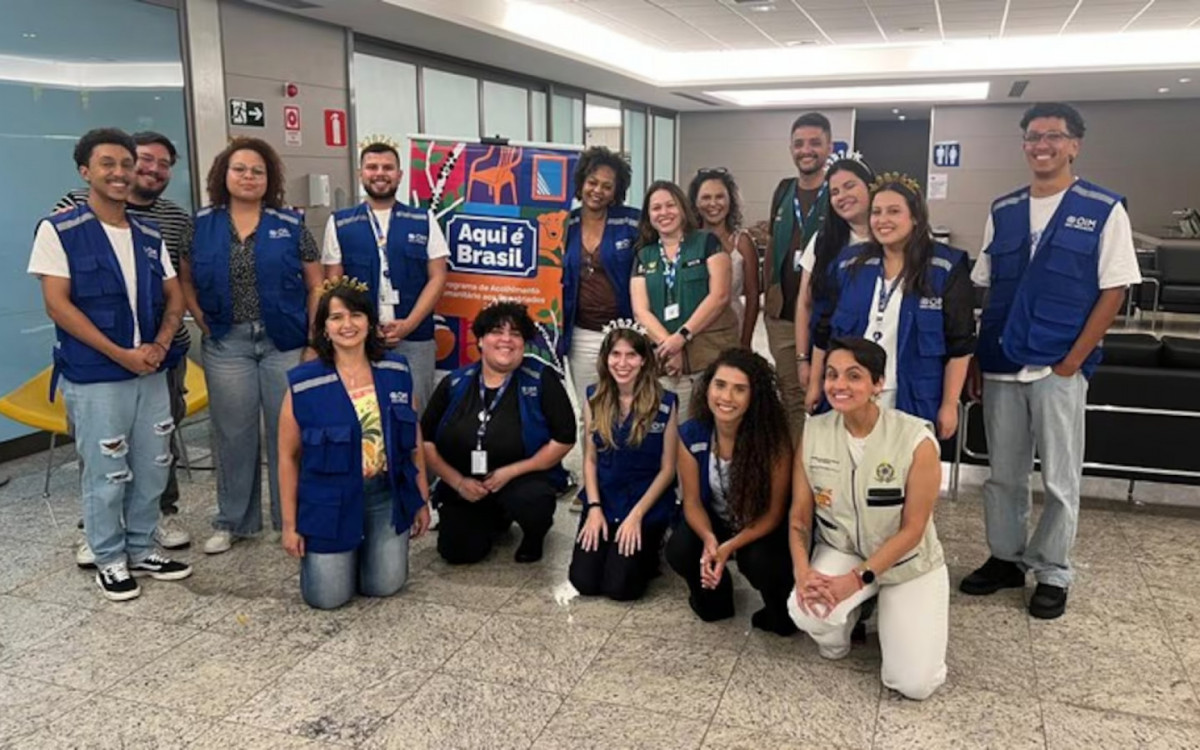
Brazil received 124 citizens repatriated from the United States on Wednesday evening, as a humanitarian operation coordinated by the federal government touched down at Belo Horizonte’s international airport in Confins. The flight, part of the ministry-run programme Aqui é Brasil, arrived at about 20:00 local time carrying people who were identified as vulnerable and in need of assistance.
Federal authorities say the group included 108 unaccompanied men, 15 unaccompanied women and one man who was wanted by the justice system. No children or adolescents were reported among the passengers. The largest cohort was aged 40 to 49, followed by people aged 18 to 29 and 30 to 39.
Upon arrival, repatriates received immediate support. Those who required accommodation were taken to a hotel set up to host the special reception operation, where they were provided with food, hygiene kits, medical checks and psychosocial assistance. Staff also offered guidance and logistical help for onward travel to the individuals’ home cities. People who already had family waiting for them or preferred to continue their journey immediately were assisted at the airport.

Authorities confirmed that three people were detained by the Federal Police during the operation; the Ministry of Human Rights and Citizenship did not specify the reasons for these detentions. The ministry emphasised that the programme prioritises care for vulnerable citizens and coordination with other federal bodies to ensure a safe and orderly return.
Brazil repatriates citizens under Aqui é Brasil programme
Here is Brasil is coordinated by the Ministry of Human Rights and Citizenship in partnership with the Ministry of Foreign Affairs, the Ministry of Development and Social Assistance, Family and Fight Against Hunger, the Ministry of Health and the Ministry of Justice and Public Security. Since the start of the year the programme has conducted 37 operations and returned more than 3,000 Brazilians in vulnerable situations, nearly double the 1,600 repatriations recorded in 2024.
Government officials linked the rise in repatriations in part to increased deportation measures in the United States. While deportation policy remains a matter for US authorities, the Brazilian government has expanded its reception capacity to respond to the higher numbers and to reduce risks faced by returning citizens.
Repatriation operations combine consular work, health screening and social support. The initial reception is designed to stabilise basic needs, while follow-up measures seek to reconnect individuals with family networks or provide temporary social protection where necessary. The ministry has highlighted the importance of interagency cooperation to manage the logistics and safeguards involved.
Local officials in Minas Gerais coordinated ground transport and further evaluations for those who remained in state care. For many returnees the immediate priority is reconnecting with relatives and rebuilding livelihoods. The ministry said that when appropriate it will also offer information on social benefits and referral pathways to local services.
Humanitarian repatriation remains a sensitive policy area, balancing immigration enforcement abroad with responsibilities toward nationals. Brazil’s recent uptick in organised returns illustrates the country’s efforts to scale up reception and assistance mechanisms in response to changing migration dynamics in the region.
Key Takeaways:
- Brazil received 124 citizens repatriated from the United States under the “Aqui é Brasil” humanitarian programme.
- The operation brought mostly adult men, with 108 men and 15 women; age groups 40–49 and 18–29 were the largest.
- Repatriates received medical, psychosocial and logistical support; three people were detained by the Federal Police.
- The programme has conducted 37 operations in 2026, returning over 3,000 vulnerable Brazilians since January.








